Iran threatens to set ships on fire if they enter Strait of Hormuz – National | Globalnews.ca
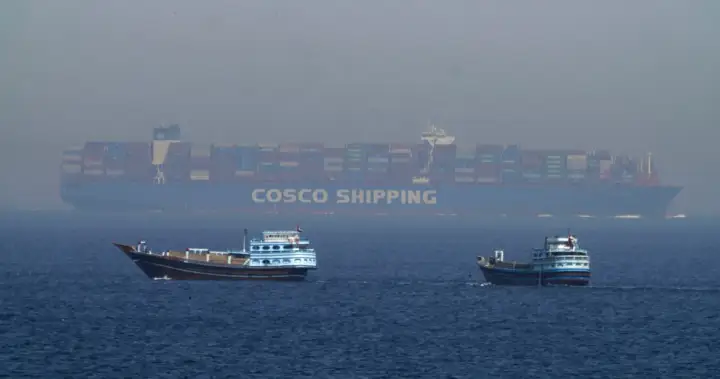
Iran’s Revolutionary Guards declared the Strait of Hormuz “closed,” threatening to burn passing ships and turn a global trade chokepoint into a weapon of coercion.
Sources
Summary
An Iranian Revolutionary Guards senior official said Iran has closed the Strait of Hormuz and will set fire to any ship attempting to pass.
The stated intent is to weaponize control of a global maritime chokepoint as an instrument of state coercion following U.S. and Israeli strikes and ensuing regional retaliation.
If enforced, the threat would disrupt a route carrying about 20% of daily global oil consumption, escalating economic and security risk beyond the immediate conflict zone.
Reality Check
Normalizing threats to incinerate civilian shipping in an international chokepoint collapses the basic expectation that commerce moves under enforceable rules rather than armed veto. When a state signals it will punish passage itself, every maritime agreement becomes conditional on force, and the cost is paid by civilians through energy shocks and widened conflict. Once this becomes an accepted tool, the guardrails that separate strategic deterrence from indiscriminate economic warfare weaken, and escalation becomes easier to trigger and harder to stop.
Detail
<p>Iranian state media reported that Ebrahim Jabari, a senior adviser to the Revolutionary Guards commander-in-chief, said on Monday that the Strait of Hormuz is closed and that Revolutionary Guards forces and the regular navy would set ships on fire if they try to pass.</p><p>The warning followed statements on Saturday that Iran was closing the export route. The strait connects major Gulf oil producers—including Saudi Arabia, Iran, Iraq, and the United Arab Emirates—to the Gulf of Oman and the Arabian Sea, and carries about 20% of the world’s daily oil consumption.</p><p>The reported closure was described as triggered by U.S. and Israeli strikes on Iran on Feb. 28 aimed at toppling its leaders, with U.S. President Donald Trump offering Iranians help in ousting the ruling clerics. The text reports Iran responded by firing missile barrages at Gulf neighbors hosting U.S. military bases, including Qatar, Kuwait, and Bahrain, and also fired missiles at the United Arab Emirates, Saudi Arabia, and Oman.</p><p>The report notes shipping disruptions in the region have also been linked to drone and missile attacks by Yemen’s Iran-aligned Houthi militants since 2023.</p>