Norms Impact
JD Vance’s team had water level of Ohio river raised for family’s boating trip
When a vice-president’s trip triggers changes to a public lake’s outflow, the norm of equal access to shared infrastructure gives way to governance by VIP request.
Aug 6, 2025
⚖ Legal Exposure
Sources
Summary
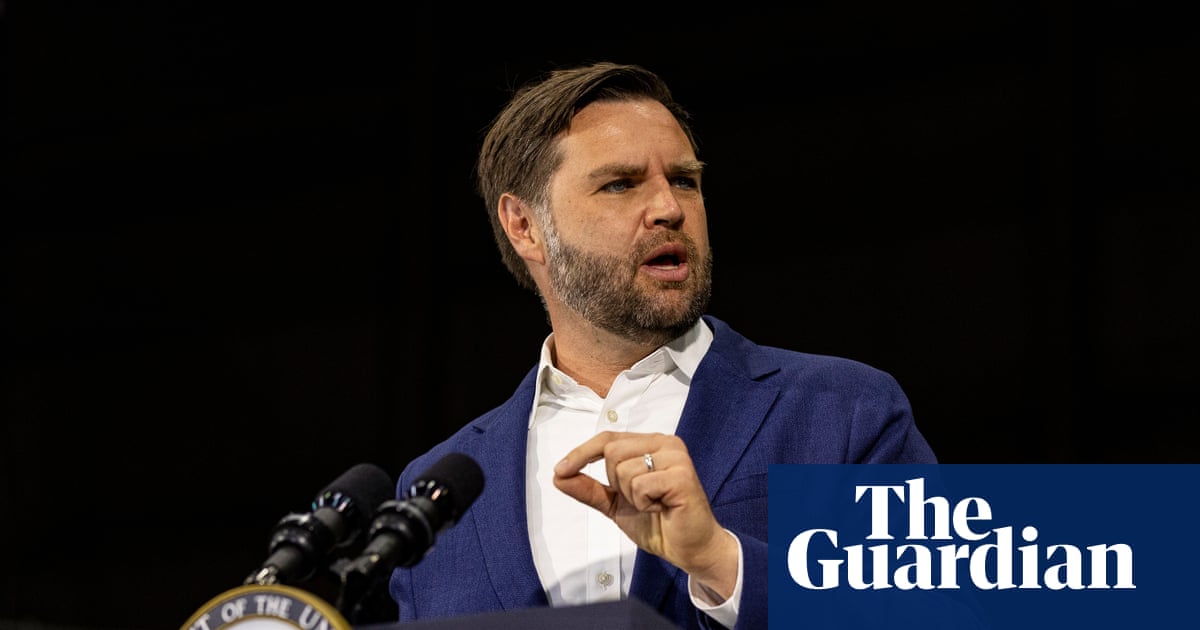
The US Secret Service asked the US Army Corps of Engineers to temporarily increase outflows from Caesar Creek Lake in Ohio, coinciding with JD Vance being spotted canoeing on the Little Miami River area on 2 August. The vice-president’s security footprint moved from routine protection into operational influence over public water-control infrastructure without prior public announcement. The practical consequence is a precedent where elite travel can trigger alterations in shared public resources, deepening public distrust in equal access and accountable governance.
Reality Check
Weaponizing routine security planning to alter public water-control operations for a leader’s leisure erodes our rights by normalizing a two-tier government where public resources bend to private convenience. On this record, criminal exposure is not clearly established, but the conduct squarely implicates anti–quid-pro-quo and abuse-of-office norms that underpin democratic legitimacy, especially when documentation and “deviation” safeguards exist to prevent arbitrary changes. If any false statements or misuse of position were used to secure the change, federal fraud theories like 18 U.S.C. § 1001 (false statements) and 18 U.S.C. § 1346 (honest-services fraud) become relevant—but the stated justification was “safe navigation” and USACE claims no deviation was required. The deeper danger is institutional: once VIP recreation can be operationalized through federal infrastructure controls without transparent, public-facing justification, we train agencies to treat ordinary citizens as downstream stakeholders in name only.
Legal Summary
The reported outflow increase aligned with a Vice President family boating trip presents a serious investigative and ethics concern about use of public resources and preferential treatment. However, the article does not allege any payment, gift, or external transactional exchange, making this more consistent with potential misuse/appearance issues than prosecutable quid-pro-quo corruption on the current record.
Legal Analysis
<h3>5 C.F.R. § 2635.101(b) & § 2635.702 — Standards of Ethical Conduct / Use of Public Office for Private Gain</h3><ul><li>Alleged facts indicate an unusual operational change (increased outflow) coinciding with the Vice President’s family recreational boating trip, raising an appearance that official position and government resources were used to improve private leisure conditions.</li><li>Even if framed as Secret Service “safe navigation,” the timing and individualized nature of the action (no public announcement; source claims releases are generally not done for individuals) supports a strong investigative inference of preferential treatment not available to ordinary users.</li></ul><h3>31 U.S.C. § 1349 / 1341 (Anti-Deficiency Act) — Fiscal Misuse (theory depends on funding/authorization facts)</h3><ul><li>Article suggests possible use of public operational capacity to benefit a private recreational outing, but does not provide facts on incremental costs, unauthorized obligations, or expenditure outside appropriations.</li><li>Gaps: no evidence of improper obligation, mischarging, or knowingly exceeding authority; exposure here is contingent and would require cost/authorization documentation.</li></ul><h3>18 U.S.C. § 208 — Conflict of Interest (financial interest)</h3><ul><li>No facts indicate a specific financial interest held by the Vice President or family that would be affected by the outflow decision beyond personal convenience/recreation.</li><li>Gaps: absent a qualifying financial interest and a covered “particular matter,” this is not well-supported on the stated record.</li></ul><h3>18 U.S.C. § 201 (Bribery/Illegal Gratuities) / 18 U.S.C. § 666 — Quid Pro Quo Corruption</h3><ul><li>The article presents no transfer of money, gift, or thing of value from an outside party to the Vice President or staff in exchange for the outflow change.</li><li>Absent a payer-beneficiary structure, this reads as potential misuse of governmental service rather than a transactional corruption scheme.</li></ul><b>Conclusion:</b> The conduct as described is primarily a procedural/ethics red flag involving potential exploitation of public services for personal recreation and preferential treatment appearance, not a money-for-official-action corruption pattern on the provided facts.
Detail
<p>The US Army Corps of Engineers (USACE) confirmed it received a request from the US Secret Service to temporarily increase outflows from Caesar Creek Lake in southwest Ohio. USACE spokesperson Gene Pawlik said the request was to “support safe navigation of US Secret Service personnel” during a recent visit and that the slight outflow increase occurred on 1 August 2025, with downstream stakeholders notified in advance.</p><p>Public US Geological Survey data showed a sudden increase in river level and a corresponding drop in lake elevation during early August days when JD Vance was vacationing; social media posts placed Vance canoeing on 2 August, his 41st birthday, on the Little Miami River, which is fed by Caesar Creek Lake. An anonymous source alleged the change was also intended to create “ideal kayaking conditions,” which could not be independently confirmed.</p><p>USACE said the request met operational criteria in the Water Control Manual and did not require a “deviation” from normal procedures. The Secret Service said it coordinated with the Ohio Department of Natural Resources and USACE to ensure motorized watercraft and emergency personnel could operate safely, but it would not discuss specifics.</p>