Norms Impact
Judge quotes Orwell’s 1984 as she orders Trump to restore slavery exhibits in Philly
A federal court just blocked an executive-branch bid to rewrite public history at a national landmark, curbing the government’s claim it can erase uncomfortable truths on official property.
Feb 16, 2026
⚖ Legal Exposure
Sources
Summary
A federal judge ordered the federal government to restore all slavery-related exhibit materials removed from the President’s House site on Independence Mall in Philadelphia. The ruling rejects the executive-branch claim that it can unilaterally control historical messaging at federally managed landmarks. The order forces the National Park Service to reinstate removed panels and interpretive content that had been stripped ahead of Black History Month.
Reality Check
This conduct weaponizes federal control of public spaces to suppress factual history, setting a precedent where our rights to receive truthful civic information can be narrowed by whoever holds power. The most immediate legal exposure in the record is not “speech control” but physical interference: if federal property was damaged or panels were forcibly removed, that can implicate federal statutes governing injury to U.S. property (18 U.S.C. § 1361) and related offenses depending on proof and actors. Even where criminal intent cannot be pinned to specific individuals from this record, the asserted theory that the government may “choose the message” by dismantling established historical interpretation is a norm-shattering abuse of custodial power over our national memory.
Legal Summary
The described conduct presents serious investigative red flags of politicized, potentially unlawful federal agency action—removing historical content pursuant to an executive directive and advancing a broad “government message” theory that a federal judge rejected and enjoined. On the stated facts there is no transactional quid-pro-quo or personal enrichment, so this is not structural corruption, but it carries meaningful civil-law exposure and compliance/records-handling scrutiny.
Legal Analysis
<h3>5 U.S.C. § 706 (APA) — Arbitrary/capricious agency action; action contrary to law</h3><ul><li>The National Park Service removed “any mention of slavery” and information about enslaved people at a federal historic site following the President’s executive order directing review of sites depicting “founding principles and historical milestones in a negative light.”</li><li>A DOJ lawyer argued the government “gets to choose the message it wants to convey,” which the judge characterized as “dangerous” and rejected, ordering restoration—supporting an inference that the agency action exceeded lawful discretion or lacked a reasoned basis.</li></ul><h3>5 U.S.C. § 552 (FOIA) / Records-retention principles (investigative angle) — Potential improper handling of federal exhibit/interpretive materials</h3><ul><li>The context describes physical removal of panels/exhibit materials and government-directed message control; while no specific destruction is alleged, the rapid removal and physical dismantling heighten investigative concerns about whether records/materials were properly preserved and documented.</li><li>Gaps: The article does not allege document destruction, concealment, or noncompliance with a specific retention directive; exposure remains an investigative red flag rather than a chargeable theory on these facts alone.</li></ul><h3>18 U.S.C. § 241 / § 242 — Civil rights conspiracy / deprivation under color of law (not substantiated on stated facts)</h3><ul><li>The conduct described is viewpoint/message control over historical interpretation at a federal site; the article does not identify a specific individual’s federally protected right being willfully deprived under color of law in a manner meeting criminal elements.</li><li>Gaps: No targeted deprivation, force, threat, or discriminatory enforcement act is alleged beyond exhibit removal.</li></ul><b>Conclusion:</b> The article supports significant procedural/constitutional-administrative irregularity and unlawful-agency-action risk (APA-type exposure) rather than a money-for-official-act structural corruption case; criminal public-corruption elements are not indicated on these facts.</p>
Detail
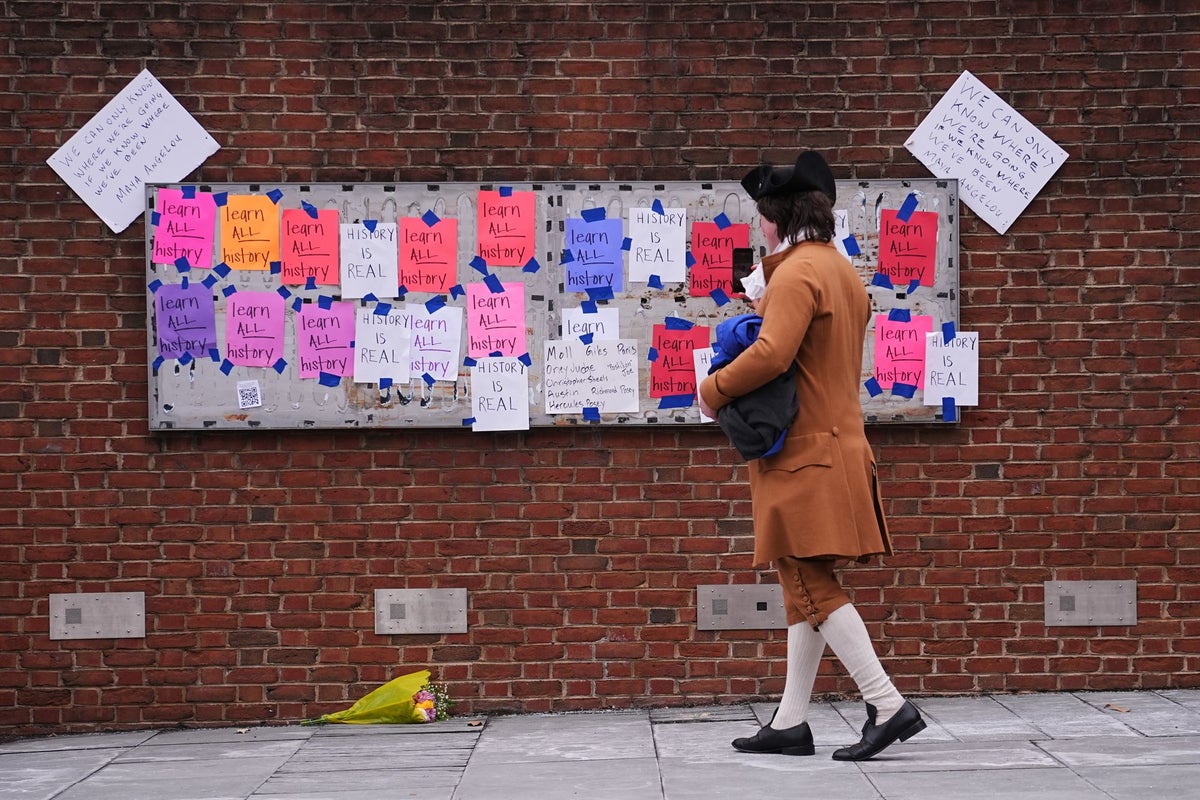
<p>On Monday, U.S. District Judge Cynthia Rufe ordered the federal government to return all exhibit materials about slavery that were removed from the President’s House site at Independence National Historical Park in Philadelphia.</p><p>In January, the National Park Service removed any mention of slavery and all information about enslaved people who lived at the site, leaving only names engraved in a cement wall: Austin, Paris, Hercules, Christopher Sheels, Richmond, Giles, Oney Judge, Moll, and Joe. The removal followed President Donald Trump’s executive order directing a review of museums and historical sites that depict “founding principles and historical milestones in a negative light.”</p><p>At a hearing last month, a Department of Justice lawyer argued “the government gets to choose the message it wants to convey.” The court rejected that position and ordered restoration. Separately, observers reported people using crowbars to remove several panels from an outdoor display, including one titled “The Dirty Business of Slavery.”</p>