Norms Impact
Judge Rebukes U.S. Over Application to Search Washington Post Reporter’s Home
Federal prosecutors sought a warrant to search a reporter’s home while withholding a controlling press-protection law from the judge, eroding the court’s role as the gatekeeper of lawful searches.
Feb 21, 2026
⚖ Legal Exposure
Sources
Summary
A federal magistrate judge admonished the Justice Department for seeking a warrant to search Washington Post reporter Hannah Natanson’s home without alerting the court to the Privacy Protection Act of 1980. The episode exposes an institutional practice in which prosecutors say department policy can override full disclosure of controlling legal constraints to a warrant judge. The practical consequence is a weakened judicial check on searches that can sweep up protected reporting materials.
Reality Check
This conduct threatens our rights by training law enforcement to treat judges as rubber stamps—keeping decisive legal constraints off the record so searches of journalists can proceed before meaningful scrutiny occurs. On these facts, the core legal exposure is not the search itself but the omission: if the warrant process was misled, it implicates false-statement and obstruction risks under 18 U.S.C. § 1001 and 18 U.S.C. § 1519, depending on what was represented in the application and what was knowingly withheld. Even if it falls short of a provable crime, it is a severe breach of the warrant process and the Privacy Protection Act’s press safeguards, normalizing end-runs around judicial oversight when the target is newsgathering.
Legal Summary
The facts indicate a significant procedural/legal irregularity: DOJ sought a warrant to search a reporter’s home without alerting the judge to the Privacy Protection Act’s restrictions, despite the AUSA knowing the law. On this record, exposure is best characterized as potential unlawful-search/civil liability and suppression risk, with insufficient facts to support a clear criminal civil-rights or false-statement charge.
Legal Analysis
<h3>42 U.S.C. § 2000aa (Privacy Protection Act of 1980) — Unlawful search/seizure of work product or documentary materials</h3><ul><li>The magistrate judge found the statute a “threshold question” and admonished DOJ for not disclosing it in a warrant application seeking to search a reporter’s home for reporting materials; the statute states such a search “shall be unlawful” unless an exception applies (e.g., probable cause the reporter committed specified crimes related to the materials).</li><li>The article describes the search as “unprecedented” and notes the PPA’s strict limits; the record presented here does not establish that the statutory exception (probable cause the reporter committed qualifying crimes) was met.</li><li>Key gap: the article does not specify the warrant affidavit’s probable-cause showing or whether DOJ asserted/qualified under any PPA exception; exposure centers on potential statutory noncompliance and suppression/civil liability risk rather than a clear criminal charge.</li></ul><h3>18 U.S.C. § 242 — Deprivation of rights under color of law (potential theory; high bar)</h3><ul><li>Executing a search in a manner that violates a clear statutory protection for journalists could implicate rights-based concerns, but criminal exposure generally requires willful deprivation of a constitutional/right and the article does not provide facts showing the necessary intent beyond nondisclosure of the statute.</li><li>The prosecutor (AUSA) conceded he knew of the law but claimed department policy supported not highlighting it; the article does not establish willfulness to deprive rights as opposed to procedural/legal error.</li></ul><h3>18 U.S.C. § 1621 / § 1001 — Perjury / false statements (limited on these facts)</h3><ul><li>The judge’s rebuke focuses on omission (failure to raise the PPA) rather than an affirmative false statement under oath; the article does not allege any knowingly false factual assertions in the warrant application.</li></ul><b>Conclusion:</b> The described conduct presents a serious investigative red flag and potential unlawful-search/civil exposure under the Privacy Protection Act, driven by omission of a key statutory constraint from the warrant process; it reads as procedural/legal noncompliance rather than a money-for-official-act structural corruption pattern.</p>
Detail
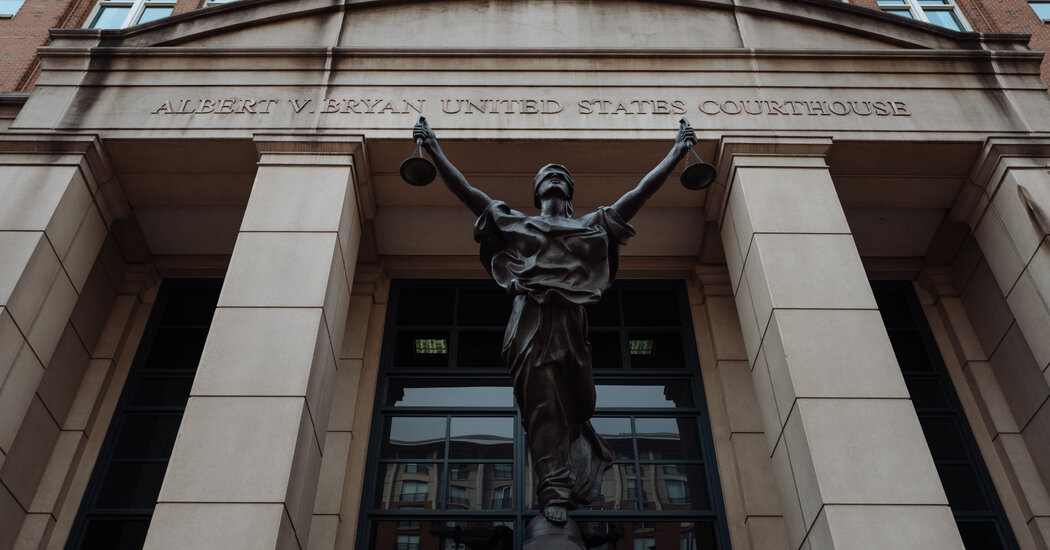
<p>Judge William B. Porter, a magistrate judge in the Eastern District of Virginia, questioned Justice Department officials at a hearing in federal court in Alexandria, Va., about a warrant application filed the prior month to search the home of Washington Post reporter Hannah Natanson.</p><p>During the hearing, Judge Porter said the department had not informed him of the Privacy Protection Act of 1980, a law that restricts searches for reporting materials and makes such searches unlawful unless there is probable cause the reporter committed certain crimes to which the materials relate.</p><p>Assistant U.S. Attorney Gordon D. Kromberg, who submitted the warrant application, later conceded he knew about the law but said he was following department policy by not bringing it to the judge’s attention, and apologized to the court.</p><p>First Amendment scholars described the search as unprecedented. The search was tied to a broader investigation into a government contractor’s handling of classified material.</p>