Norms Impact
Kristi Noem Repeatedly Refuses to Apologize to Alex Pretti’s Parents at Senate Hearing | Common Dreams
When federal agents kill U.S. citizens and the DHS secretary won’t retract false “domestic terrorist” claims, accountability collapses into a public-relations shield for state violence.
Mar 3, 2026
⚖ Legal Exposure
Sources
Summary
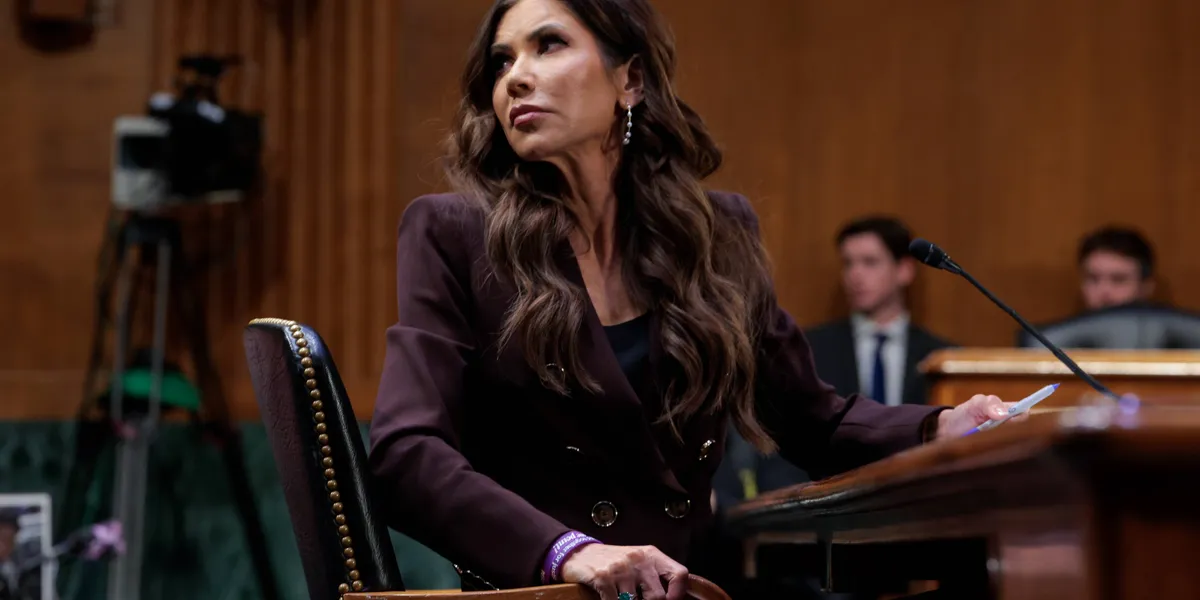
Homeland Security Secretary Kristi Noem testified before the Senate Judiciary Committee and repeatedly refused to apologize or retract her public branding of multiple people shot by DHS agents as “domestic terrorists,” including VA nurse Alex Pretti.
The hearing centered on DHS’s mass-deployment operations and the department’s use of public accusation in the immediate aftermath of lethal force incidents.
The practical consequence is a federal enforcement apparatus that can expand into U.S. cities, kill Americans, and then shield itself behind “reports from the ground” while families and lawmakers are denied a clear admission of error.
Reality Check
Permitting the executive branch to deploy large federal forces into U.S. communities and then publicly stigmatize those shot—without clear retraction when evidence contradicts the claim—teaches government that lethal power can be exercised without meaningful accountability.
This precedent corrodes rule-of-law expectations by replacing transparent correction with vague condolences and “reports from the ground,” insulating agencies from oversight when their narratives fail.
Over time, normalizing this posture weakens congressional control, blurs limits on domestic operations, and conditions the public to accept branding Americans as threats as a substitute for due process.
Legal Summary
The context describes multiple federal-agent shootings during DHS operations and alleged trampling of rights, alongside disputed DHS public characterizations of victims as “domestic terrorists.” This supports Level 2 exposure as an investigative red flag for potential civil rights violations and politicized/irregular agency handling, but the article does not provide element-complete facts tying leadership to willful rights deprivations or any money-access-official-action quid pro quo.
Legal Analysis
<h3>18 U.S.C. § 242 — Deprivation of Rights Under Color of Law</h3><ul><li>Article describes multiple shootings by federal immigration agents during DHS operations in Minnesota and Illinois, including deaths of U.S. citizens; these are alleged uses of force by officers acting under color of law.</li><li>Potential exposure hinges on whether the shootings were “willful” deprivations of constitutional rights (e.g., unreasonable seizure/excessive force); the article notes video/eyewitness evidence “contradicted the DHS narrative,” but does not specify intent or adjudicated facts.</li><li>Noem’s post-incident statements (“domestic terrorists”) are not themselves the deprivation, but could be investigatory leads regarding agency posture, justification narratives, and potential tolerance of unconstitutional force.</li></ul><h3>18 U.S.C. § 241 — Conspiracy Against Rights</h3><ul><li>Large-scale “surge” operations are described; however, the article does not allege an agreement to violate rights, only alleged rights “trampled on” and disputed incident narratives.</li><li>Would require evidence of coordinated intent to deprive protected rights beyond operational deployment.</li></ul><h3>5 C.F.R. § 2635 / Executive ethics norms — Misrepresentation, dignity, and public trust (Ethics/administrative exposure)</h3><ul><li>Repeated refusal to retract or apologize for labeling victims as “domestic terrorists,” despite claimed video/eyewitness contradiction, raises administrative/ethics concerns about accuracy and stewardship of public communications.</li><li>Article frames this as politicized handling and reputational harm to families rather than a money-for-official-act scheme.</li></ul><h3>42 U.S.C. § 1983 / Bivens-type constitutional tort analogs (Civil liability framework)</h3><ul><li>Although the article discusses federal officers (not state actors), the described conduct (shootings; alleged rights violations) aligns with potential civil rights/excessive-force civil exposure against responsible actors and possibly the government under applicable doctrines.</li><li>The article does not provide facts sufficient to assess immunity, policy causation, or supervisory liability for Noem.</li></ul><b>Conclusion:</b> The article presents serious investigative red flags involving alleged unconstitutional uses of force and contested official narratives, but it does not establish a transactional corruption scheme or supply enough element-specific facts to charge high-level officials; exposure is primarily procedural/operational misconduct requiring further investigation into willfulness, policy direction, and incident facts.
Media
Detail
<p>As the Department of Homeland Security remained partially shut down, Secretary Kristi Noem appeared Tuesday before the Senate Judiciary Committee.</p><p>Sen. Amy Klobuchar questioned Noem about Operation Metro Surge, which sent thousands of immigration agents to the Twin Cities in January, and said two Minnesota constituents—Renee Good and Alex Pretti—were killed by immigration agents. Klobuchar cited fatal shootings of Pretti by a Border Patrol agent and a Customs and Border Protection officer, and of Good by an ICE officer. Klobuchar also stated that roughly 500 more agents remained than before the surge, which the administration says has ended.</p><p>Klobuchar asked Noem what she wanted to say to Pretti’s parents after Noem called him a domestic terrorist the day after his death. Noem responded that she relied on early information from agents and offered condolences without apologizing or retracting the label.</p><p>Sen. Dick Durbin raised similar concerns about Operation Midway Blitz in Illinois and asked Noem to retract “domestic terrorist” statements about victims, including Marimar Martinez. Noem again offered condolences and said DHS relies on reports from agents and aims to provide accurate facts.</p>