Norms Impact
MAGA Melts Down Over Iran War No One Voted For
A president launched “major combat operations” on Iran in the dead of night without Congress, normalizing unilateral war-making beyond the constitutional guardrails meant to constrain lethal national power.
Feb 28, 2026
⚖ Legal Exposure
Sources
Summary
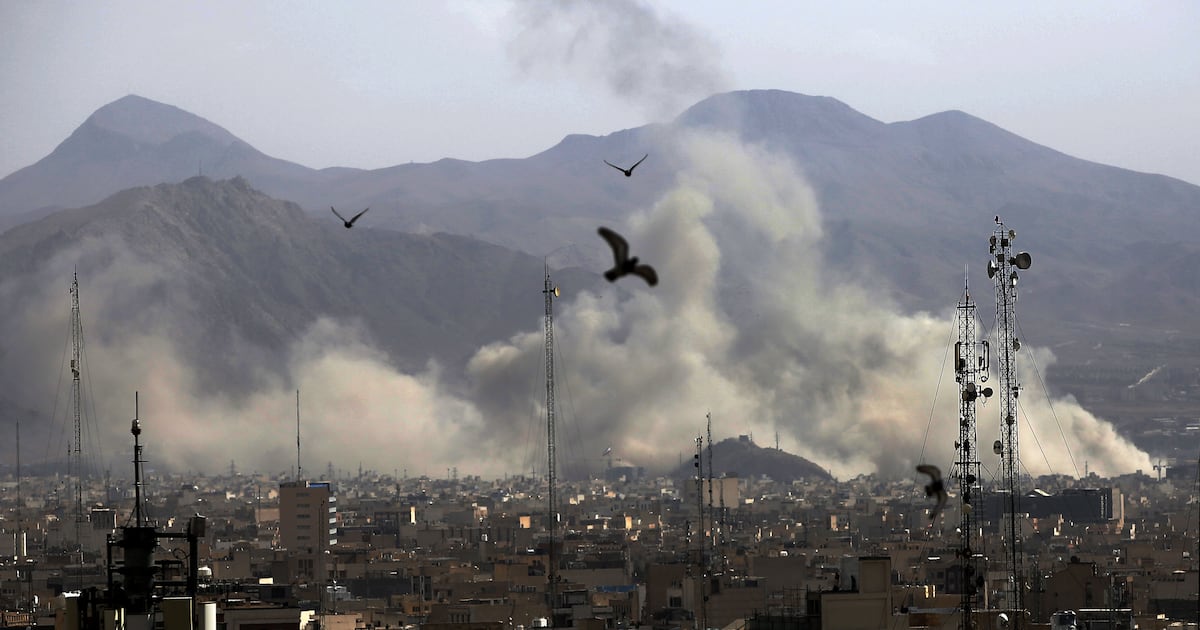
President Donald Trump ordered a major overnight strike on Iran without Congressional approval and publicly acknowledged it could result in U.S. citizen deaths. The action asserted unilateral presidential war-making authority while bypassing the congressional authorization described as legally required. The immediate consequence is an escalatory cycle that has already triggered Iranian strikes on U.S. installations and widened the risk of prolonged conflict without a legislative mandate.
Reality Check
When a president initiates major combat operations without Congress, we weaken the core separation-of-powers barrier designed to prevent personal or factional control over war. Normalizing unauthorized strikes turns democratic consent into an afterthought, making escalation—and the loss of American lives—an executive choice rather than a national decision. Once this becomes routine, congressional war powers degrade into commentary, and our system accepts armed conflict as a tool that can be deployed without public accountability or a binding vote.
Legal Summary
The article alleges the President initiated major combat operations against Iran without required congressional approval, creating substantial exposure for unlawful war-making under the War Powers framework and related constitutional constraints. While the piece does not provide facts sufficient to charge war-crimes-type offenses, the scale, objectives (including regime change), and lack of authorization elevate this beyond a political dispute into likely illegal conduct pending investigation of intent, reporting/consultation compliance, and operational lawfulness.
Legal Analysis
<h3>U.S. Const. art. I, §8 & War Powers Resolution (50 U.S.C. §§ 1541–1548) — Unauthorized hostilities</h3><ul><li>Article describes a “major attack on Iran” and “major combat operations” launched “without Congressional approval—which is required by law,” indicating initiation/expansion of hostilities absent statutory authorization.</li><li>Use of force appears planned and not framed as a narrow, imminent self-defense action in the article; the stated objective includes eliminating Iran’s nuclear program and urging “change in government,” suggesting sustained hostilities rather than a limited, defensive strike.</li></ul><h3>18 U.S.C. § 2441 — War crimes (threshold exposure based on admitted foreseeability of U.S. deaths)</h3><ul><li>The article quotes the President acknowledging “American heroes may be lost” and “we may have casualties,” but this alone does not establish conduct meeting §2441 elements (which require specified grave breaches/violations tied to armed conflict).</li><li>Key gaps: no facts alleging prohibited targeting, unlawful weapons, or violations of protected-person/status rules; exposure here is contingent on subsequent facts about methods/targets and compliance with LOAC.</li></ul><h3>18 U.S.C. § 371 — Conspiracy (conditional)</h3><ul><li>The article indicates coordinated executive military action (“launched a major attack”) but provides no facts of an agreement to commit a specific federal offense beyond alleged War Powers violations.</li><li>Gap: no described overt acts aimed at evading statutory reporting/consultation requirements or falsifying justifications.</li></ul><b>Conclusion:</b> The described conduct presents a high structural illegality risk centered on unilateral initiation of hostilities without Congress, with potentially criminal exposure depending on proof of knowing violation and any resulting unlawful targeting/LOAC violations; it is more than a mere procedural irregularity given the scale and stated regime-change aims.</p>
Media
Detail
<p>On Saturday morning, President Donald Trump announced in an eight-minute video that the United States had launched “major combat operations” against Iran, stating the objective was to eliminate Iran’s nuclear program and calling for Iranians to overthrow their government after the operation ends. The strike occurred overnight and was conducted without Congressional approval, which the text states is required by law; Rep. Thomas Massie referenced “acts of war unauthorized by Congress” while pushing legislation to require presidential approval before striking Iran.</p><p>The strike followed a large U.S. military build-up in the Middle East and marked the second use of U.S. military force against Iran in eight months, after Trump previously claimed Iran’s enrichment facilities were “completely and totally obliterated.” Trump also acknowledged potential American casualties and said U.S. lives “may be lost.” Iran responded with missiles and drones targeting Israel and then strikes on U.S. military installations in Bahrain, Kuwait, and Qatar, alongside a statement that it “will not hesitate” in its response.</p>