Norms Impact
Minnesota launches investigation that could bring charges against federal immigration officers
Minnesota is moving to prosecute federal immigration officers for street-level tactics, setting a high-stakes precedent over whether federal agents can be held to local criminal accountability.
Mar 3, 2026
⚖ Legal Exposure
Sources
Summary
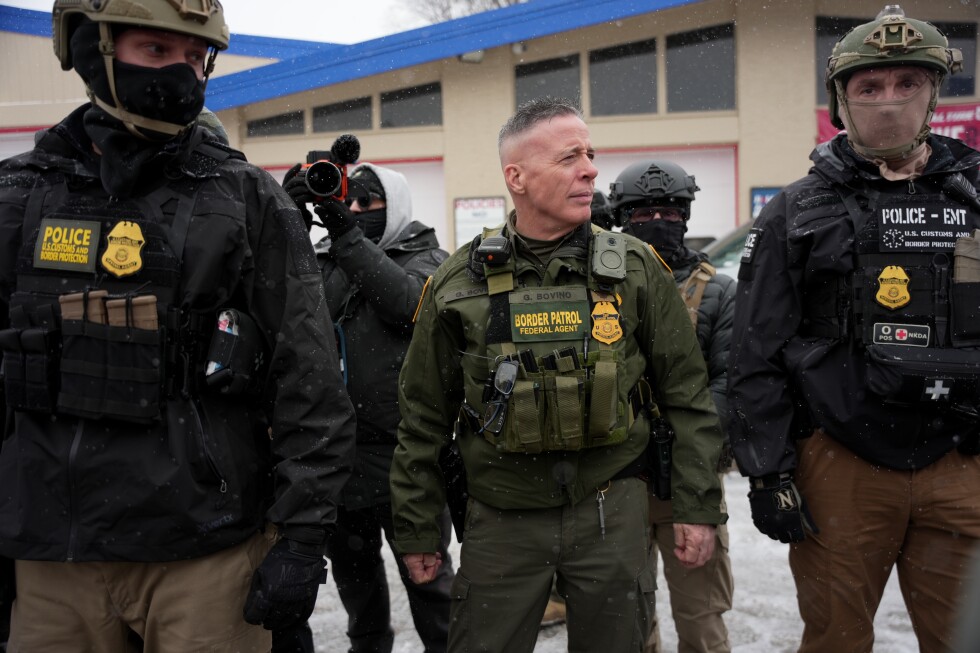
Hennepin County Attorney Mary Moriarty announced an investigation into 17 incidents that may lead to criminal charges against federal immigration officers, including Border Patrol official Greg Bovino, for alleged misconduct during an enforcement crackdown in Minnesota. The announcement asserts local prosecutorial authority over federal enforcement conduct, while the Department of Homeland Security rejects that premise and claims states cannot prosecute federal officers. The resulting federal-state conflict could determine whether local communities can use criminal law to constrain federal immigration tactics on their streets.
Reality Check
When federal officers are treated as effectively beyond the reach of local criminal accountability, we normalize a carve-out where enforcement power can be exercised without the same constraints imposed on everyone else. This confrontation hardens a precedent fight over whether communities can use ordinary legal processes to check federal force in public spaces.
If federal agencies can categorically foreclose state prosecutions regardless of conduct, the practical result is a widening accountability gap that weakens rule-of-law expectations and concentrates coercive power. Our democratic guardrails depend on enforceable consequences for misconduct, not blanket immunity claims that outpace public oversight.
Legal Summary
The described incidents (a Border Patrol official allegedly throwing a smoke canister at protesters and federal officers deploying chemical irritants near a high school during arrests) create likely criminal exposure for excessive-force/civil-rights violations under color of law pending investigation. Even if Minnesota’s ability to prosecute is contested by DHS, the underlying conduct presents substantial criminal investigative risk rather than a purely political or procedural dispute.
Legal Analysis
<h3>18 U.S.C. § 242 — Deprivation of rights under color of law</h3><ul><li>Alleged use of force/chemical agents by federal officers during enforcement activity (smoke canister allegedly thrown at protesters; chemical irritants deployed near students/staff) implicates willful deprivation of Fourth Amendment rights (unreasonable seizures/excessive force).</li><li>Context includes arrests conducted during an “immigration enforcement crackdown,” supporting that conduct occurred under color of federal authority.</li><li>Key gap: article does not state injury level, precise circumstances, or willfulness evidence; however, the described force deployment in sensitive contexts supports a potentially criminal civil-rights investigation.</li></ul><h3>18 U.S.C. § 111 — Assaulting, resisting, or impeding certain officers (reverse exposure risk)</h3><ul><li>While typically charged against civilians, the described events (protest setting; irritants; thrown canister) create a factual environment where use-of-force justification will be contested; unlawful force by officers can negate defenses and elevate exposure under other statutes.</li></ul><h3>Minnesota state assault / riot-control chemical agent misuse (state-law exposure; preemption/removal issues)</h3><ul><li>Throwing a smoke canister at protesters and deploying chemical irritants near a high school may satisfy state assault or reckless endangerment-type elements depending on intent, risk creation, and contact/fear.</li><li>Jurisdictional conflict is explicit: DHS asserts states cannot prosecute federal officers; nonetheless, the conduct as described triggers investigative exposure, with likely litigation over Supremacy Clause immunity and removal to federal court.</li></ul><b>Conclusion:</b> The article describes potentially criminal use-of-force misconduct under color of law (civil-rights exposure) rather than a mere procedural irregularity, though ultimate charge viability will depend on proof of willfulness and factual specifics, and state prosecution will face significant federal-immunity/preemption challenges.</p>
Detail
<p>Hennepin County Attorney Mary Moriarty said Monday that her office has opened an investigation that could lead to charges against federal officers for misconduct during an immigration enforcement operation described as “Operation Metro Surge.” Moriarty said prosecutors are already reviewing 17 cases.</p><p>Among the incidents cited was a Jan. 21 event in which Border Patrol official Greg Bovino allegedly threw a smoke canister at protesters. Another cited incident occurred Jan. 7, when federal officers made an arrest outside a high school and deployed chemical irritants while students and staff were in the area.</p><p>The Department of Homeland Security issued a statement Monday night asserting that immigration enforcement is a federal responsibility and that states cannot prosecute federal officers.</p>