Norms Impact
More Than Ever, Videos Expose the Truth. And Cloud It, Too.
Federal agents are retreating after citizen video evidence shattered false official claims—an urgent reminder that unchecked narrative control collapses when accountability records survive.
Feb 15, 2026
⚖ Legal Exposure
Sources
Summary
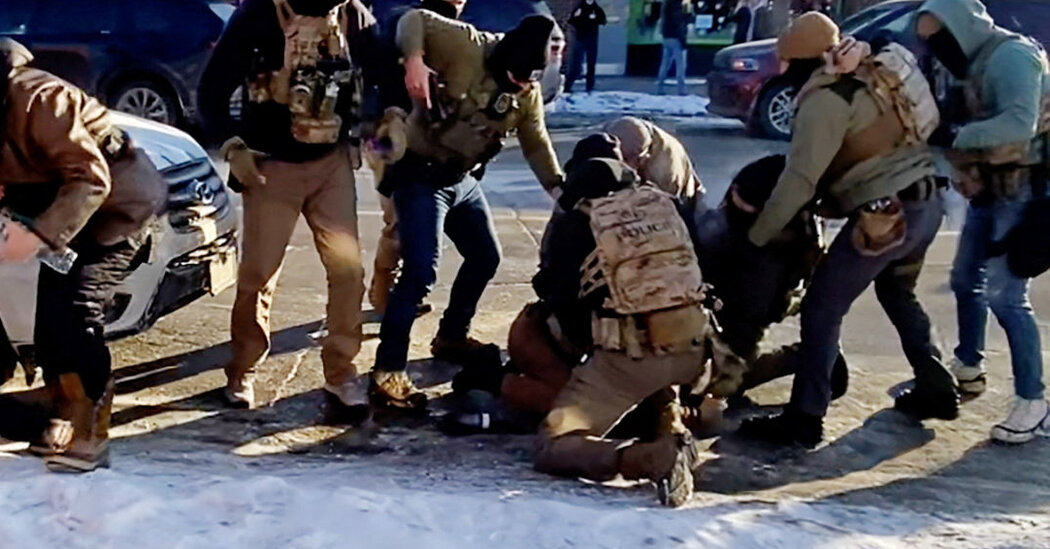
Federal immigration agents are set to withdraw from Minnesota after bystander videos documented two fatal shootings of Minneapolis residents by federal agents. The administration’s public narrative control faltered when video evidence rapidly contradicted false derogatory claims about the victims and triggered cross-partisan rebukes. The practical consequence is a shrinking operational footprint driven by public accountability, even as A.I.-generated video tools threaten to erode trust in visual proof going forward.
Reality Check
Government power becomes dangerous when officials can smear victims to justify lethal force and then treat withdrawal as a face-saving “success,” because it normalizes impunity instead of accountability. Nothing here establishes a clear federal crime on the record provided, but the conduct described squarely violates core governance norms against weaponizing official communications to mislead the public about state violence. When video evidence is the only check, and A.I. tools can cloud what we see, our due process rights and public oversight become easier to defeat in the next crisis.
Legal Summary
The described conduct centers on alleged false/derogatory public claims about shooting victims and a subsequent operational withdrawal amid political backlash from videos. The facts support an ethics/public-trust violation risk, but do not establish a transactional corruption pattern or the elements of a specific federal criminal offense based on the article alone.
Legal Analysis
<h3>5 C.F.R. § 2635.101(b) — Federal ethics principles (truthfulness, accountability)</h3><ul><li>The article alleges the administration made “false and derogatory claims about the victims” following two fatal shootings by federal agents; if made by covered federal officials in an official capacity, that raises ethics and public-integrity concerns even absent a clear criminal hook.</li><li>The decision to withdraw agents is described as a response to political damage from bystanders’ videos, suggesting reputational management rather than transparent accountability.</li></ul><h3>18 U.S.C. § 1001 — False statements (limits / gaps)</h3><ul><li>The context references false public claims, but provides no allegation of false statements made in a matter within federal jurisdiction (e.g., to investigators, in reports, or official proceedings) or specific speaker, audience, or materiality facts.</li><li>On the provided facts, the conduct reads as public messaging rather than a provable §1001 violation.</li></ul><h3>18 U.S.C. §§ 241–242 — Civil rights (limits / gaps)</h3><ul><li>Two fatal shootings by federal agents are referenced, but the article supplies no details about intent, willfulness, constitutional deprivation, or circumstances of force necessary to assess prosecutable civil-rights exposure.</li></ul><b>Conclusion:</b> The article presents a narrative of potentially misleading official rhetoric and political fallout from documented shootings, but it does not describe a money-access-official-action transaction or enough elements for a charge; exposure is best characterized as an ethics/public-integrity concern rather than prosecutable structural corruption on these facts.</p>
Media
Detail
<p>On Thursday morning, Tom Homan, described as Donald Trump’s border czar, announced that federal immigration agents would soon withdraw from Minnesota.</p><p>Homan characterized the operation as a success, but the decision followed political fallout from bystanders’ videos showing two fatal shootings of Minneapolis residents by federal agents the prior month.</p><p>The videos circulated quickly and contradicted the administration’s false and derogatory claims about the victims. The footage prompted rebukes that included some Republican politicians and conservative commentators; Senator Ted Cruz said on a late-January podcast that escalating rhetoric loses credibility.</p><p>The withdrawal announcement occurred amid broader concern about the reliability of video evidence, as hyper-realistic A.I.-generated clips—created from a short prompt using Seedance 2.0, a tool released by ByteDance—demonstrated how convincingly fabricated video can mimic real scenes.</p>