Norms Impact
Pam Bondi tried to steal a 4-year-old
When the nation’s top prosecutor treats congressional oversight and victim engagement as disposable, the Justice Department’s core norm—equal accountability under law—starts to fail in plain sight.
Feb 13, 2026
⚖ Legal Exposure
Sources
Summary
Attorney General Pam Bondi previously kept a Saint Bernard from a family who tracked the dog down after Hurricane Katrina, then pursued an out-of-court settlement for visitation rights she did not use.
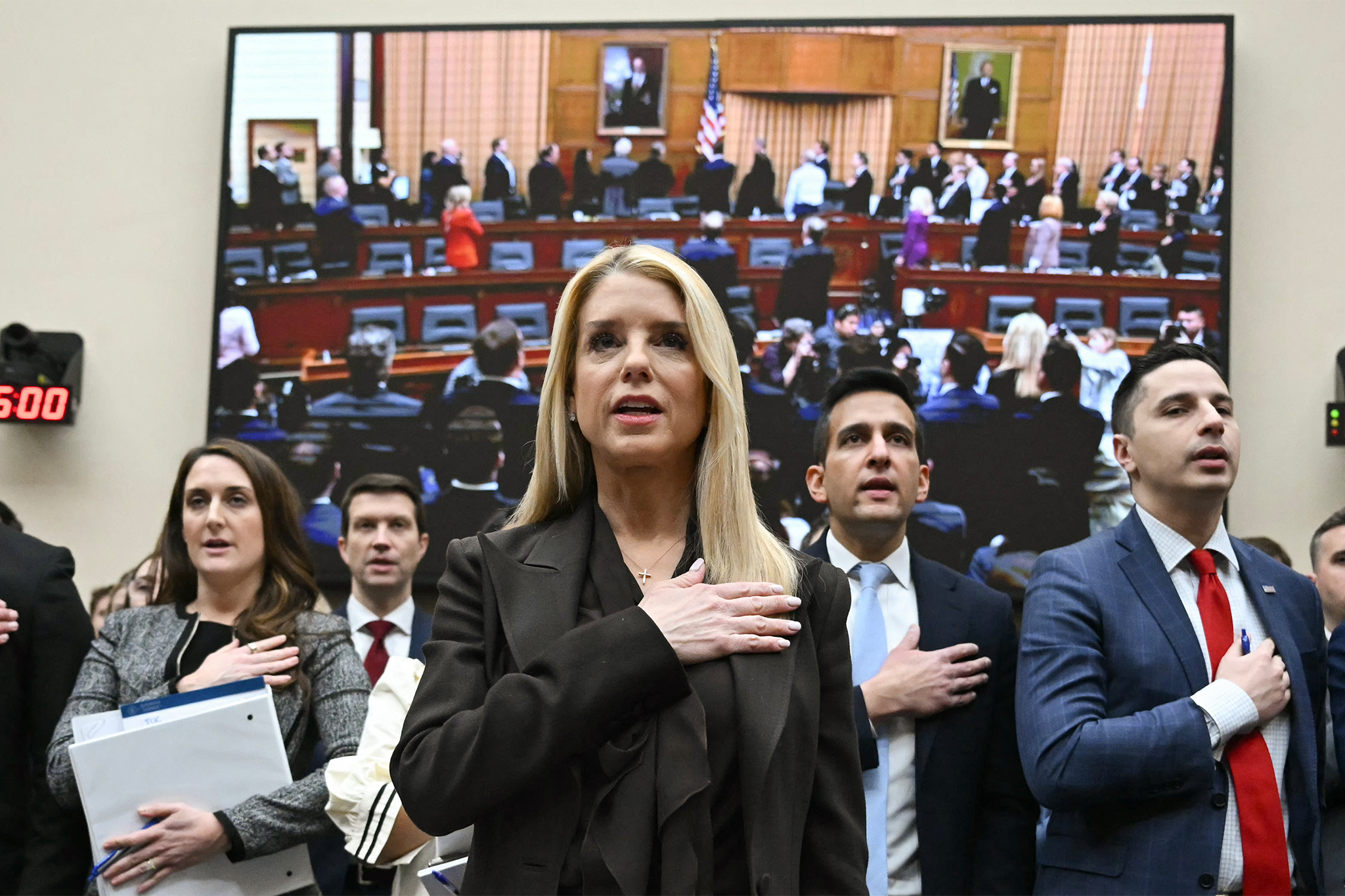
Bondi’s current conduct before Congress—defending a Jan. 6 rioter’s DOJ hiring on the basis of a presidential pardon, refusing to answer questions, and declining to acknowledge Epstein survivors seeking meetings—signals a Department of Justice posture that treats oversight and victim engagement as optional.
The practical consequence is a federal law-enforcement apparatus led by an official who, as presented here, normalizes stonewalling, selective accountability, and disregard for harmed people.
Reality Check
This kind of stonewalling from the Attorney General teaches every federal prosecutor that power, not principle, is the governing rule—and it weakens our ability to demand equal justice when we are the ones harmed. On this record, the conduct is not clearly chargeable as a federal crime, but it is a direct violation of the DOJ’s duty-bound governance norms: transparency to Congress, good-faith oversight cooperation, and non-weaponized use of pardons as a moral shield. The deeper danger is precedent: a Justice Department that dismisses victims and dodges elected oversight can be turned, with ease, into a tool for selective protection and selective punishment.
Legal Summary
Exposure is primarily ethical and reputational based on alleged evasive congressional testimony and the unrelated historical civil dispute over a dog. ARTICLE CONTEXT does not allege a financial exchange, personal enrichment through official action, or a structured quid pro quo linking money, access, and governmental decisions. On these facts, prosecutable public-corruption exposure is not substantiated beyond ethics-level concern.
Legal Analysis
<h3>5 C.F.R. § 2635.101(b) — Executive branch ethics principles (integrity / impartiality)</h3><ul><li>ARTICLE CONTEXT depicts the Attorney General responding to congressional oversight with refusals to answer and dismissive conduct toward questions about DOJ handling of Epstein-related matters and victims; that behavior raises ethics/credibility concerns but is not itself a transactional corruption scheme.</li><li>The article’s central anecdote (a private dog-ownership dispute litigated and settled out of court with “visitation rights”) suggests aggressive personal conduct, but it is framed as a civil/private matter, not misuse of federal office for personal gain.</li></ul><h3>18 U.S.C. § 201 — Bribery of public officials (quid pro quo)</h3><ul><li>No facts in ARTICLE CONTEXT allege any thing of value offered/received in exchange for an official act by Bondi; no money-access-official-action alignment is described.</li></ul><h3>18 U.S.C. § 208 — Conflicts of interest (financial)</h3><ul><li>ARTICLE CONTEXT does not describe Bondi participating in a DOJ matter affecting her financial interests; the dog incident appears historical and personal, not a current federal decision with a financial nexus.</li></ul><h3>18 U.S.C. § 1505 — Obstruction of congressional proceedings</h3><ul><li>While the article portrays evasive or nonresponsive testimony, it does not allege false statements, document concealment, or corrupt acts aimed at impeding a specific congressional inquiry sufficient to satisfy obstruction elements.</li></ul><b>Conclusion:</b> The described conduct is best characterized as ethics/fitness concerns and political/procedural controversy, not prosecutable structural public corruption; the article does not present a money-to-official-action quid pro quo pattern.</p>
Detail
<p>Pam Bondi testified before the House Judiciary Committee on Feb. 11, 2026, addressing Department of Justice oversight in the Rayburn building. During the hearing, she defended the hiring of a Jan. 6 rioter by stating that President Donald Trump had pardoned him. She refused to answer a question from Rep. Sydney Kamlager-Dove and instead looked down at her papers. She called a question from a Democratic member “so ridiculous” when asked whether Trump and Jeffrey Epstein ever partied with “underage girls.”</p><p>Rep. Pramila Jayapal asked Epstein survivors in the room to stand and raise their hands if they had still been unable to meet with the DOJ; the text states every survivor raised their hand, and Bondi did not acknowledge them.</p><p>The text also recounts an earlier episode in Florida: Bondi adopted a Saint Bernard, “Master Tank,” whose owners later located the dog; Bondi retained the dog, hired a lawyer who accused the family of abuse, and the dispute ended in an out-of-court settlement granting Bondi visitation rights that she did not use.</p>