Norms Impact
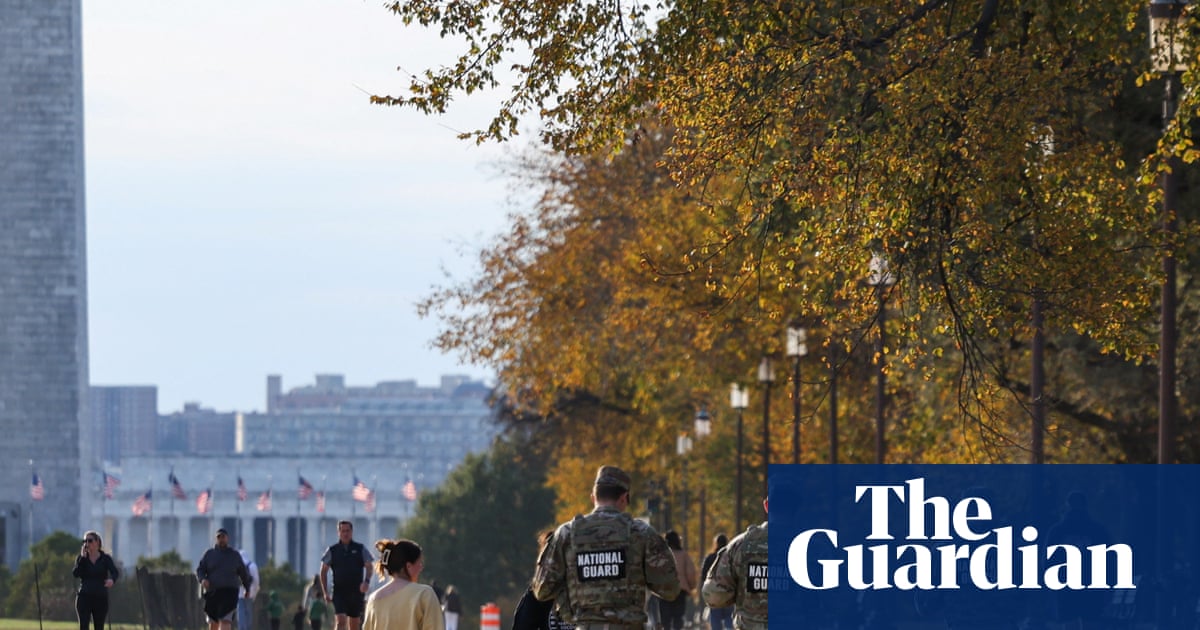
Revealed: Pentagon orders states’ national guards to form ‘quick reaction forces’ for ‘crowd control’
A standing, nationwide National Guard “quick reaction force” for domestic crowd control turns emergency powers into routine infrastructure—eroding civilian governance and the constitutional line between policing and the military.
Oct 29, 2025
⚖ Legal Exposure
Sources
Summary
A Pentagon directive ordered every state, Washington DC, and US territories to form National Guard “quick reaction forces” trained in riot and crowd control, totaling 23,500 troops nationwide. The order operationalizes a standing, rapidly deployable domestic force under executive direction, with Pentagon trainers and standardized equipment pushed into all jurisdictions. The practical consequence is a nationwide framework for deploying armed troops into civil unrest and potentially into politically contested spaces, including elections.
Reality Check
This kind of standing, rapidly deployable domestic force invites the normalization of troop deployments against our own communities, setting a precedent that can be turned on protests, political opposition, and the basic right to participate safely in elections. The most acute risk is not theoretical violence alone but institutional capture: a federalized command posture that can be aimed at states “without their permission” and used to disrupt election administration, including seizing ballots, as warned in the text. On the facts given, criminality is not established, but the conduct strains core anti-abuse-of-power norms by building a reusable machinery for “quelling civil disturbances” that can be weaponized in practice against lawful assembly and democratic participation.
Legal Summary
The article describes a centralized Pentagon directive to train and equip large National Guard “quick reaction forces” for crowd control with rapid nationwide deployment, raising substantial risk of misuse against protest activity or election operations. However, the allegations are largely prospective and based on expert concerns rather than documented deployments to suppress rights or elections. This supports Level 2 exposure: a serious investigatory and oversight concern, not yet a clearly chargeable corruption or civil-rights crime on the stated facts.
Legal Analysis
<h3>18 U.S.C. § 242 — Deprivation of rights under color of law</h3><ul><li>Facts describe a Pentagon-directed nationwide buildup of National Guard “quick reaction forces” trained and equipped for riot/crowd control, with contemplated rapid deployment and a parallel DC military police battalion, potentially positioning armed state actors to affect protests and election-related activity.</li><li>Criminal exposure would depend on proof of a willful plan or use of these forces to deprive persons of constitutional rights (e.g., speech/assembly or voting) rather than lawful public-safety operations; the article includes predictions and concerns, but does not allege an executed rights-deprivation event.</li></ul><h3>18 U.S.C. § 241 — Conspiracy against rights</h3><ul><li>Centralized directives, standardized training, equipment distribution, and monthly reporting could support an inference of coordinated capability for nationwide deployment; however, the article provides no allegation of an agreement to target protected activity or specific communities.</li><li>Key gap: no concrete allegation of an operational plan to interfere with elections or suppress lawful protest; concerns are prospective.</li></ul><h3>18 U.S.C. § 595 — Interference by administrative employees with elections</h3><ul><li>Article raises the risk that the force could be used to “suppress turnout” or disrupt elections, but it does not allege any actual electioneering directive, deployment tied to a campaign purpose, or specific incident.</li><li>Without facts showing use of official authority to affect an election, exposure remains investigative rather than prosecutable on these allegations alone.</li></ul><h3>18 U.S.C. §§ 1385, 332 (Posse Comitatus / use of armed forces to execute laws)</h3><ul><li>The memo concerns National Guard training and potential deployment for “civil disturbances,” including in DC; legality may turn on status (state active duty/Title 32/Title 10) and statutory authorization.</li><li>The article does not provide the legal authorities invoked beyond referencing an executive order; insufficient facts to conclude an unlawful militarization of civilian law enforcement, but it is a significant red flag warranting scrutiny.</li></ul><b>Conclusion:</b> The described conduct presents a serious investigative red flag for potential rights-deprivation and election-interference misuse of force, but the article alleges preparation and intent concerns rather than a completed, provable criminal act or transactional corruption pattern.</p>
Detail
<p>An internal Pentagon directive signed 8 October by Maj Gen Ronald Burkett, director of operations for the National Guard Bureau, ordered the National Guards of all 50 states, the District of Columbia, and US territories to form “quick reaction forces” trained in “riot control.” The memo set state-by-state training thresholds, with most states required to train 500 Guard members, totaling 23,500 troops nationwide.</p><p>Burkett cited as authority Donald Trump’s August executive order that deployed the Guard to fight crime in Washington DC and directed the secretary of defense to create “a standing National Guard quick reaction force” available for rapid nationwide deployment in “quelling civil disturbances.” The 8 October memo directs Pentagon trainers to deploy to every state and territories including Guam, requires monthly progress reports, and aims to make the forces “operational” by 1 January 2026. Each state is to receive 100 sets of crowd-control equipment, and training includes riot formations, baton use, supervising crowd-control operations, and de-escalation techniques.</p><p>A separate Pentagon document dated 24 September mandates creation of a specialized military police battalion within the DC National Guard, including a 50-person full-time element ready within 90 days and full strength by 2027.</p>