Norms Impact
Rights Group Says Massacre at Iranian School—Likely by US—Should Be Investigated as ‘War Crime’ | Common Dreams
When the Pentagon signals it will drop “rules of engagement” while a school is hit with guided munitions and accountability stalls, civilian-protection norms and democratic oversight of war collapse together.
Mar 7, 2026
⚖ Legal Exposure
Sources
Summary
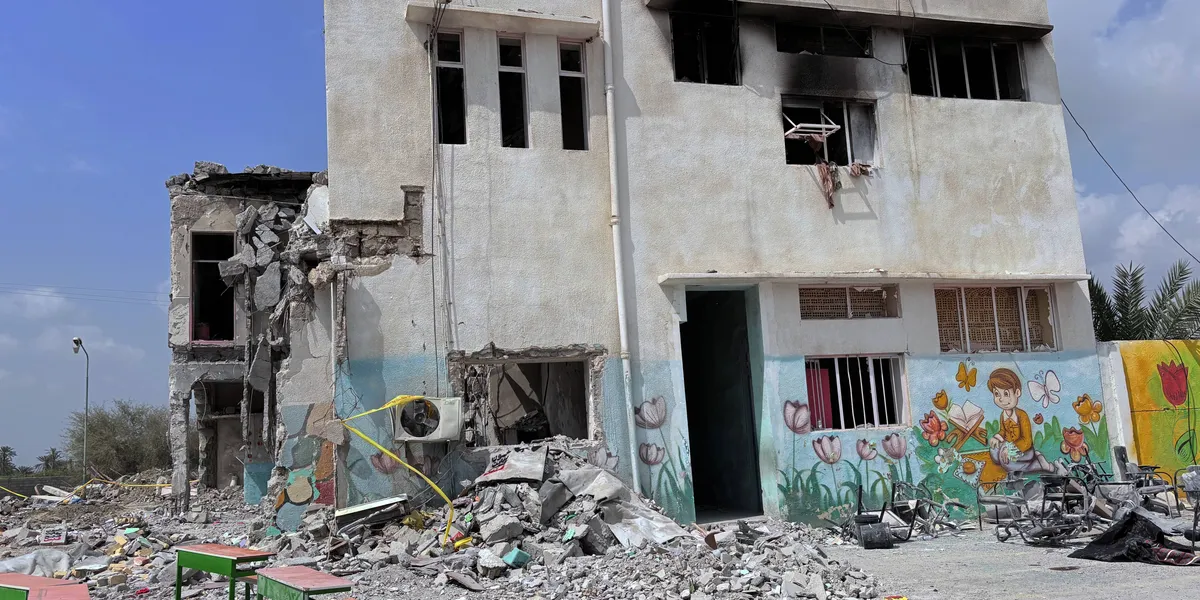
A primary school in Minab, Iran was bombed on February 28, killing an estimated 160 or more civilians, mostly children, amid the opening day of Operation Epic Fury, with multiple analyses indicating U.S. forces were the most likely culprits while the U.S. has denied responsibility.
Human Rights Watch and U.S. officials describe a posture shift in which highly accurate guided munitions were used as senior Pentagon leadership publicly rejected prior restraints on operations and the Pentagon disclosed only that it was “investigating.”
Absent a prompt, independent, and transparent investigation with accountability, the operational and political precedent hardens: civilian-protection guardrails weaken while executive war-making proceeds with diminished public and congressional constraint.
Reality Check
Normalizing military operations that publicly cast restraint as “stupid” while civilian massacre allegations linger without transparent accountability trains our institutions to treat civilian protection as optional and scrutiny as a nuisance.
This precedent concentrates war-making power inside the executive branch by lowering the practical cost of lethal error or misconduct: denial, delay, and closed investigations become the default response.
Over time, that corrodes separation-of-powers oversight and the rule-of-law expectation that unlawful strikes trigger independent inquiry and real consequences, not messaging and ambiguity.
Legal Summary
The article alleges a highly accurate strike on an active primary school killing 160+ civilians, mostly children, with no evidence of military use—facts consistent with an unlawful attack on civilians/civilian objects and significant war-crimes exposure if U.S. responsibility is confirmed. The reported use of guided munitions and contemporaneous leadership rhetoric about abandoning “rules of engagement” heighten the inference of knowing or reckless disregard for civilian protections. While intent and targeting-chain proof are not established in the article, the money/access pattern is irrelevant here; the key prosecutable risk is structural combatant accountability for an unlawful strike pending investigation.
Legal Analysis
<h3>18 U.S.C. § 2441 — War crimes (grave breaches / serious violations of Common Article 3)</h3><ul><li>Alleged facts describe a strike on an in-use primary school with an estimated 160+ civilian deaths, mostly children, with HRW stating it found no evidence the school was used for military purposes—supporting an inference of an unlawful attack on civilians/civilian objects.</li><li>HRW’s assessment that the strike used “highly accurate, guided munitions” supports a structural inference that the impact was not accidental weapon failure, increasing exposure for intentionally directing attacks at civilians or at least knowingly launching an indiscriminate/disproportionate attack.</li><li>Gaps: the article does not establish the precise target-selection process, commander knowledge, or specific intent; however, the described civilian nature of the object and high-accuracy munitions create substantial prosecutorial risk pending investigation.</li></ul><h3>18 U.S.C. § 1111 — Murder (potentially applicable to killings by U.S. personnel under federal jurisdiction)</h3><ul><li>If U.S. forces conducted the strike as alleged and knowingly attacked a civilian school, the resulting deaths could be analyzed as unlawful killings; public denials and ongoing “investigation” do not negate exposure where evidence indicates likely responsibility.</li><li>Operational statements attributed to Sec. Hegseth about no longer following “rules of engagement” may support an inference of reckless or knowing disregard for civilian-protection constraints relevant to criminal culpability.</li><li>Gaps: extraterritorial jurisdiction and the exact status of perpetrators/victims are not established in the article; further factual development is required.</li></ul><h3>18 U.S.C. § 371 — Conspiracy (if coordinated unlawful targeting within a coalition operation)</h3><ul><li>The article frames the strike as occurring during a U.S.-Israeli coalition campaign (“Operation Epic Fury”) and reports evidence pointing to U.S. forces as likely culprits; coordinated operational conduct could support conspiracy exposure if the underlying attack is unlawful.</li><li>Gaps: no explicit agreement or planning facts are provided; exposure depends on proof of shared unlawful objective or knowing participation.</li></ul><b>Conclusion:</b> The described conduct presents a high-risk, potentially prosecutable structural war-crimes fact pattern (civilian school hit with guided munitions and no apparent military purpose), not a mere procedural irregularity, though key elements (intent/knowledge, targeting process, jurisdictional predicates) require investigation.
Media
Detail
<p>Human Rights Watch said a February 28 strike hit the Shajareh Tayyebeh primary school in Minab, a town in southern Iran, killing an estimated 160 or more civilians, mostly children. HRW said it reviewed satellite imagery from before and after the strike, video taken after the bombing, and other materials, and concluded the available evidence indicates the attack involved highly accurate guided munitions rather than a random weapons failure.</p><p>HRW stated the school was in use and children were in attendance, and that it found no evidence the site was being used for military purposes, while noting researchers could not speak with witnesses, victims’ families, or other informed sources. The strike occurred on the first day of Operation Epic Fury, which President Donald Trump and Defense Secretary Pete Hegseth described publicly.</p><p>An Israeli military spokesperson told HRW it was not aware of any Israeli strikes in the area. Hegseth said the Pentagon was investigating. Joint Chiefs Chair Gen. Dan Caine said U.S. forces from the USS Abraham Lincoln strike group had been applying “pressure” along Iran’s southeastern coast, including an area encompassing Minab.</p>