Norms Impact
Study: Left-wing terrorism outpaces far-right attacks for first time in 30 years
Designating a decentralized political movement as a “domestic terror organization” without known links to a crime weaponizes counterterror power and corrodes equal enforcement of the law.
Sep 28, 2025
⚖ Legal Exposure
Sources
Summary
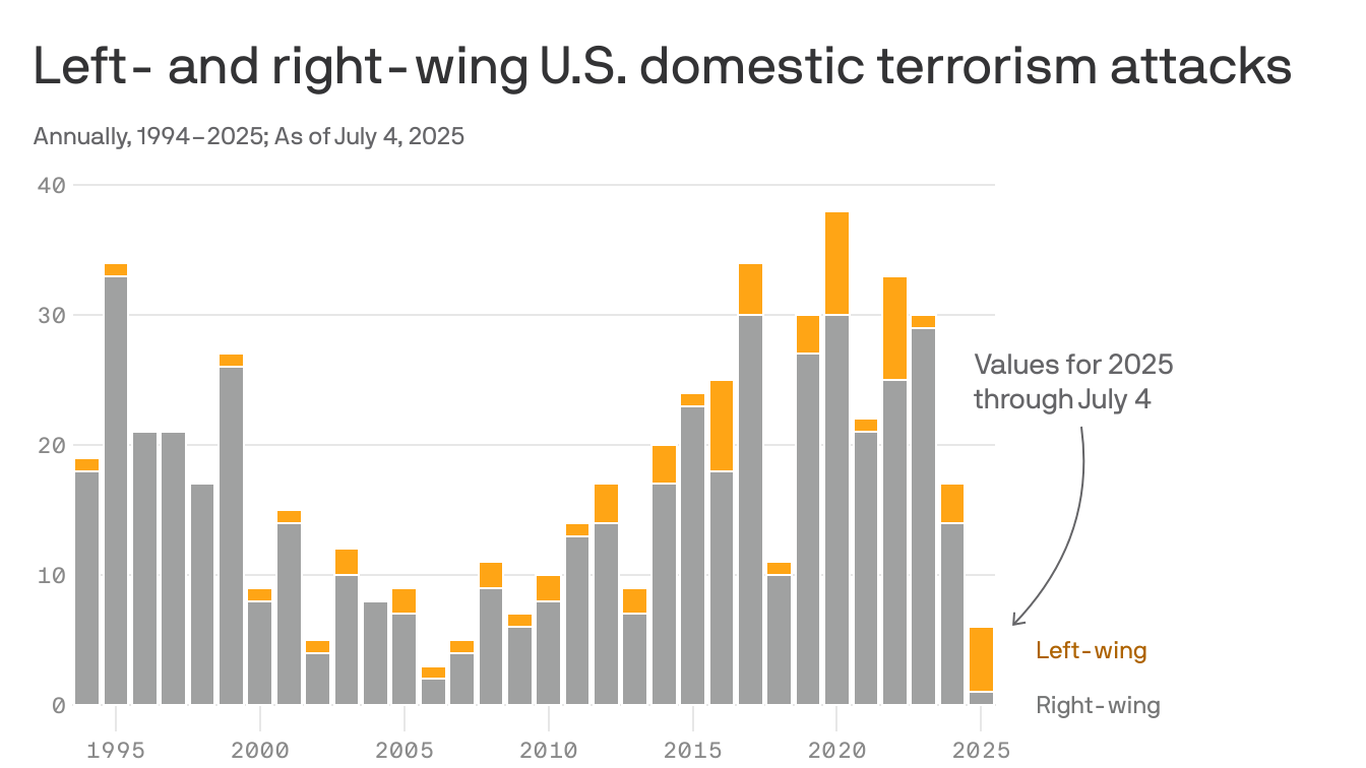
Attacks and plots categorized as far-left outpaced far-right violence in the first half of 2025 for the first time in more than three decades in a CSIS data set spanning 1994 to July 4, 2025. The administration responded by elevating a political label into an instrument of state power, designating antifa a “domestic terror organization” despite no known link to the alleged shooter in the Kirk assassination. The practical consequence is a counterterrorism posture that can be steered by partisan incentives while reshaping public attention away from how violence is defined, counted, and prosecuted.
Reality Check
Branding a political movement as a “domestic terror organization” without demonstrated operational ties to specific crimes normalizes using state power to stigmatize and surveil opponents, a precedent that will predictably shrink our rights and expand arbitrary enforcement. The sharper legal risk in the described conduct is not a clean “terrorism designation” crime, but abuse-of-power dynamics: if government resources are directed toward punitive targeting absent predicate facts, it collides with core due-process and viewpoint-neutral enforcement norms. On the pardons side, blanket clemency for the Jan. 6 Capitol storming may be constitutionally available, but it guts deterrence for federal offenses implicated by that conduct—obstruction of an official proceeding (18 U.S.C. § 1512), seditious conspiracy (18 U.S.C. § 2384), and assault on federal officers (18 U.S.C. § 111)—and signals that loyalty can function as an escape hatch from accountability.
Legal Summary
Level 2 exposure: the article alleges selective, partisan use of executive tools (terror designation narrative and pardons) and tolerance of allied violence, which raises serious investigative concerns about politicized enforcement. However, the context provides no transactional structure (money/access), no specific unlawful directives, and no concrete rights deprivation facts sufficient to support a higher, charge-ready criminal assessment.
Legal Analysis
<h3>18 U.S.C. § 242 — Deprivation of rights under color of law</h3><ul><li>The article describes a presidential posture of selectively designating “antifa” a domestic terror organization and “turn[ing] a blind eye” to right-wing violence, including pardons for Jan. 6 participants; if law enforcement powers were directed or withheld on partisan grounds, this raises investigative concern about unequal protection or punitive targeting.</li><li>Gaps: the article does not allege specific deprivations of individual constitutional rights, specific enforcement directives, or willful intent tied to identifiable victims.</li></ul><h3>18 U.S.C. § 371 — Conspiracy to defraud the United States (impairing lawful government functions)</h3><ul><li>Allegations of politicized treatment of domestic extremist violence and use of official narratives/designations could, if coordinated to obstruct or skew lawful counterterrorism functions, implicate an impairment theory.</li><li>Gaps: no facts describing an agreement, coordinated acts among officials, or concrete obstruction of an agency function beyond political characterization.</li></ul><h3>5 C.F.R. § 2635 — Standards of Ethical Conduct (impartiality / misuse of position) (ethics framework)</h3><ul><li>The article’s framing—designating a decentralized movement without known shooter links and pardoning political supporters—presents an appearance/impartiality concern and politicization of official power.</li><li>Gaps: not a criminal statute; no specific decision record or improper personal benefit alleged.</li></ul><b>Conclusion:</b> The conduct described reflects potential politicization and irregular use of executive power rather than a money-access-official-action quid-pro-quo; exposure is best characterized as a serious investigative red flag, not a clearly chargeable corruption scheme on the provided facts.
Media
Detail
<p>New research from the Center for Strategic & International Studies found that, halfway through 2025, attacks by far-left extremists outpaced far-right violence for the first time in more than three decades. CSIS researchers compiled and analyzed a data set of 750 domestic attacks and plots from Jan. 1, 1994, to July 4, 2025, and categorized incidents as “right,” “left,” “jihadist,” “ethnonationalist,” or “other.”</p><p>The research found that far-right violence, described as historically more frequent and more lethal, plunged dramatically over the first six months of 2025. In response to the Kirk assassination, President Trump designated antifa a “domestic terror organization,” despite no known links between the alleged shooter and the decentralized movement. The report also notes that Trump and his allies turned a blind eye to right-wing violence, including the Jan. 6, 2021 storming of the U.S. Capitol by Trump supporters, all of whom he pardoned.</p>