Norms Impact
Supreme Court strikes down most of Trump’s tariffs in a major blow to the president
A president invoked an emergency statute to levy worldwide tariffs without congressional authorization—and the Court’s rebuke underscores how easily economic power can be centralized in one office.
Feb 20, 2026
⚖ Legal Exposure
Sources
Summary
The Supreme Court ruled 6-3 that President Donald Trump exceeded his authority by using the International Emergency Economic Powers Act to impose sweeping global tariffs. The decision reasserts that Congress—not the president acting unilaterally under an emergency statute—sets the legal boundaries for nationwide tariff policy. The ruling invalidates many IEEPA-based tariffs, opens the door to large-scale refund demands, and pushes the White House toward alternative tariff authorities.
Reality Check
Threatening the Supreme Court as “disloyal,” insinuating “foreign interests,” and immediately plotting new global duties after a loss is a pressure campaign that normalizes contempt for constitutional limits that protect our property and due process. The core conduct here is not a clean criminal fit on these facts, but it squarely implicates abuse-of-office governance norms and the separation of powers the Court enforced—Congress controls tariffs, and IEEPA cannot be repurposed into unlimited taxing authority. If retaliation or coercion were aimed at judges for their rulings, that could raise serious exposure under federal obstruction and witness/juror intimidation frameworks (e.g., 18 U.S.C. §§ 1503, 1512), but the record provided shows inflammatory rhetoric and policy workarounds rather than a provable statutory offense. The democratic damage is the precedent: treating emergency powers as a shortcut to nationwide economic taxation, then attacking the judiciary that stops it.
Legal Summary
The article describes the Supreme Court finding the president exceeded statutory authority by using IEEPA to impose sweeping tariffs, creating significant exposure as an unlawful/irregular use of executive power. However, there are no allegations of payments, personal enrichment, or a quid-pro-quo structure; the risk is primarily a serious investigative red flag around executive overreach rather than classic prosecutable public corruption.
Legal Analysis
<h3>50 U.S.C. §§ 1701–1702 (IEEPA) — Exceeding delegated emergency economic authority</h3><ul><li>The Supreme Court held (6–3) that IEEPA does not authorize the president to impose tariffs, finding the asserted power would be “extraordinary” in “amount, duration and scope,” and that the administration identified no prior statutory authorization applying IEEPA to tariffs.</li><li>The article describes tariffs imposed unilaterally under IEEPA that raised about $130 billion, indicating large-scale executive action later deemed beyond statutory authority—an investigative red flag for unlawful executive action, though not inherently a bribery/quid-pro-quo scheme.</li></ul><h3>U.S. Const. art. I (Tariff power in Congress) / Major Questions Doctrine (structural separation-of-powers constraint)</h3><ul><li>The ruling emphasizes that tariff-setting is assigned to Congress; using IEEPA to impose sweeping tariffs represents a separation-of-powers overreach rather than a transactional corruption pattern.</li><li>No facts in the article indicate payments, personal enrichment, or a link between financial benefits to Trump and specific official acts connected to particular private parties.</li></ul><h3>18 U.S.C. § 242 (Deprivation of rights under color of law) — Not supported on stated facts</h3><ul><li>Although importers paid duties later deemed unauthorized, the article does not allege willful deprivation of a specific constitutional right with the requisite criminal intent; the conduct is framed as statutory overreach litigated through courts.</li></ul><b>Conclusion:</b> The conduct described reflects a serious legal/constitutional overreach and procedural irregularity in exercising emergency economic powers, not a money-access-official-action alignment indicative of prosecutable structural public corruption on the stated facts.</p>
Detail
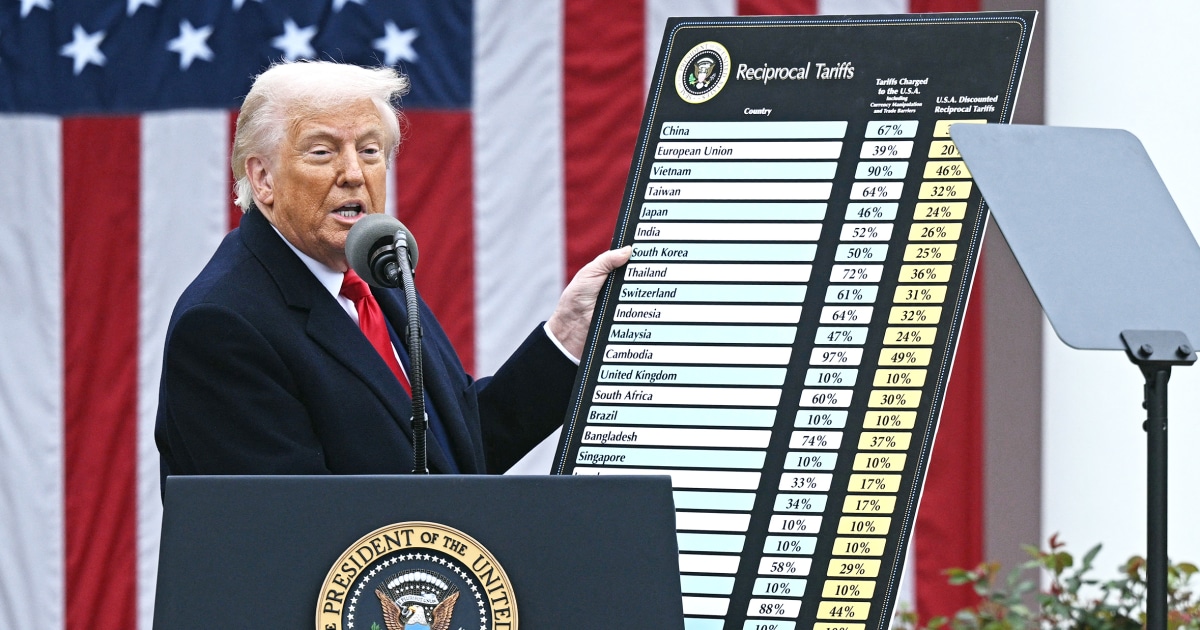
<p>The Supreme Court ruled Friday, 6-3, that the International Emergency Economic Powers Act of 1977 (IEEPA) does not authorize a president to impose tariffs. Chief Justice John Roberts wrote the opinion, joined by three liberal justices and Justices Neil Gorsuch and Amy Coney Barrett; Justices Clarence Thomas, Brett Kavanaugh, and Samuel Alito dissented.</p><p>The decision invalidates many, but not all, tariffs imposed by President Donald Trump under IEEPA, including “reciprocal” country-by-country tariffs and a 25% tariff on some goods from Canada, China, and Mexico tied to fentanyl-related claims. Tariffs imposed under other statutes, including on steel and aluminum, remain in place.</p><p>Lower courts had ruled against the administration in two consolidated cases brought by businesses and others who paid the duties. Hundreds of lawsuits have been filed. The Court did not resolve how collected funds should be returned; Kavanaugh warned the Treasury impact could be significant. A small-business group called for a “full, fast and automatic” refund process.</p>