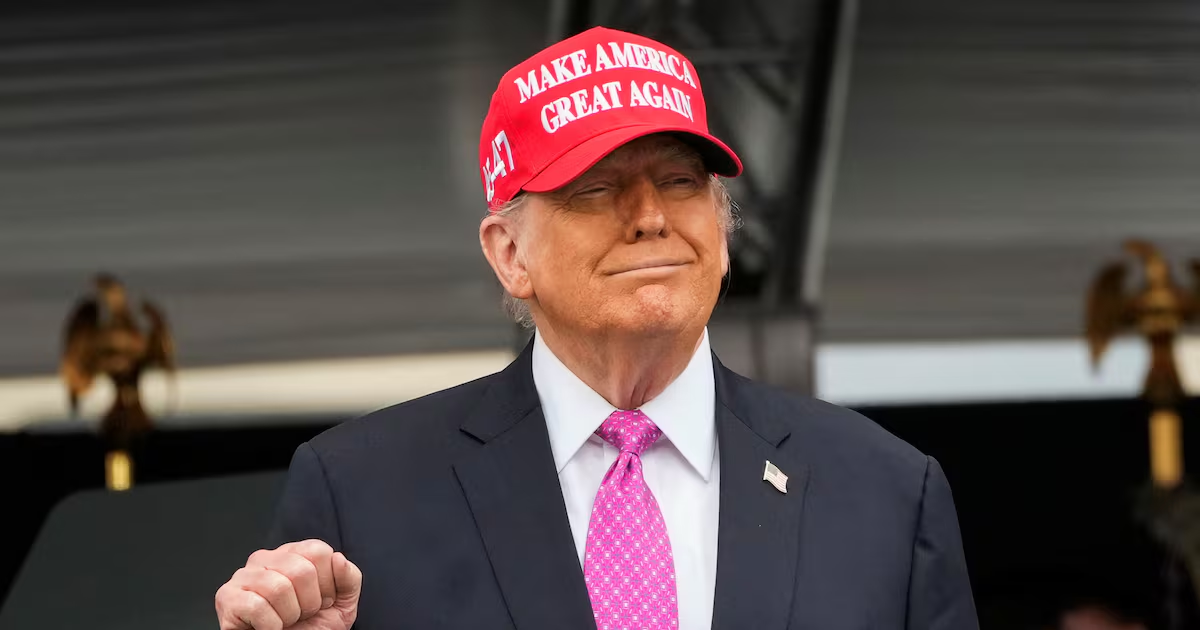
When a contractor CEO treats constitutional compliance as a monetization strategy, we normalize a pay-to-justify model where legal constraints become billable features—and that corrodes the rule-of-law protections that ultimately guard our own rights. Nothing here, standing alone, clearly establishes a prosecutable quid pro quo, but the conduct spotlights the anti-corruption fault line that federal law is designed to police, including honest-services and bribery frameworks under 18 U.S.C. §§ 201 and 1346 and gratuities risks where official action is traded for private gain. Even if no crime is provable on this record, the governance breach is stark: it signals an incentive structure where expanding surveillance capacity and operational “precision” becomes a business objective intertwined with the state’s use of force and immigration enforcement.