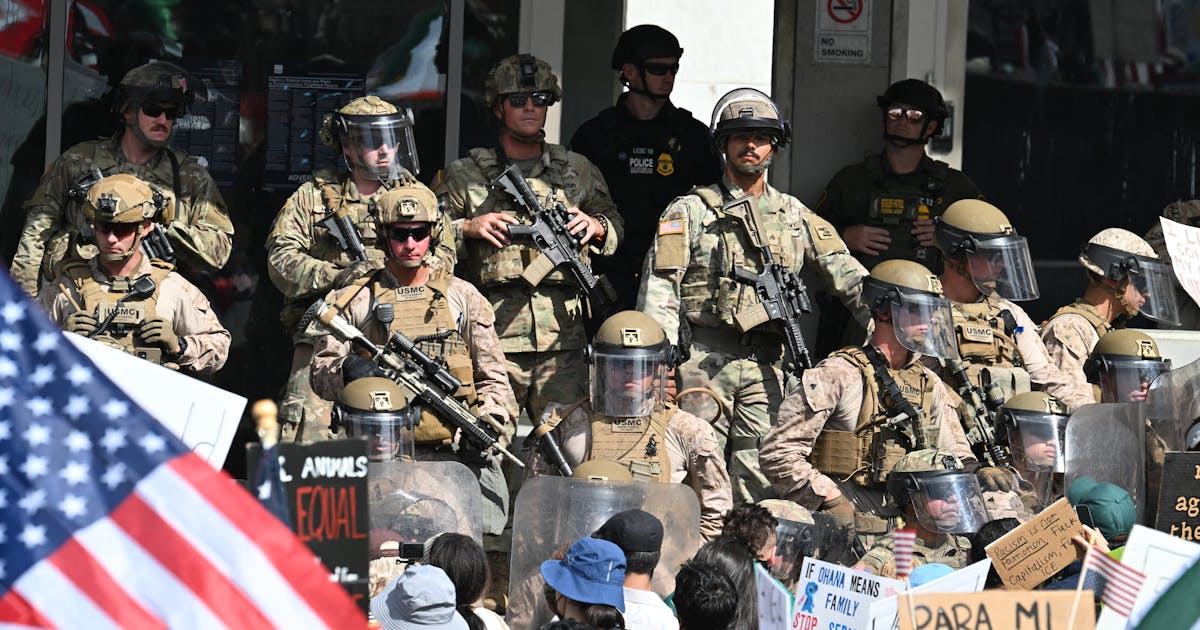
A standing, rapid-deploy military force for domestic “unrest” sets a precedent that makes protest and dissent easier to meet with troops, weakening our civil liberties and the practical meaning of civilian policing. Even if Title 32 and Title 10 provide pathways for Guard activation, building a permanent, federally directed apparatus to “quash” civil unrest risks weaponizing executive power against Americans outside the traditional, state-driven emergency request process. On the facts provided, the conduct is not clearly criminal on its face under federal law, but it presses directly against core governance norms meant to prevent military participation in law enforcement from becoming routine and politically directed. Once normalized, this template can be invoked again and again—on shorter timelines and broader rationales—while ordinary people bear the cost in chilled speech and coerced compliance.