The Trump gold coin is not normal : Consider This from NPR
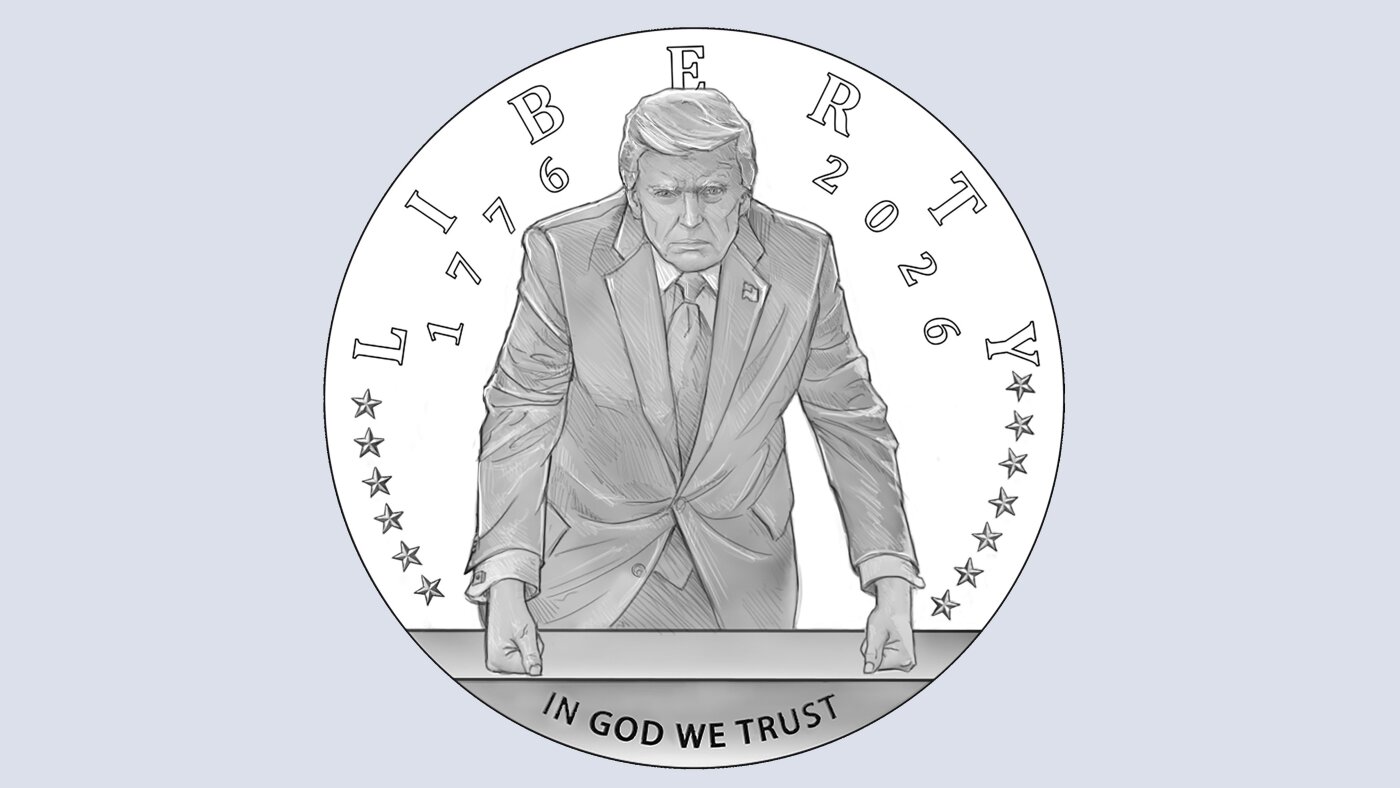
A federal design panel OK’d a Trump portrait for a commemorative gold coin, but the key question is whether Treasury can legally bypass long-standing limits meant to keep living politicians off U.S. money.
Mar 23, 2026
Sources
Summary
NPR reports that the U.S. Commission of Fine Arts voted to approve a commemorative gold coin design featuring an eagle and a portrait of President Trump. The episode frames it as legally suspect because federal law bars living people on U.S. coins, while Treasury argues it has authority to proceed anyway. The bigger issue is whether symbolic state power is being used to normalize personal glorification—and whether legal guardrails and oversight are being sidestepped.
Reality Check
The stabilizing point is that “federal law bans living people on U.S. coins” is often *overstated* in casual coverage: the relevant U.S. Code language NPR is gesturing at is program-specific (it appears in certain subsections of 31 U.S.C. § 5112), not a single clean, universal prohibition that automatically covers every possible coin Treasury might try to issue. (law.cornell.edu)
That said, even if Treasury claims a legal pathway, commemorative coin programs are typically created by Congress, and the CFA vote is advisory rather than dispositive—so the real question is what exact statutory authority Treasury is relying on and whether it is being stretched beyond its intended scope. (congress.gov)
Detail
NPR’s Consider This says the U.S. Commission of Fine Arts approved the design of a new commemorative gold coin featuring a Trump portrait and an eagle. (podcasts.apple.com)
The Commission of Fine Arts is advisory; Treasury/Mint decisions typically weigh input from the CFA and the Citizens Coinage Advisory Committee before final approval. (nbcnews.com)
NPR claims federal law prohibits putting living people on U.S. coins, and says the Trump administration argues Treasury has authority to do it anyway. (podcasts.apple.com)
The commonly cited federal restriction is narrower than “all U.S. coins”: 31 U.S.C. § 5112 includes “no portrait of a living person” language for specific coin programs/subsections, not a blanket ban across all coinage. (law.cornell.edu)
Separately, Congress’s commemorative coin programs are generally authorized by an act of Congress, not unilaterally created as a new “commemorative coin” by Treasury. (congress.gov)
Reporting elsewhere indicates the coin is tied to America’s 250th anniversary and still needed Treasury’s final sign-off at the time the design was approved. (nbcnews.com)