Norms Impact
Trump, 79, Says He’s Not Sure What His MRI Was For
A president underwent a nonroutine MRI at Walter Reed yet claimed he doesn’t know what was scanned—substituting unverifiable “perfect” assurances for the transparency basic to public trust.
Dec 1, 2025
Sources
Summary
Donald Trump said he received an MRI at Walter Reed Medical Center in October but told reporters he did not know what part of his body was scanned. His response reframed a basic medical disclosure question into a personal attack while offering to release results without providing basic context for the test. The gap between a nonroutine imaging procedure and the president’s refusal or inability to describe its purpose leaves the public with unverifiable assurances in place of transparent health information.
Reality Check
This conduct erodes our right to informed consent as citizens by normalizing a presidency that answers legitimate health oversight with insults, vague promises, and non-falsifiable claims. Based on the facts provided, it is not likely criminal because no false written statement to a federal investigator or coerced disclosure is described; statutes like 18 U.S.C. § 1001 are not implicated by a public press exchange alone. But the governance violation is stark: the office is using the prestige of the presidency to demand trust without providing the minimal factual predicate—what was tested and why—needed for accountability over fitness to lead.
Media
Detail
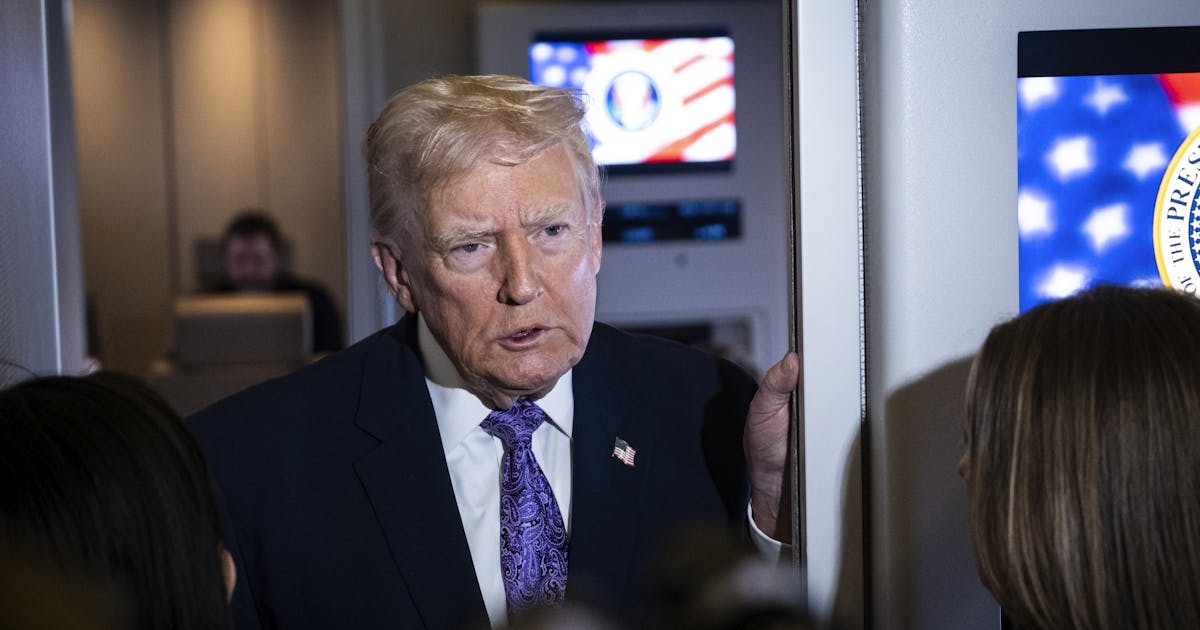
<p>During remarks to reporters on Air Force One on Sunday, President Donald Trump was asked about an MRI he received during an October visit to Walter Reed Medical Center. The question followed comments by Minnesota Governor Tim Walz calling for the results to be released.</p><p>Trump responded by calling Walz incompetent, saying the results were “absolutely perfect,” and comparing them to the phone call that led to his first impeachment. When a reporter asked, “What part of your body was the MRI looking at?” Trump answered, “I have no idea. It was just an MRI,” adding it “wasn’t the brain” because he said he took a cognitive test and “aced it.”</p><p>The October visit was described as unexpected and occurred about six months after his annual physical exam. The context notes that MRIs are not routine and are typically used to assess tumors, joint injuries, or heart conditions. Trump had also previously been unable to explain why he was getting the MRI or what was being examined.</p>