Norms Impact
Trump admin is pulling supercomputers out of key weather research center | CNN
The White House’s bid to “break up” a premier federal weather lab now threatens to sever the supercomputing backbone that underwrites public forecasting and national research capacity.
Feb 13, 2026
⚖ Legal Exposure
Sources
Summary
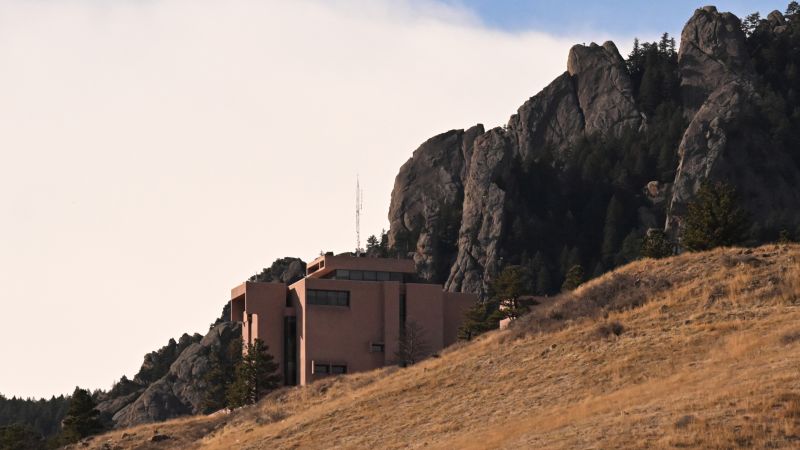
The National Science Foundation notified staff that the National Center for Atmospheric Research in Boulder is slated to lose its supercomputing facility, which is set to be turned over to an unspecified third party. The decision advances the White House’s stated intention to “break up” NSF NCAR and reorganize the nation’s weather research infrastructure while leaving climate research continuity unaddressed. The immediate consequence is potential disruption to high-performance computing access used by roughly 1,500 researchers and relied upon by NOAA for current and next-generation weather models.
Reality Check
When an administration moves to fragment a national forecasting and research backbone, we all pay in weaker public safety, degraded transparency, and a government that can quietly reroute core capabilities without clear accountability. The described conduct is not clearly criminal on this record—there is no documented quid pro quo, fraud, or theft—but it represents a profound abuse-of-governance pattern: using federal administrative control to dismantle institutional capacity while leaving basic facts unresolved, including who will control the system and on what timeline. Even without a provable federal bribery scheme (18 U.S.C. § 201) or honest-services fraud theory (18 U.S.C. §§ 1343, 1346), this kind of power shift normalizes politicized reorganization of critical infrastructure and invites future coercion by making scientific and operational capacity contingent on political favor.
Legal Summary
Exposure is elevated because the article alleges federal action to dismantle/spin off a critical research supercomputing facility may be used as leverage to pressure a state governor to grant clemency in a politically charged case. However, the context provided does not describe payments, personal enrichment, or a clear quid-pro-quo benefiting a federal decisionmaker, making this primarily a politicization/retaliation investigative red flag rather than a mature bribery case on these facts.
Legal Analysis
<h3>5 C.F.R. Part 2635 (Standards of Ethical Conduct) / 18 U.S.C. § 208 (Conflicts of interest) — potential improper motive vs. personal financial conflict</h3><ul><li>The article alleges the administration is removing/“spinning off” NCAR’s supercomputing facility as part of an effort to “disassemble” NCAR due to perceived “climate change alarmism,” and that Colorado officials view it as potential “retribution” to pressure Gov. Jared Polis into granting clemency to Tina Peters.</li><li>No facts indicate any covered official’s personal financial interest, payments, gifts, or outside compensation tied to the supercomputer transfer; thus classic conflict/bribery predicates are not established on this record.</li></ul><h3>18 U.S.C. § 872 / § 1951 (Extortion under color of official right / Hobbs Act) — coercive leveraging of federal action</h3><ul><li>Structural concern: alleged use of federal executive leverage (breaking up NCAR; transferring a critical supercomputing facility to an “unspecified third party”) to pressure a state governor to take a discretionary act (grant clemency to Tina Peters).</li><li>Key gap: the demanded “thing of value” is not money/property to the federal actor as described; the alleged objective is a political/legal outcome (clemency), which may support a coercion narrative but is less cleanly chargeable as Hobbs Act/§872 without a cognizable property/benefit element to the extorter or a defined exchange.</li></ul><h3>5 U.S.C. § 706 (APA arbitrary/capricious review) / 5 U.S.C. § 2302 (Prohibited personnel practices) — administrative/political retaliation risk</h3><ul><li>The article describes a major operational reorganization (spinning off the computing center; seeking proposals to reorganize weather research infrastructure; omitting climate research from continuation signals) allegedly driven by political/ideological aims and/or retaliation theories.</li><li>These facts more directly raise administrative-law and governance concerns (procedural regularity, rationale, and mission-based decisionmaking) than classic public corruption offenses, because no transactional enrichment is alleged.</li></ul><b>Conclusion:</b> The described conduct presents a serious investigative red flag for politicized or retaliatory use of federal administrative power (pressure/leverage), but the article does not allege the money-access-benefit alignment typical of prosecutable structural corruption or bribery; chargeable extortion theories would require substantially more facts on the “thing of value” and exchange.
Media
Detail
<p>A letter released Thursday by the National Science Foundation stated that a leading American research lab, NSF’s National Center for Atmospheric Research (NCAR) in Boulder, Colorado, is slated to lose its critical supercomputing facility.</p><p>The computing center is planned to be transferred to an unspecified third party. NCAR director Everette Joseph told staff that the new managing entity and the timeline are not yet known, and that NCAR is seeking details from NSF on how the transition will affect NCAR science and the broader research community.</p><p>The supercomputer runs weather and climate research models and is used by about 1,500 researchers from over 500 universities. The facility supports work that contributes to forecasts of extreme weather and climate events and other operational uses.</p><p>NOAA relies on the facility to run some current models and recently chose to upgrade next-generation models using “Modeling for Prediction Across Scales,” a system developed by NCAR researchers. NSF has also issued a request for proposals to reorganize NCAR and national weather research infrastructure, indicating support for weather-related programs while not mentioning continued climate research.</p>