Norms Impact
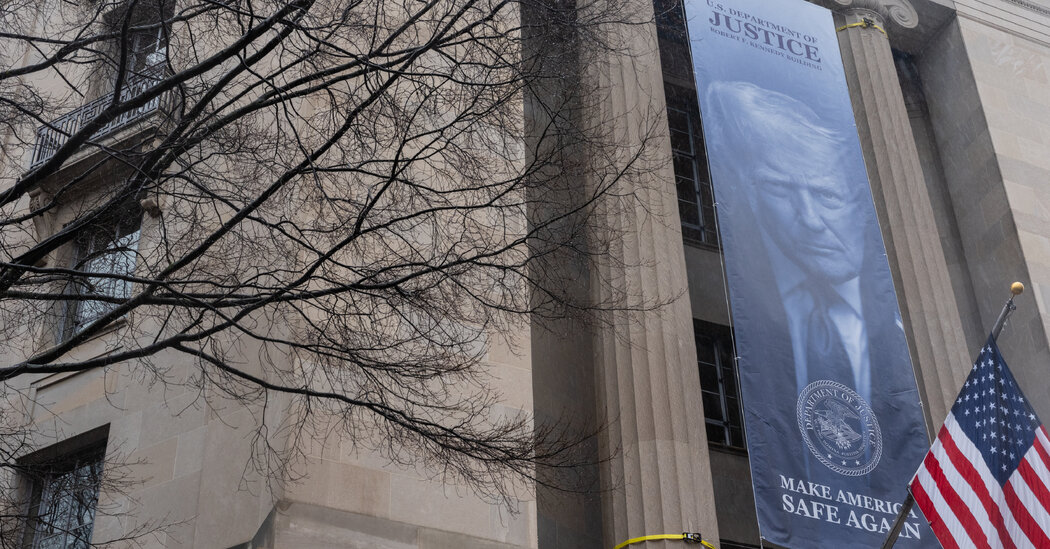
Trump Administration, in Apparent Reversal, Tries to Continue Fight Against Law Firms
A federal administration’s abrupt courtroom reversal to keep defending punitive orders against law firms tests the norm that government litigation positions are stable, reasoned, and not used as pressure.
Mar 3, 2026
⚖ Legal Exposure
Sources
Summary
The Trump administration signaled it would renew its defense of executive orders targeting law firms after indicating a day earlier it would drop the fight in court. The Justice Department’s posture toward litigation is shifting abruptly, with no clear final legal strategy disclosed. The immediate consequence is heightened uncertainty over whether the government will continue pressing the orders and whether courts will permit a reversal.
Reality Check
When the executive branch whipsaws its legal posture in active litigation, it weakens the expectation that federal power is exercised through consistent, accountable process rather than improvisation. Normalizing rapid reversals without explanation conditions the public to accept government by maneuver, not justification.
Over time, that erodes rule-of-law guardrails by making enforcement and legal defenses appear contingent on immediate political calculation, not durable institutional standards. Courts become the last backstop against executive volatility, and our separation of powers grows more strained as procedural uncertainty becomes a governing tool.
Legal Summary
The described abrupt reversal in DOJ litigation strategy to continue defending executive orders aimed at law firms presents a serious investigative red flag suggesting possible politicization or retaliatory use of governmental power. The context provided contains no allegations of financial transfers, personal enrichment, or a concrete quid pro quo, so exposure is best characterized as procedural/abuse-of-power risk pending more facts about the orders’ targets, purposes, and decision-making.
Legal Analysis
<h3>18 U.S.C. § 242 — Deprivation of rights under color of law</h3><ul><li>The article describes executive orders “leveled against law firms” and a DOJ litigation posture whipsaw (drop the fight, then “renew its defense”), which raises a civil-rights/retaliation concern if government power is being used to punish protected advocacy; however, the context provided does not specify targeted conduct, rights impacted, or intent.</li><li>Key gaps: no facts in the provided context establishing willful deprivation of a specific constitutional right or the content of the orders.</li></ul><h3>18 U.S.C. § 241 — Conspiracy against rights</h3><ul><li>A rapid internal reversal on whether to defend punitive-appearing executive orders could suggest coordinated pressure or politicized decision-making, but the article provides no agreement, actors, or acts indicating a conspiracy.</li><li>Key gaps: no described coordination beyond “people familiar with the matter,” and no details of objectives or overt acts.</li></ul><h3>5 C.F.R. Part 2635 — Standards of Ethical Conduct (misuse of position / impartiality)</h3><ul><li>The oscillating DOJ position over defending orders against private law firms indicates a potential appearance of politicization or misuse of official authority if decisions are driven by improper animus rather than lawful executive-branch interests.</li><li>Key gaps: no stated personal benefit, financial exchange, or identified decision-maker motive in the provided context.</li></ul><b>Conclusion:</b> Based solely on the provided context, this reads as a serious investigative red flag for politicized or retaliatory use of executive authority and DOJ process rather than a developed money-access-official-action corruption scheme.
Detail
<p>On Tuesday, the Trump administration indicated it planned to renew its defense of executive orders directed at law firms, according to people familiar with the matter. The move followed a prior indication, one day earlier, that the administration would drop that legal fight in court.</p><p>As of Tuesday morning, the situation was described as fluid. It was not clear what legal strategy the administration would ultimately use, or whether a court would allow the Justice Department to reverse its position after signaling it would abandon the defense.</p><p>The Justice Department did not immediately comment. The White House declined to comment.</p>