Norms Impact
Trump Asked For The Real Declaration of Independence Be Moved Into His Office, ‘Alarming’ Aides: Report
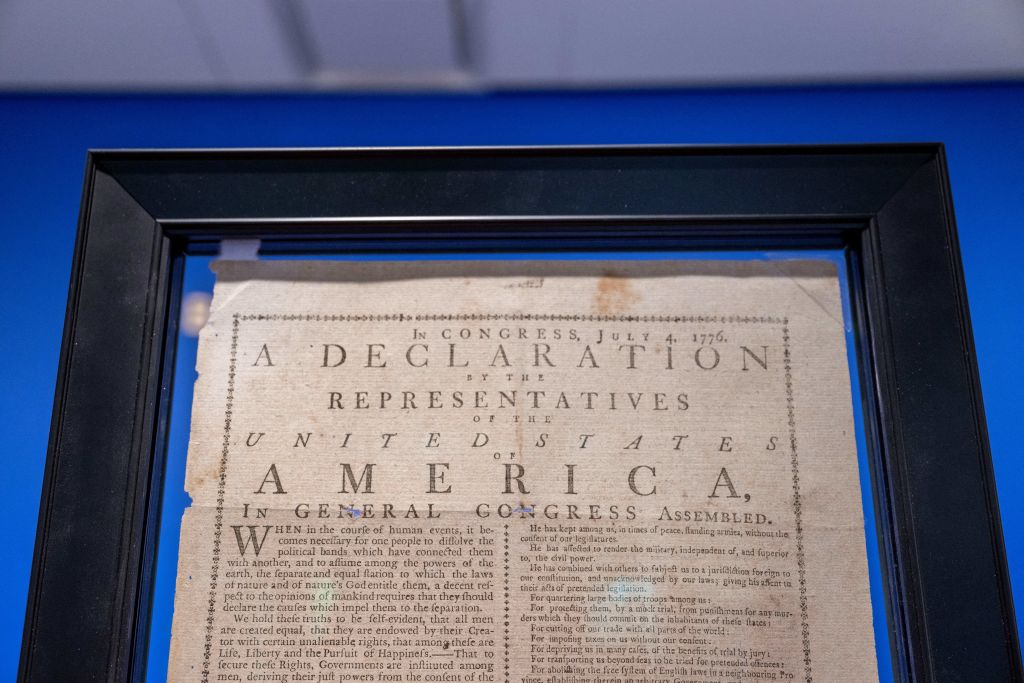
Trump’s request to relocate the Declaration of Independence into the Oval Office tests the norm that America’s founding records are held in public trust, not personal executive display.
Mar 7, 2025
Sources
Summary
Donald Trump requested that the Declaration of Independence be moved into the Oval Office, prompting reported alarm among his advisers. The presidency is being used to redirect custody and display of foundational national artifacts toward personal executive space. The practical consequence is heightened pressure on archival security protocols and the normalization of treating public heritage as an extension of a single officeholder’s preferences.
Reality Check
This conduct presses the presidency into direct control over public heritage, a precedent that weakens the idea that our national symbols belong to the people rather than the officeholder—and it invites future demands that blur custody, access, and security for political theater. On the provided facts, there is no clear criminal hook: a request alone, met with preservation objections and pivoting to a copy, does not establish theft, concealment, or unlawful removal under federal records laws such as 18 U.S.C. § 641 or 18 U.S.C. § 2071. The danger is institutional: treating the nation’s most protected document as movable decor erodes the governance norm of stewardship and turns public trust assets into instruments of personal authority.
Detail
<p>Donald Trump advisers were reported to be alarmed after the president requested that the Declaration of Independence be moved into the Oval Office. Advisers raised logistical and cost concerns tied to security and preservation requirements.</p><p>The original document is displayed in the rotunda at the National Archives Building in Washington, D.C., housed behind heavy glass in an oxygen-free, argon-filled case that retracts into the wall at night. The storage system includes limits on how often doors can be opened because light can damage the parchment.</p><p>After those constraints were raised, Trump discussed moving a historical copy rather than the original. White House spokesperson Steven Cheung said Trump believes significant historic documents should be shared and displayed. The White House has at least one historical copy. The report also noted Trump ordered creation of “Task Force 250” to plan 250th anniversary celebrations and has pursued other changes to White House grounds, including paving the Rose Garden and proposing a new ballroom.</p>