Norms Impact
Trump ditched plans to avoid civilian casualties before Iran strikes: report
A U.S. administration dismantled civilian-protection safeguards while lowering lethal-force approval thresholds, normalizing a strike posture that weakens accountability for civilian deaths.
Mar 11, 2026
⚖ Legal Exposure
Sources
Summary
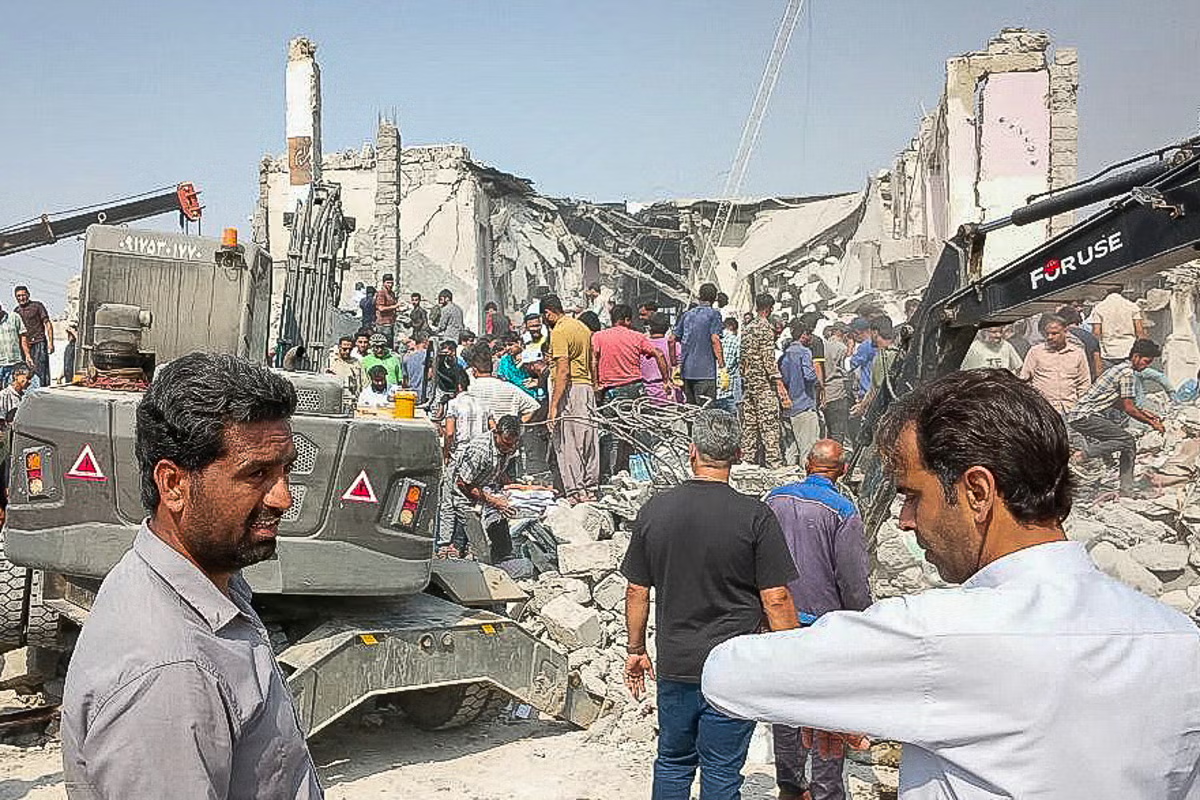
The Trump administration scaled back civilian-harm mitigation initiatives across the Pentagon as the U.S. faces scrutiny over a February 28 missile strike in Minab, Iran, that reportedly hit a girls’ primary school and killed more than 165 people. The Defense Department’s 2022 Civilian Harm Mitigation and Response plan was reportedly reduced by about 90% while authorization for lethal force was lowered and target categories broadened. The practical consequence is a military posture with fewer institutional checks before strikes and weaker internal capacity to prevent, investigate, and account for civilian deaths.
Reality Check
Weakening civilian-harm safeguards while expanding lethal authority resets the rules of state violence by design, eroding the guardrails that keep military power accountable in our name. When protection offices are defunded, lawyers and inspectors general are removed, and authorization thresholds drop, the system becomes structurally less capable of preventing errors, investigating outcomes, and enforcing consequences.
This precedent concentrates operational discretion inside the executive branch and makes civilian casualties easier to dismiss as routine friction rather than failures requiring transparency and correction. Over time, our democracy absorbs a dangerous lesson: that lethal force can expand while oversight contracts, and the public is conditioned to accept secrecy and diminished accountability as the default.
Legal Summary
The reported dismantling of civilian-harm mitigation mechanisms, lowered lethal-force authorization levels, and multiple high-casualty incidents create a serious investigative red flag for unlawful use-of-force and law-of-war compliance failures. The article’s key operational facts are disputed or described as under investigation (including whether the U.S. conducted the Minab strike and whether errors vs. intent drove outcomes), leaving major criminal elements insufficiently established on the stated record.
Legal Analysis
<h3>18 U.S.C. § 242 — Deprivation of rights under color of law</h3><ul><li>The article alleges U.S. lethal operations with relaxed authorization thresholds and broadened target categories, and cites incidents with high civilian death tolls (e.g., Minab school strike; Yemen detention center strike), raising concern about unlawful killing under governmental authority.</li><li>However, the article frames key facts as disputed or under investigation (U.S. responsibility for Minab not conceded; targeting error attributed to “outdated targeting data”), leaving gaps on willfulness and clear unlawful intent required for §242.</li></ul><h3>18 U.S.C. § 1111 — Murder (federal)</h3><ul><li>If U.S. forces intentionally or with malice aforethought targeted civilians or conducted knowingly unlawful strikes, exposure could implicate federal homicide theories.</li><li>On the stated facts, the article emphasizes policy rollbacks, lowered approval levels, and alleged targeting-data errors rather than a specific intent to kill civilians, leaving elements (mens rea; jurisdictional theory) incomplete.</li></ul><h3>10 U.S.C. §§ 801–946 (UCMJ) — Potential law-of-war related offenses (general exposure)</h3><ul><li>Reported rollback ("scaled back" CHMR by ~90%), reduced civilian-protection functions, and criticism of “overbearing” rules of engagement create an investigative red flag for systemic noncompliance with civilian-protection obligations in targeting and post-strike accountability.</li><li>The article also notes alleged “double tap” conduct and claims of “extrajudicial assassinations,” which, if substantiated, could support UCMJ exposure for individual actors; the piece does not provide sufficient operational details to charge.</li></ul><h3>18 U.S.C. § 1001 — False statements (risk area)</h3><ul><li>The article reports public suggestions by President Trump that Iran or “somebody else” might be responsible for a strike that “appeared” to use an American Tomahawk missile, while a Pentagon probe reportedly found U.S. targeting data caused the hit.</li><li>As presented, these are media-described statements and internal findings; there is no allegation of a materially false statement made in a federal investigative matter with requisite intent.</li></ul><b>Conclusion:</b> The article describes serious procedural and policy rollbacks that plausibly increase unlawful civilian harm risk and undermine accountability, creating significant investigative exposure, but it does not establish a money-access-official-action quid pro quo or provide sufficiently developed facts to treat the described conduct as clearly prosecutable structural corruption.</p>
Detail
<p>Former U.S. officials told ProPublica that the Trump administration scaled back the Pentagon’s Civilian Harm Mitigation and Response (CHMR) effort by roughly 90% after the plan was implemented in 2022. The CHMR framework was designed to integrate additional planning, civilian mapping, and after-action investigations across U.S. military commands.</p><p>The policy changes are under scrutiny following a February 28 missile strike in the Iranian city of Minab that reportedly struck a girls’ primary school near a military base. Iranian officials said more than 165 people were killed, most of them children under 12. U.S. officials said the strike is under investigation, while President Trump suggested Iran or “somebody else” might be responsible, despite reporting that the weapon appeared to be an American Tomahawk missile.</p><p>ProPublica reported that an internal Pentagon probe found outdated U.S. targeting data caused American forces to hit the school. Former officials also said the administration lowered the authorization level needed for lethal force and broadened target categories as Defense Secretary Pete Hegseth reoriented the military around “lethality” and a “warrior ethos.”</p>