Norms Impact
Trump faces returning $100bn in tariffs after court ruling
A president’s attempt to bypass Congress with “emergency” tariffs now risks a $100 billion unwind and a precedent that weakens democratic control of economic power.
Aug 31, 2025
⚖ Legal Exposure
Sources
Summary
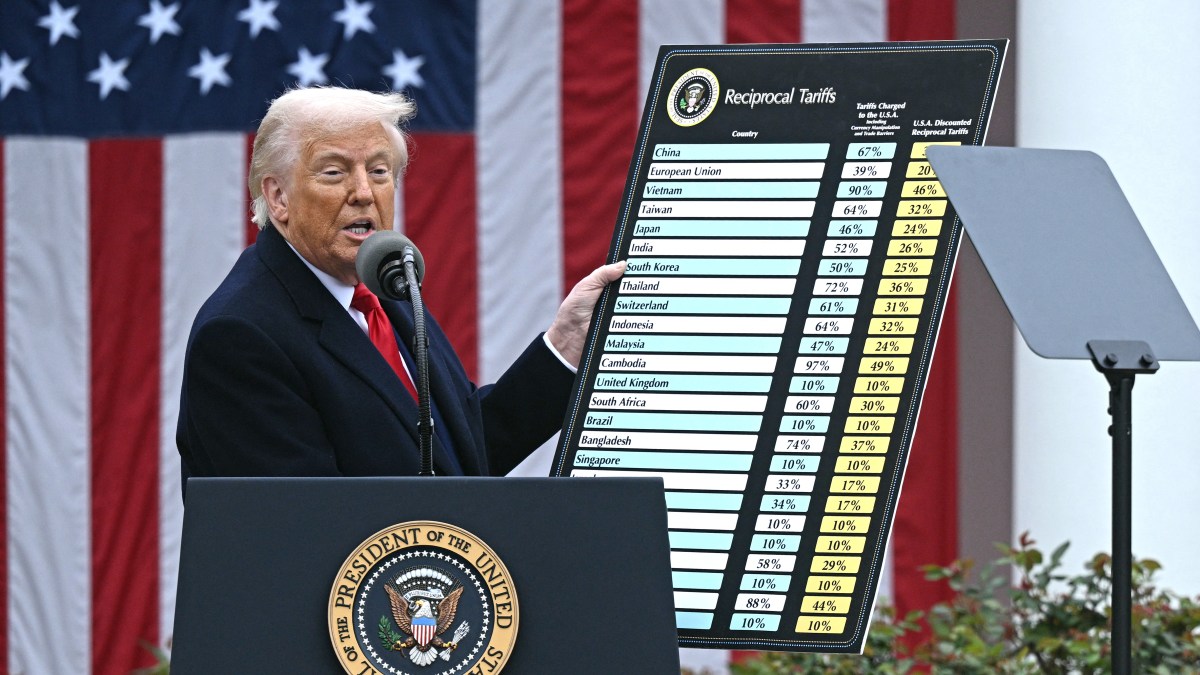
A federal appeals court upheld a ruling that President Trump acted unlawfully by using emergency powers to impose blanket import tariffs without Congress’s consent. The decision draws a hard line around congressional control over trade and emergency authorities, even as the tariffs remain temporarily in place pending Supreme Court review. If the ruling ultimately stands, the Treasury may have to return close to $100 billion in collected customs duties and trading partners could unwind preliminary agreements.
Reality Check
Letting any president unilaterally impose blanket tariffs by stretching “emergency” claims concentrates taxing and trade power in one office and leaves our rights and livelihoods hostage to executive decree. This conduct is not most clearly a street-crime case on the facts given, but it squarely collides with the constitutional allocation of trade and revenue powers to Congress, and the court found “no clear congressional authorisation” for the fentanyl rationale. The deeper danger is the normalization of rule-by-executive-order in a domain that can punish disfavored countries and reward compliance without legislative consent. When a president publicly pressures the Supreme Court to “help” overturn a loss, it further erodes the judiciary’s independence as a check we all rely on.
Legal Summary
Courts reportedly held that Trump acted unlawfully by using emergency powers to impose blanket tariffs without clear congressional authorization, creating major civil/administrative exposure including potential repayment of close to $100 billion in duties. The described conduct reflects contested executive authority and possible retaliatory/political use of tariffs, but the article does not allege personal enrichment or a money-for-official-act arrangement. Accordingly, this presents high-stakes civil illegality/abuse-of-power risk rather than a clearly chargeable public-corruption transaction on the stated facts.
Legal Analysis
<h3>5 U.S.C. § 706(2) — Administrative Procedure Act (unlawful agency/Executive action; judicial set-aside)</h3><ul><li>Federal courts (Court of International Trade; affirmed by Court of Appeals) concluded the President acted unlawfully by using emergency powers to impose blanket import levies without clear congressional authorization.</li><li>The ruling indicates a serious legal vulnerability: the tariff program may be ultra vires, triggering potential refunds of collected duties if ultimately invalidated.</li></ul><h3>28 U.S.C. § 1581(i) / 19 U.S.C. § 1514 — Customs duties challenges and potential refund liability (civil exposure)</h3><ul><li>Article context indicates approximately $100 billion in additional customs duties were collected under the challenged tariff regime; if the Supreme Court affirms illegality, the Treasury could face large-scale repayment exposure.</li><li>This is primarily civil/administrative liability exposure flowing from invalid tariffs rather than a money-for-official-act exchange.</li></ul><h3>18 U.S.C. § 371 — Conspiracy to defraud the United States (theory check)</h3><ul><li>No facts in the article describe an agreement or coordinated scheme to impair lawful government functions via deceit; the described conduct is overt executive policy action litigated in court.</li><li>Absent allegations of falsified predicates, concealed benefits, or corrupt coordination, criminal conspiracy elements are not supported on this record.</li></ul><h3>18 U.S.C. § 201 — Bribery of public officials (structural corruption screen)</h3><ul><li>The article describes tariffs used as leverage in trade negotiations and possible retaliatory targeting (e.g., India; Brazil) but provides no allegation of personal payments, gifts, or private financial benefit to the President tied to official action.</li><li>Without money/access/personal benefit alignment, the facts read as contested legal authority/policy abuse rather than a quid-pro-quo bribery structure.</li></ul><b>Conclusion:</b> The article supports significant civil/administrative unlawfulness (abuse of emergency powers and lack of congressional authorization) and resulting refund exposure, but it does not describe a transactional money-for-official-act corruption pattern; exposure is best characterized as a serious investigative/legal red flag rather than prosecutable bribery on these facts.
Detail
<p>On Friday, the US Court of Appeals upheld a prior decision by the Court of International Trade finding that President Trump acted unlawfully when he used emergency powers to impose blanket levies on imported goods without congressional consent.</p><p>The appeals court voted 7–4 to uphold the initial judgment, but left the tariffs in place while the Trump administration pursues an appeal to the Supreme Court. Trump appointed three of the nine Supreme Court justices.</p><p>Since tariffs were introduced in February—mainly targeting Canada, Mexico, and China—the US government has collected about $100 billion in additional customs duties. Capital Economics said that if the Supreme Court agrees Trump abused presidential powers, the Treasury would still need to return most of the close to $100 billion collected, and that trading partners including Britain and the European Union could backtrack on preliminary trade agreements.</p><p>The White House had cited fentanyl as the basis for the tariffs; the appeals court said there was no clear congressional authorisation to use fentanyl transport as justification for blanket import levies imposed by executive orders.</p>