Norms Impact
Trump Fires Entire Agency Reviewing His Tacky D.C. Makeover
By purging the capital’s design review commission as White House construction plans loom, the presidency tightens control over oversight mechanisms meant to protect transparency and the public’s stake in federal space.
Oct 29, 2025
⚖ Legal Exposure
Sources
Summary
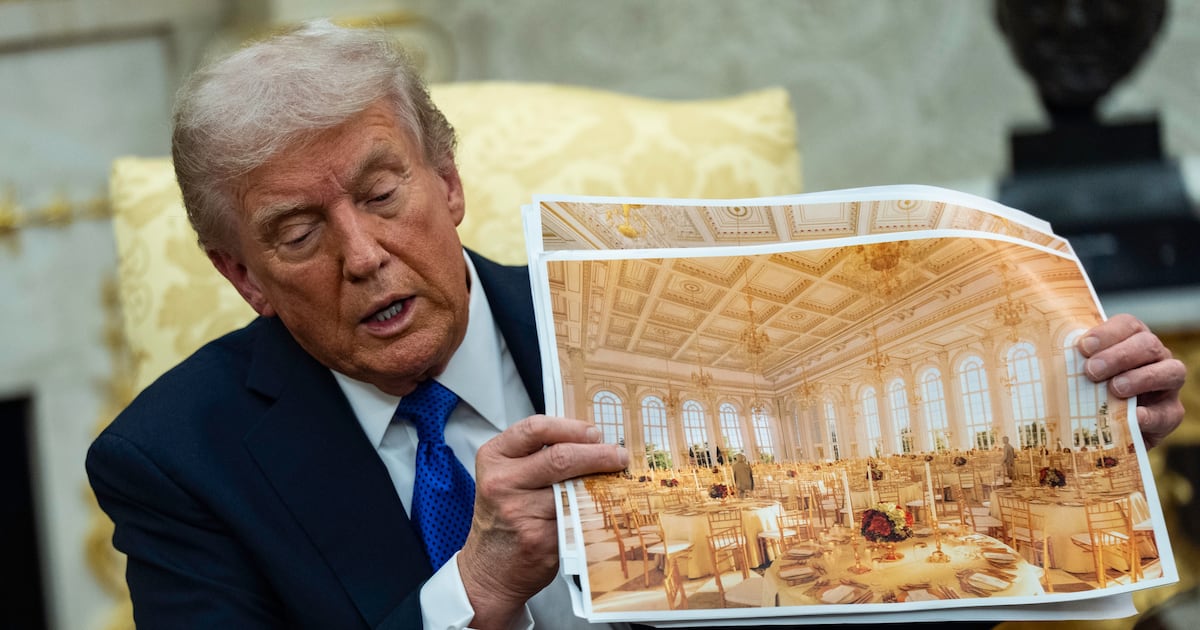
The White House terminated all sitting members of the Commission of Fine Arts, an independent federal body that reviews and advises on design and aesthetics affecting the federal interest in Washington, D.C. The move collapses an established advisory checkpoint as the president advances major construction plans tied to the White House and other federal sites. The practical result is fewer institutional brakes on demolition and redesign decisions that traditionally receive expert review and public-facing scrutiny.
Reality Check
Terminating an independent advisory commission in the middle of consequential federal construction work teaches every future administration the same lesson: oversight is optional when power is concentrated enough, and our public assets can be reshaped without meaningful outside review. The conduct described is not, on these facts alone, clearly criminal under federal law, because the CFA is expressly “advisory” to the president and commissioners are presidential appointees—even if the timing functionally neutralizes scrutiny. The democratic harm is structural: it weaponizes appointment and removal power to preempt expert review and public-facing process, weakening transparency norms that protect our shared civic property and, ultimately, our ability to demand accountable governance.
Legal Summary
Terminating an entire advisory commission while advancing major construction that would typically undergo its review raises significant abuse-of-process and transparency concerns, supporting investigative scrutiny into whether required public review is being unlawfully bypassed. However, the article alleges no payments, personal enrichment, or quid-pro-quo exchange, so exposure is best characterized as procedural/political irregularity rather than a developed bribery scheme on these facts.
Legal Analysis
<h3>5 C.F.R. § 2635.101(b) — Standards of Ethical Conduct (misuse of position / appearance concerns)</h3><ul><li>Alleged facts indicate the President removed all members of an aesthetics/design advisory commission while pursuing major White House-area construction (ballroom; East Wing replacement) that would ordinarily receive commission review, creating an appearance that official power is being used to avoid independent scrutiny.</li><li>No compensation or personal payments to commissioners are alleged; exposure is framed as an ethics/abuse-of-process concern rather than a direct enrichment scheme on these facts.</li></ul><h3>18 U.S.C. § 371 — Conspiracy (to defraud the United States)</h3><ul><li>Record describes efforts to “sidestep” or weaken traditional review (terminations; reliance on advisory-only precedent), which can raise a defraud-the-U.S. theory if there were coordinated deceit or obstruction of legally required public review processes.</li><li>Gaps: the article does not allege false statements, concealment, or an agreement with others to obstruct mandated review; it describes staffing and procedural moves that may be lawful presidential control over an advisory body.</li></ul><h3>18 U.S.C. § 201 — Bribery / Illegal Gratuities (quid pro quo)</h3><ul><li>The article does not allege any payment, gift, or thing of value tied to these terminations or to the construction approvals; it instead alleges politicized restructuring and potential avoidance of scrutiny.</li><li>Absent a money/access/official-action exchange, the classic public-corruption bribery structure is not supported on the provided facts.</li></ul><b>Conclusion:</b> The described conduct presents a serious investigative red flag for politicization and potential evasion of “legally required” review processes, but the article does not allege the transactional money-to-official-action alignment typical of prosecutable structural corruption.</p>
Detail
<p>The White House ended the appointments of all active members of the Commission of Fine Arts (CFA) through emails stating their positions were “terminated, effective immediately.” The CFA has seven seats, with one vacant; members are presidential appointees serving four-year terms without compensation. Several commissioners had been appointed by President Joe Biden in 2021 and 2024, and one member, Billie Tsien, resigned earlier in 2025 after her term expired in May.</p><p>The CFA’s function is to advise the president, Congress, and local governments on design proposals for memorials, government buildings, and certain privately owned properties in parts of Washington, D.C., where projects affect the federal interest and the capital’s design standards. The administration has not publicly committed to submitting plans for a 90,000-square-foot White House ballroom to the CFA, and a White House official said “all necessary agencies and entities” were being consulted.</p><p>Separately, the National Trust for Historic Preservation urged the administration to halt demolition of the 123-year-old East Wing until plans undergo required public review processes, including review by the CFA and the National Capital Planning Commission.</p>