Norms Impact
Trump has turned the US into a laughing stock
When luxury gifts and family payouts coincide with tariff cuts, we normalize a presidency where public power can be traded like a private favor.
Feb 24, 2026
⚖ Legal Exposure
Sources
Summary
Melania Trump’s production company received $40 million from Jeff Bezos and Amazon to make a documentary about her role as first lady. That payment and contemporaneous reports of President Trump accepting luxury gifts alongside tariff reductions reflect an erosion of anti-corruption guardrails in the executive branch. The practical consequence is a presidency where private enrichment and official economic policy can blur into transactional governance without immediate institutional restraint.
Reality Check
This kind of conduct invites a precedent where policy becomes a marketplace and our rights become contingent on who can buy access. If a public official accepted valuable items in exchange for lowering tariffs, it tracks the core elements of federal bribery and illegal gratuities (18 U.S.C. § 201) and honest-services fraud (18 U.S.C. §§ 1341, 1343, 1346). Even if prosecutors could not prove a quid pro quo beyond a reasonable doubt, the pattern described shreds anti–pay-to-play norms and weaponizes the presidency for private gain.
Legal Summary
The article alleges the President accepted high-value gifts from Swiss businessmen and then reduced tariffs on Swiss goods, creating a strong money–access/benefit–official action alignment. That pattern supports a Level 3 exposure (likely illegal, potentially criminal) under federal bribery/gratuities theories, subject to proof of intent and corroborating timing and donor interests. Separate allegations about the First Lady’s $40m documentary deal raise ethics and influence concerns but are less clearly tied to a specific official act in the described facts.
Legal Analysis
<h3>18 U.S.C. § 201(b) — Bribery of public officials (quid pro quo)</h3><ul><li>Alleged receipt by the President of high-value items (a $130,000 gold bar and a gold Rolex clock) from Swiss businessmen followed by a concrete official act: cutting tariffs on Swiss goods from 39% to 15%.</li><li>Structural corruption inference: the sequence (gift → favorable tariff action) suggests a thing of value given with intent to influence an official act; an explicit agreement is not required to justify investigative/prosecutorial inference at this stage.</li><li>Gap: the article does not specify the precise timing details, identities of the businessmen, or direct evidence of intent, but the described alignment is consistent with classic bribery indicators.</li></ul><h3>18 U.S.C. § 201(c) — Illegal gratuities</h3><ul><li>Even if a quid pro quo cannot be proven, receiving valuable gifts “for or because of” an official act (tariff reduction benefiting Swiss goods) fits the illegal gratuities theory.</li><li>The magnitude of the gifts and the specificity of the subsequent policy benefit strengthen the inference that the gifts related to official action.</li></ul><h3>5 U.S.C. § 7342 — Foreign Gifts and Decorations Act (reporting/acceptance restrictions)</h3><ul><li>Acceptance of high-value gifts (gold bar/Rolex clock) from foreign business figures raises compliance issues regarding acceptance, custody, and reporting requirements.</li><li>Where gifts are linked to official action, the issue escalates beyond administrative handling into corruption exposure.</li></ul><h3>18 U.S.C. § 208 — Acts affecting a personal financial interest (conflict-of-interest)</h3><ul><li>The article alleges significant personal benefit to a federal official (valuable gifts) contemporaneous with an official trade action benefiting the donors’ country/sector, implicating conflict-style concerns.</li><li>Gap: §208’s technical application varies by covered positions and the interest type; further facts would be needed to charge under this provision.</li></ul><h3>5 C.F.R. Part 2635 — Standards of Ethical Conduct (gifts/conflicts)</h3><ul><li>Receiving luxury items from parties with interests affected by government action is a paradigmatic ethics violation and supports corrupt-intent inferences when paired with favorable official action.</li></ul><b>Conclusion:</b> The described facts present structural money-to-official-action alignment (valuable gifts followed by a tariff cut) consistent with potentially prosecutable public-corruption conduct rather than mere political or procedural irregularity, pending corroboration of timing, intent, and donor interest in the tariff decision.
Detail
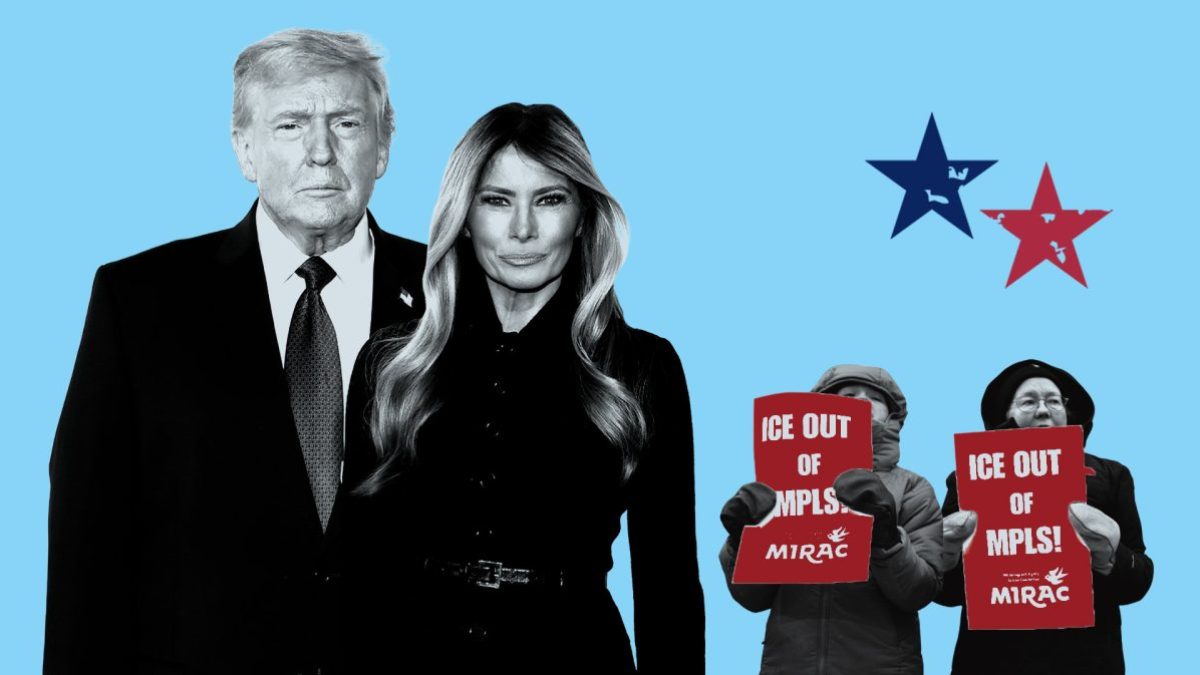
<p>In the first year of Donald Trump’s second term, commentary described a rapid normalization of conduct that would typically trigger scrutiny. It reported that first lady Melania Trump’s production company received $40 million from Jeff Bezos and Amazon to produce a documentary centered on her role as first lady.</p><p>The same account stated that President Trump accepted a gold bar valued at $130,000 and a gold Rolex clock from Swiss businessmen. It further stated that after receiving those items, Trump reduced tariffs on Swiss goods from 39 percent to 15 percent.</p>