Norms Impact
Trump Marks Full Month Of Government Shutdown With $3.4 Million Golf Trip
As federal workers go unpaid during a shutdown, the presidency is used to route millions in public funds into the president’s leisure at his own properties.
Oct 31, 2025
⚖ Legal Exposure
Sources
Summary
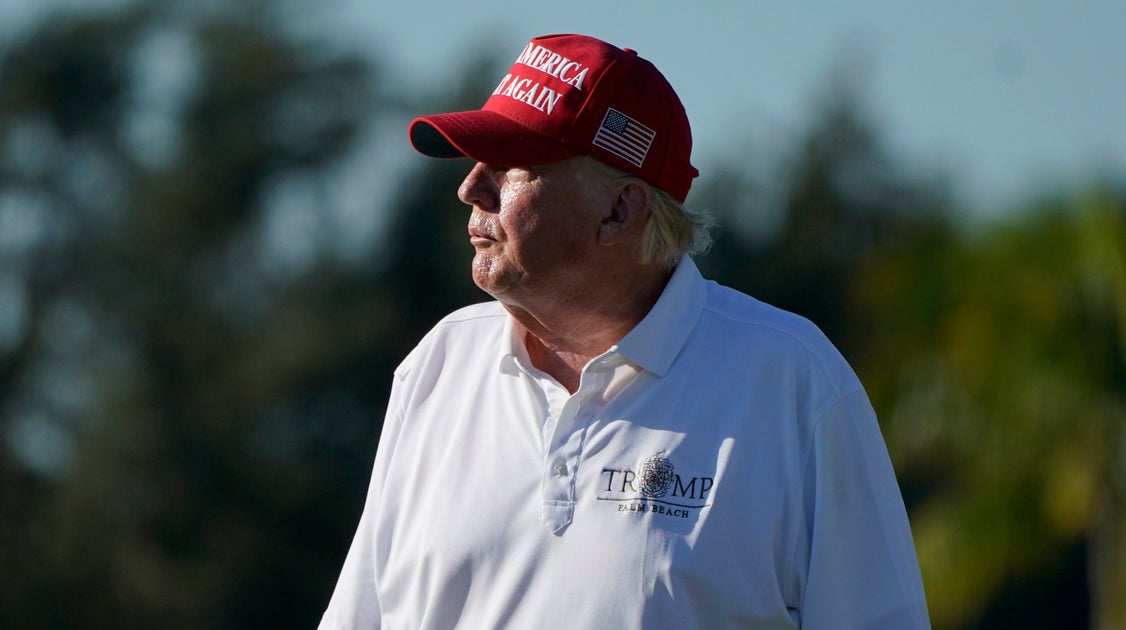
President Donald Trump spent $3.4 million in taxpayer funds on a golf trip to Florida as the government shutdown reached its first full month, bringing second-term golf-related costs to $60.7 million since January.
The presidency is being used to normalize large-scale personal leisure spending and promotion of presidentially owned properties during a period of halted governance and unpaid federal labor.
The practical consequence is a deepened erosion of public-service obligations as hundreds of thousands of workers are furloughed or compelled to work without pay while public resources underwrite the president’s private routine.
Reality Check
This conduct teaches the country that public money can be treated as a private expense account while the state suspends paychecks and basic governance—a precedent that weakens our rights by normalizing unaccountable executive self-dealing. On the provided facts alone, the strongest exposure is not a clean criminal case but an ethical collapse: repeated, high-cost travel and golf at presidentially owned resorts during a shutdown invites scrutiny under federal conflict-of-interest norms even where the president is often exempt from 18 U.S.C. § 208. The deeper institutional harm is the conversion of the office into a revenue-adjacent platform and lifestyle subsidy, with taxpayers compelled to fund the security and logistics of a president’s routine as workers are furloughed or forced to labor without pay.
Legal Summary
Level 2 exposure: the article supports an abuse-of-office/self-dealing and appropriations-purpose red-flag theory based on repeated taxpayer-funded trips to the President’s own properties and alleged official promotion of a personal business interest. However, it lacks allegations of a third-party financial transfer tied to an official act or other facts that would complete a bribery/gratuities or clear criminal conversion case without further investigation.
Legal Analysis
<h3>18 U.S.C. § 201 (Bribery of public officials; illegal gratuities)</h3><ul><li>The article describes extensive government-funded travel/security costs tied to the President’s frequent visits to his own properties, but it does not allege any third-party payer providing something of value in exchange for an “official act.”</li><li>Without a donor/customer/foreign principal or other identifiable source of value linked to a specific official act, core quid-pro-quo elements are not established on these facts.</li></ul><h3>18 U.S.C. § 208 (Conflicts of interest) / 5 C.F.R. Part 2635 (Executive-branch ethics standards)</h3><ul><li>Repeated trips to Mar-a-Lago and golf at Trump-owned resorts, alongside taxpayer-funded support, create an appearance of using office for private benefit (structural self-dealing risk).</li><li>The article also notes White House promotion of opening a new course at his Aberdeen resort during a taxpayer-funded Scotland trip, suggesting use of official channels to advance a personal business interest.</li><li>Gap: the article does not specify particular covered “particular matters” or decision points, nor the formal applicability of §208 to a President; exposure is strongest as ethics/abuse-of-office concerns based on the described conduct.</li></ul><h3>31 U.S.C. § 1301 (Purpose Statute) / Anti-deficiency and appropriations principles (misuse of appropriated funds)</h3><ul><li>Taxpayer expenditures ($3.4M for this trip; $60.7M year-to-date; $10M Scotland trip) tied to frequent leisure travel to personally owned properties raises an appropriations-purpose concern if government spending is effectively subsidizing personal recreation or private business promotion.</li><li>Gap: the article does not provide procurement/appropriations details needed to prove improper purpose beyond inference from the nature and frequency of trips.</li></ul><h3>18 U.S.C. § 641 (Theft or conversion of government property/funds)</h3><ul><li>If government funds/services were knowingly converted for personal use (e.g., travel primarily for private leisure or business promotion), §641 could be investigated; the described pattern raises a red-flag inference.</li><li>Gap: the article does not allege specific fraudulent billing, false statements, or diversion mechanisms—only aggregate cost and frequency.</li></ul><b>Conclusion:</b> The described conduct presents serious investigative red flags for self-dealing and misuse of office/resources, but the article does not allege an external payer or a specific official-act exchange sufficient to characterize it as prosecutable money-for-action structural corruption on these facts alone.
Detail
<p>President Donald Trump traveled to Florida on Friday for a golf trip costing taxpayers $3.4 million as the ongoing government shutdown reached its first full month.</p><p>The shutdown has furloughed nearly 700,000 federal workers and requires another 700,000 to continue working without pay. After arriving on Air Force One, Trump blamed Democrats for the shutdown, telling reporters: “It’s their fault. Everything is their fault.”</p><p>This was Trump’s 13th trip to Mar-a-Lago in Palm Beach. During the flight, Trump posted photos of renovations at the White House, including redoing the Lincoln bathroom in marble and gold. The context also notes additional White House changes, including paving over the Rose Garden and tearing down the 123-year-old East Wing to build a ballroom.</p><p>In his first nine months back in office, Trump has played golf at his own resorts 76 times; the reported second-term taxpayer cost for his golf hobby totals $60.7 million.</p>