Norms Impact
Trump Rambles Concerningly About Destroying Foreign Countries
Trump responded to a Supreme Court loss by claiming near-total power to “destroy” other countries through embargoes—then pivoted to new tariffs, normalizing maximalist executive power over commerce.
Sources
Summary
Donald Trump said the Supreme Court gave him “the unquestioned right” to “destroy foreign countries” by banning imports and imposing embargoes, while separately blocking his “reciprocal tariffs” under the International Emergency Economic Powers Act.
The court’s ruling narrowed the legal basis for sweeping tariffs under IEEPA, while Trump publicly reframed the decision as affirming expansive presidential control over commerce restrictions.
Trump then announced plans to pursue new 10% tariffs under Section 232, signaling continued use of emergency and national-security authorities to reshape trade policy.
Reality Check
When a president publicly claims an “unquestioned right” to “destroy foreign countries” through trade bans and embargoes, we are watching executive power being recast as personal, limitless discretion—an invitation to arbitrary punishment that weakens democratic checks and our own economic and legal rights. The Supreme Court language described here did the opposite: it rejected the use of IEEPA to impose sweeping “reciprocal tariffs,” with the Chief Justice stating the statute “cannot bear the weight” of that program. The conduct described is not clearly criminal on these facts, but the assertion that judges are “very easily swayed,” paired with self-described restraint to avoid affecting their decision, corrodes the norm of judicial independence and signals an abuse-of-power mindset even where no direct bribery or threat is stated. The pivot to Section 232 underscores how national-security and emergency authorities can be repurposed to bypass legislative control, turning trade powers into a tool of coercion rather than accountable governance.
Media
Detail
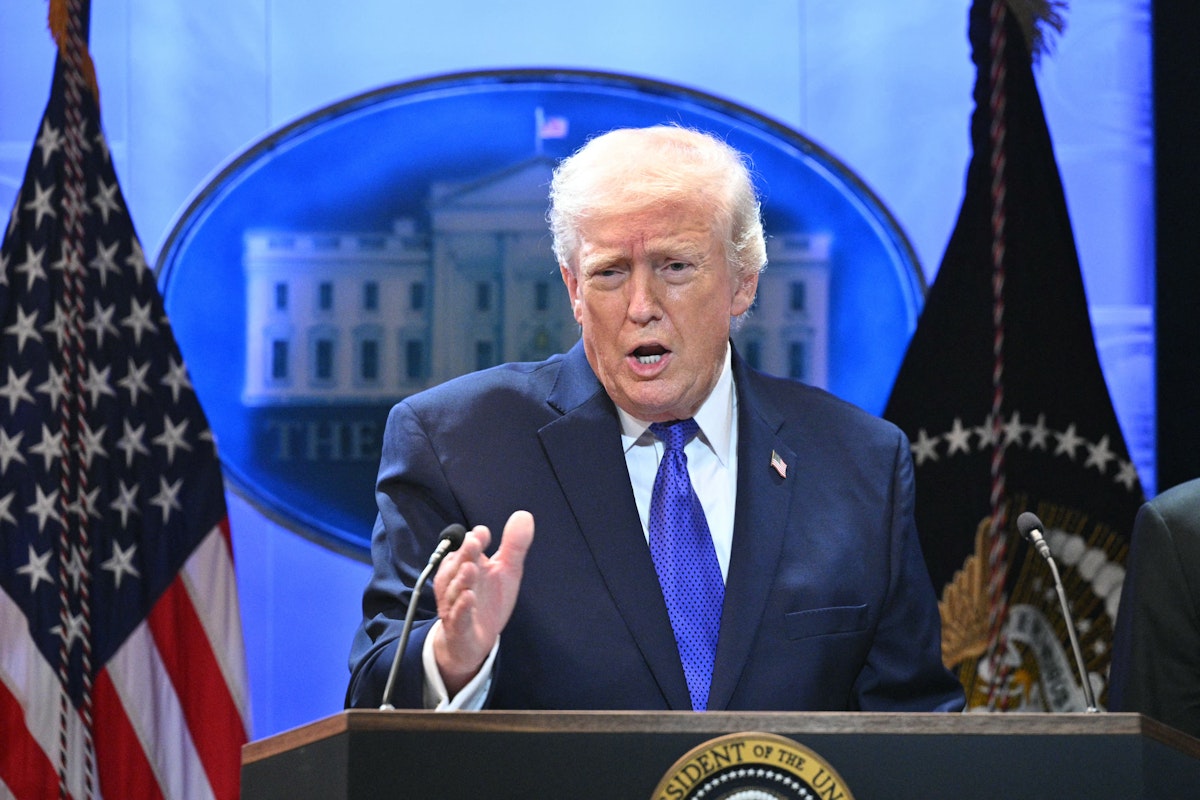
<p>On Friday, President Donald Trump spoke to reporters after the Supreme Court blocked his “reciprocal tariffs” that he imposed in April 2025 under the International Emergency Economic Powers Act (IEEPA). Trump said the Court had taken away his ability to “charge a fee” through tariffs but claimed it left him broad authority to ban imports, “destroy the trade,” and impose embargoes that could “destroy the country.”</p><p>Trump repeatedly described the ruling as allowing him to bar goods from entering the United States and to stop foreign countries from doing business in the U.S., while prohibiting tariffs under the authority he used. In the ruling, Chief Justice John Roberts wrote that IEEPA’s language “cannot bear the weight” of Trump’s tariffs and noted the statute does not include the word “tariff.”</p><p>Trump also said he avoided actions he believed could influence the Court’s decision, describing the justices as “very easily swayed.” He ended by announcing a plan to impose new 10% tariffs under Section 232 on national security grounds.</p>