Norms Impact
Trump Reveals He’s Taking $10 Billion From Taxpayers for His New Board
A president publicly claimed $10 billion in taxpayer money for a personal “board” without Congress—an open challenge to the Constitution’s power of the purse and a template for executive slush funds.
Feb 19, 2026
⚖ Legal Exposure
Sources
Summary
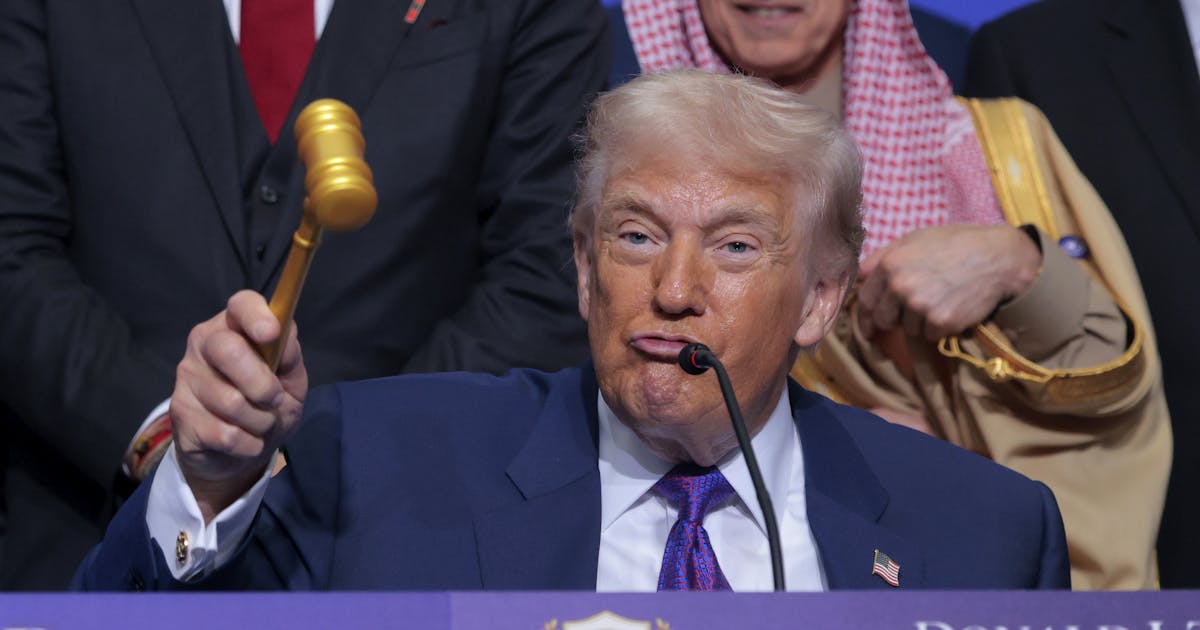
Donald Trump said he wants the United States to contribute $10 billion to his “Board of Peace” at its inaugural meeting in Washington. The move asserts executive control over massive public spending despite Congress’s constitutional power of the purse and without congressional approval. If pursued, it normalizes routing taxpayer funds into a president-directed vehicle with unclear controls and unclear destination for related private money.
Reality Check
This kind of self-directed public funding attempt guts the separation of powers and teaches future presidents they can announce billions into existence while our representatives are cut out—and our rights shrink with every surrendered check. If federal money were actually moved without an appropriation, it would collide with the Appropriations Clause and the Anti-Deficiency Act (31 U.S.C. § 1341), and any concealment or diversion could trigger federal false-statement or fraud exposure depending on the mechanics. Even if no transfer occurs, using the presidency to assemble a taxpayer-funded vehicle alongside undisclosed private “seat” money is a direct breach of anti–quid-pro-quo governance norms and invites weaponized, unaccountable spending power.
Legal Summary
The article describes an attempt to direct $10 billion in taxpayer funds to a president-controlled board without congressional approval, creating serious exposure under appropriations/Anti-Deficiency constraints and potential conversion theories if implemented. It also alleges $1 billion “permanent seats” sold for the same board with undisclosed disposition of funds, creating a strong money-to-access pattern that, combined with proposed control over public funds, supports a structural quid-pro-quo investigation. Overall exposure is consistent with likely illegal conduct pending confirmation of actual obligations, transfers, and benefit flows.
Legal Analysis
<h3>18 U.S.C. § 641 — Theft/Conversion of Government Funds</h3><ul><li>Announcing an intent to direct $10 billion in taxpayer funds to a president-controlled “Board of Peace” without congressional approval implicates conversion/unauthorized control of federal funds if any transfer or obligation is executed outside appropriations.</li><li>The article frames the board as a “slush fund” the president can use “however he likes,” supporting an inference of non-programmatic, discretionary use inconsistent with lawful purpose limitations.</li></ul><h3>31 U.S.C. § 1341 (Anti-Deficiency Act) — Spending/Obligating Without Appropriation</h3><ul><li>The article states the $10 billion transfer would require congressional approval and that Trump “has not gotten that,” creating high exposure if executive action obligates or expends funds absent an appropriation.</li><li>Even preparatory commitments or directives to spend could constitute unlawful obligations if undertaken before Congress authorizes funds.</li></ul><h3>18 U.S.C. § 201 — Bribery/Illegal Gratuities (Quid Pro Quo Risk)</h3><ul><li>The president allegedly “sold permanent seats on his board for $1 billion a head” and refused to say where the money was going, creating a structural money-to-access pattern with potential linkage to official action through the board.</li><li>The contemporaneous push to secure $10 billion in taxpayer funding for the same board heightens the inference that purchased seats could translate into influence over allocation/use of public funds, even if an explicit agreement is not stated.</li></ul><h3>18 U.S.C. § 371 — Conspiracy to Defraud the United States</h3><ul><li>If the board structure is used to route or mask control over federal money outside appropriations limits, coordination with others to implement the plan could fit a scheme to impair lawful governmental functions (Congress’s power of the purse).</li></ul><b>Conclusion:</b> The alleged conduct presents prosecutable structural corruption risk and unlawful fiscal control indicators (money/access via paid seats plus attempted executive redirection of taxpayer funds), contingent on whether any funds are actually obligated/expended and how board monies are controlled and used.
Detail
<p>At the Board of Peace’s inaugural meeting in Washington, Donald Trump said he wants the United States to contribute $10 billion to the board. He described $10 billion as “a very small number” compared to the cost of war.</p><p>The transfer of billions in taxpayer funds would require congressional approval, and Trump has not obtained that approval. The announcement comes amid a partial government shutdown tied to a funding deadlock over the Department of Homeland Security.</p><p>The context described includes earlier unilateral foreign-policy actions attributed to Trump without congressional authorization, including ongoing extrajudicial strikes on vessels the government claims are carrying drugs and a prior military operation to depose a foreign leader and take that country’s oil. The same context also states Trump wants to use U.S. money to facilitate Jared Kushner’s plan for Gaza and notes Trump previously sold permanent seats on the board for $1 billion each while refusing to say where that money was going.</p>