Norms Impact
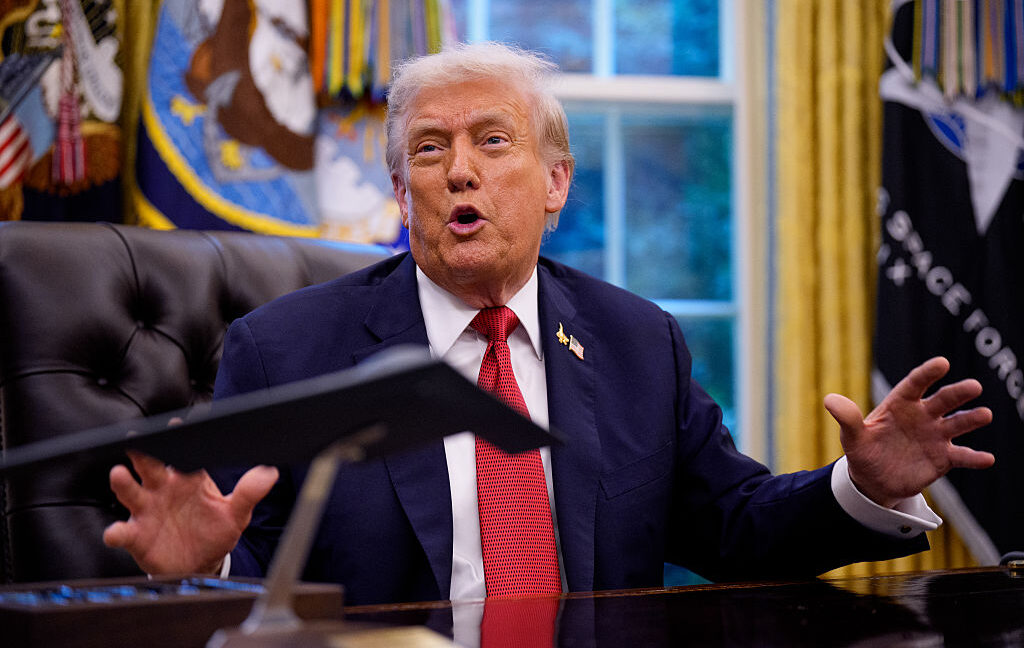
Trump says TikTok should be tweaked to become “100% MAGA”
A president publicly floated tuning a major social platform’s algorithm to serve his movement while a government-shaped takeover structure and reported federal “cut” normalize state leverage over private speech.
Sep 26, 2025
⚖ Legal Exposure
Sources
Summary
Donald Trump signed an executive order restructuring TikTok’s U.S. operations while publicly saying the platform’s algorithm should be tweaked to become “100 percent MAGA.”
The order centralizes government-facilitated control over ownership, data security, and governance of a major speech platform, while insiders described talks about investors paying a multibillion-dollar fee to the U.S. government and potential government designation of a board member.
The practical consequence is a precedent where federal power can reshape, monetize, and indirectly steer the information environment used by 170 million Americans.
Reality Check
This conduct sets a corrosive precedent: federal power positioned to extract value from, and potentially steer, a speech platform’s governance and algorithm, weakening our First Amendment culture and the public’s ability to receive information free from state-aligned manipulation. If a “multibillion-dollar transaction fee to the U.S. government” or a government-designated board seat is tied to official action on the divestiture, it raises serious anti-corruption exposure under 18 U.S.C. § 201 (bribery/illegal gratuities) and 18 U.S.C. § 1346 (honest-services fraud), depending on the quid pro quo facts. Even if prosecutors never charge it, normalizing government-involved business decisions and monetized approvals invites weaponized regulation where disfavored platforms or speakers face coerced restructuring, a direct threat to our rights and democratic stability.
Legal Summary
The article describes a presidentially structured TikTok transaction where insiders report investors discussed paying a multibillion-dollar “transaction fee” to the US government, alongside executive action setting governance and operational control. That combination creates strong structural quid-pro-quo and “color of official right” extortion indicators, even without an explicit agreement quoted. Exposure is therefore high enough to be treated as likely illegal/potentially criminal pending confirmation of payment terms, demands, and linkage to official acts.
Legal Analysis
<h3>18 U.S.C. § 201(b) — Bribery of public officials (quid pro quo)</h3><ul><li>The article reports insiders saying investors discussed paying a “multibillion-dollar transaction fee to the US government” contemporaneous with presidential executive action structuring the TikTok outcome (EO “save” TikTok; board seats; Oracle role).</li><li>Structural inference: a large payment stream tied to executive-branch approvals/structuring that materially benefits private investors (control of a major social network) aligns money + access + official action even without an explicit agreement stated.</li><li>Gap: payment terms, recipient mechanism, and any explicit linkage to specific official acts are not detailed; however, the reported magnitude and proximity to executive action warrant bribery-focused investigation.</li></ul><h3>18 U.S.C. § 872 — Extortion by officers or employees of the United States (under color of official right)</h3><ul><li>Insiders described discussions of investors paying a multibillion-dollar “fee” to the US government in connection with an executive-branch-driven deal needed to avoid a ban and to secure operational control.</li><li>Structural inference: conditioning or leveraging governmental power over a regulated/compelled divestiture to extract a “cut” resembles obtaining property “under color of official right,” even if framed as a transaction fee.</li><li>Gap: the article does not state coercion or demanded payment by a specific official, but the “government cut” concept tied to executive action is a classic extortion risk marker.</li></ul><h3>18 U.S.C. § 1346 & § 1343 — Honest services wire fraud (deprivation of honest services via bribery/kickbacks)</h3><ul><li>If deal negotiations and communications used interstate wires while steering a government-controlled process to favor politically allied billionaires (Murdochs/Ellisons) in exchange for governmental financial benefit, this fits an honest-services bribery/kickback theory.</li><li>The article raises concerns of government influence over the platform and potential government-designated board involvement, supporting an inference of politicized control as part of the benefit structure.</li><li>Gap: the article does not allege personal enrichment to Trump or aides, but honest-services exposure can attach if bribery/kickback benefits flow through governmental channels linked to official decision-making.</li></ul><h3>52 U.S.C. § 30121 — Foreign national contributions/solicitation (campaign finance)</h3><ul><li>The article references Trump claiming Chinese President Xi tentatively approved the deal and that concessions may have been made; if any value were provided to influence US elections (e.g., algorithmic bias) this could implicate campaign-finance restrictions.</li><li>Gap: no direct allegation of campaign contribution, solicitation, or election-related coordination; exposure here is speculative based on referenced foreign involvement and political “100% MAGA” comments.</li></ul><b>Conclusion:</b> The reported multibillion-dollar “transaction fee” concept coupled with direct presidential structuring of the transaction and governance presents a significant money-to-official-action alignment consistent with a prosecutable structural corruption theory (bribery/extortion) pending investigation into linkage, demands, and flow of value.
Detail
<p>Donald Trump signed an executive order aimed at “saving” TikTok by enabling a transfer of TikTok’s U.S. operations to a U.S.-controlled venture structured to comply with a law barring majority ownership by a foreign adversary.</p><p>Trump said Oracle would secure U.S. user data and that a new board would manage the venture, with ByteDance retaining one seat and six seats assigned to U.S. investors; reports cited Oracle CEO Larry Ellison as a likely board member and suggested David Ellison could also be included. Trump told Fox News that Rupert Murdoch and Lachlan Murdoch would likely be part of the investor group and claimed the deal was tentatively approved by Xi Jinping, though Chinese media had not confirmed this. Vice President JD Vance said the new U.S. company would be valued at about $14 billion.</p><p>Reuters reported key details remained unresolved, including control of the algorithm. The New York Times reported investor discussions about paying a multibillion-dollar transaction fee to the U.S. government, and the Wall Street Journal reported at least one board member could be designated by the government.</p>