Norms Impact
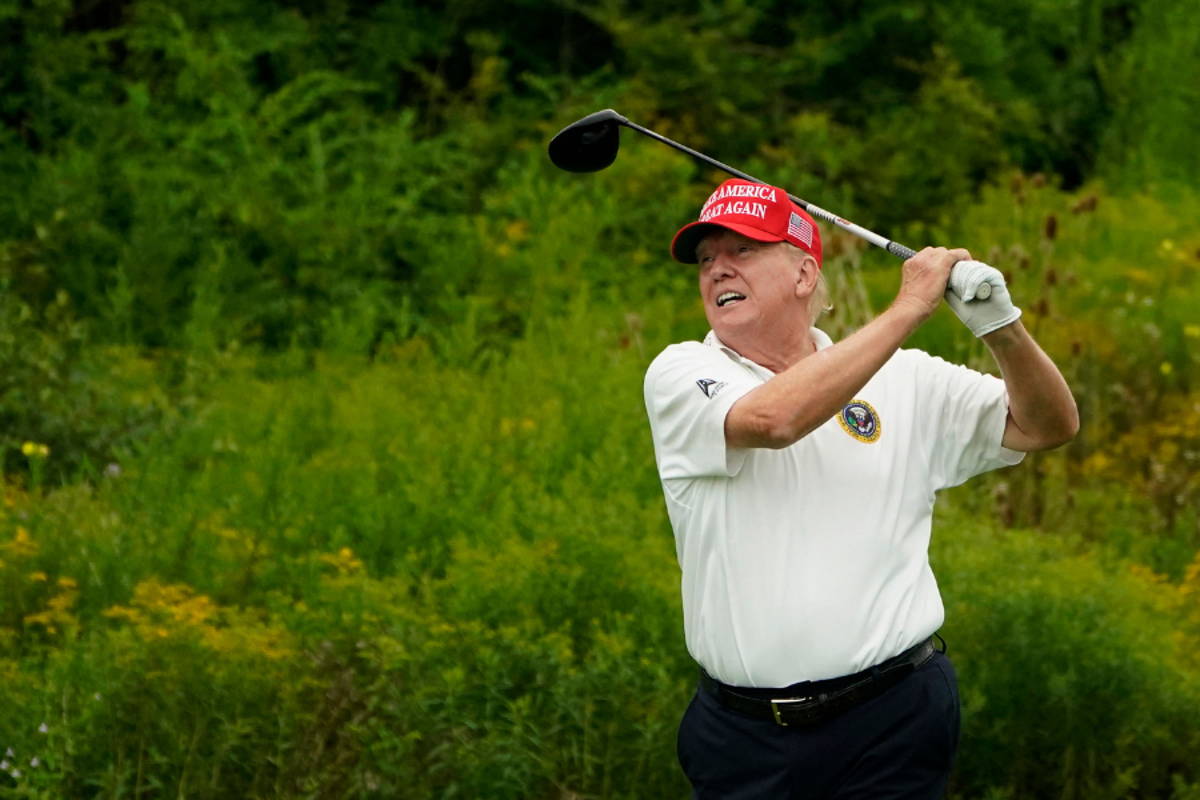
Trump was persuaded into pardoning golf partner’s client over 18 holes: Report
A private golf ask led to a presidential pardon that short-circuited a federal prosecution, collapsing the norm that justice cannot be bartered through personal access.
Dec 6, 2025
⚖ Legal Exposure
Sources
Summary
President Donald Trump granted a full pardon to entertainment executive Timothy Leiweke weeks after a round of golf at Mar-a-Lago with Leiweke’s attorney, former congressman and prosecutor Trey Gowdy.
The pardon intervenes in an ongoing Justice Department prosecution tied to the administration’s broader antitrust and ticket-pricing enforcement priorities.
By ending the criminal exposure and complicating related civil litigation, the action reshapes what evidence and leverage federal investigators can secure from a central figure.
Reality Check
This conduct threatens the rule-of-law firewall by turning a constitutional pardon into a private-access escape hatch that can nullify prosecutions and weaken our ability to hold power and wealth accountable. On these facts alone, a pardon itself is lawful, but the described sequence raises serious exposure if anything of value was offered, sought, or exchanged for official action—federal bribery and gratuities statutes (18 U.S.C. §§ 201, 666) and honest-services fraud (18 U.S.C. §§ 1341, 1343, 1346) are the core frameworks prosecutors test for quid pro quo schemes. Even without provable criminal exchange, using personal relationships to erase a Justice Department case guts anti–special treatment norms and signals that equal justice can be overridden by proximity to the president.
Legal Summary
The described sequence—private access on the golf course, a request on behalf of a client, and a rapid full pardon that undercuts DOJ cases—creates a significant appearance of undue influence and politicization warranting scrutiny. However, the article does not allege any financial transfer or personal benefit to Trump tied to the pardon, leaving core bribery/gratuity elements unproven on these facts. Exposure is best framed as a serious investigative red flag rather than a clearly prosecutable money-for-official-act scheme.
Legal Analysis
<h3>U.S. Const. art. II, § 2 — Presidential Pardon Power (not itself criminal)</h3><ul><li>Alleged facts describe Trump granting a full pardon to Timothy Leiweke shortly after a golf meeting where Leiweke’s lawyer raised the case; use of the pardon power is constitutionally authorized even when controversial.</li><li>The article does not allege any payment, thing of value, or personal benefit to Trump tied to the pardon decision; absent a “thing of value” and corrupt intent, the core bribery/illegal gratuity elements are not shown on these facts.</li></ul><h3>18 U.S.C. § 201(b) — Bribery of Public Officials (corrupt quid pro quo)</h3><ul><li>Structural concern: access to the President during a private golf round followed by rapid official action (pardon) benefiting the lawyer’s client creates an appearance of pay-to-access influence.</li><li>Element gap in article context: no allegation of anything of value offered/given to Trump (or demanded/solicited) in exchange for the pardon; the factual narrative is “request + access + favorable official act,” without a value transfer.</li></ul><h3>18 U.S.C. § 201(c) — Illegal Gratuities (thing of value for/ because of official act)</h3><ul><li>Timing raises investigative questions about whether any benefit flowed to the decision-maker after the pardon (not described in article).</li><li>Element gap: no “thing of value” described as given for or because of the pardon.</li></ul><h3>18 U.S.C. § 371 — Conspiracy (agreement to commit offense or defraud)</h3><ul><li>Article describes lawyer advocacy (Gowdy raising alleged mistreatment) and a subsequent pardon; no described agreement with Trump to exchange anything of value or to obstruct a proceeding.</li><li>Without facts indicating an unlawful objective or corrupt exchange, conspiracy exposure remains unsubstantiated on the provided record.</li></ul><h3>Ethics / Abuse-of-Power Risk (non-statutory)</h3><ul><li>Private-access advocacy (golf meeting) followed by an unusually quick pardon that undermines DOJ criminal and related civil enforcement supports an “appearance of impropriety” and politicization narrative.</li><li>The conduct as described fits a procedural/ethical irregularity pattern more than a money-for-official-act corruption pattern.</li></ul><b>Conclusion:</b> The article supports a serious investigative red flag for politicized, access-driven use of the pardon power, but it does not supply the key “thing of value”/quid-pro-quo facts needed to characterize it as prosecutable structural corruption on a bribery theory.
Detail
<p>President Donald Trump issued a full pardon to entertainment executive Timothy Leiweke on Thursday. The Wall Street Journal reported that on November 16, Trump played golf at Mar-a-Lago with Leiweke’s attorney, Trey Gowdy, and that after the round Trump asked whether Gowdy needed help with anything. People familiar with the discussions told the Journal that Gowdy raised concerns that Leiweke was being mistreated in a case tied to the Justice Department’s efforts around ticket pricing.</p><p>About three weeks after the reported golf outing, Trump granted Leiweke the pardon. The pardon affects the Justice Department’s criminal case accusing Leiweke of rigging a $375 million University of Texas Moody Center arena bid; Leiweke had pleaded not guilty and faced up to 10 years in prison and a $1 million fine. The Journal reported that after the pardon Leiweke called Trump to thank him and that Leiweke had invoked the Fifth Amendment during a deposition in related civil litigation, with plans to cooperate once a judge formally dismisses the criminal case.</p>