Norms Impact
Trump’s Sons Say Their Open Corruption Is Our Fault
The president’s family is treating alleged foreign-linked money flows and U.S. policy outcomes as unrelated “business as usual,” shredding the norm that public power must be separated from private gain.
Feb 18, 2026
⚖ Legal Exposure
Sources
Summary
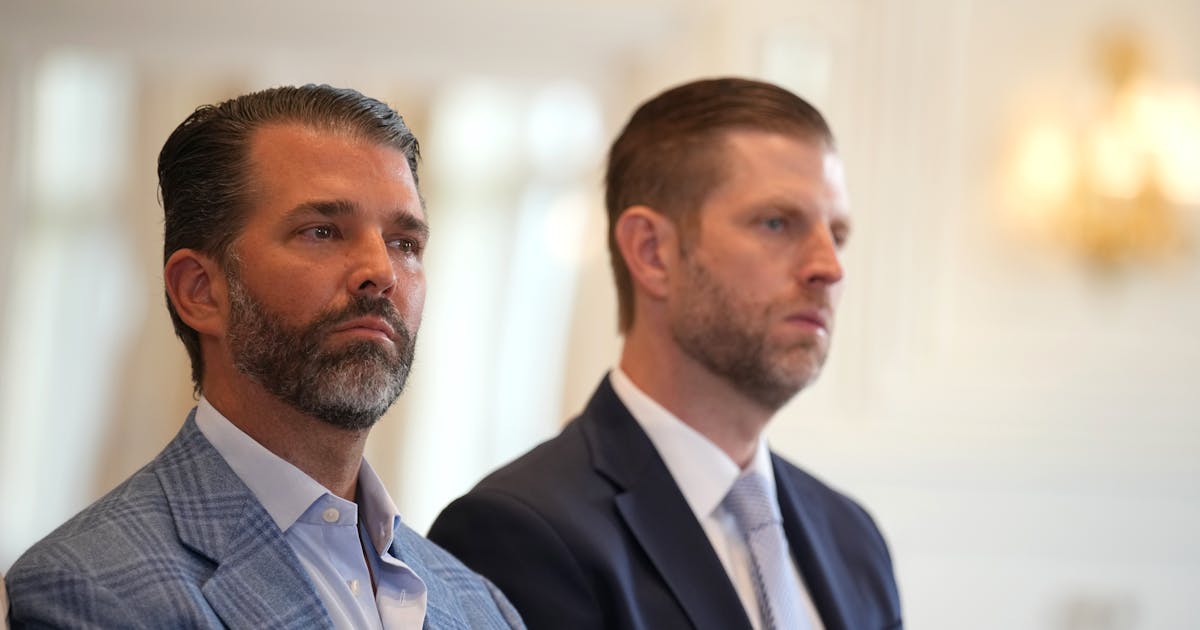
Donald Trump Jr. and Eric Trump publicly declined to rebut corruption allegations tied to their crypto venture while disputing any link between their business and their father’s policy reversals. Their posture normalizes a governing environment where presidential access and regulatory outcomes can be treated as extensions of a family enterprise. The practical consequence is a weakened firewall between private enrichment and state power, inviting pay-to-play incentives at home and abroad.
Reality Check
This conduct invites a durable pay-to-play precedent where foreign-linked capital and domestic policy outcomes can move in parallel, and our rights erode when government decisions become purchase-adjacent. If any exchange can be proven between the $2 billion investment and the reversal on UAE access to advanced AI chips, it points toward federal bribery and gratuities exposure under 18 U.S.C. § 201 and honest-services fraud under 18 U.S.C. §§ 1341, 1343, and 1346, with conspiracy risk under 18 U.S.C. § 371. Even without courtroom-proof quid pro quo in the text provided, the normalization of family-run monetization alongside presidential reversals violates core anti-corruption governance norms and collapses the boundary between national security policy and private enrichment.
Legal Summary
The reported $2 billion foreign-linked investment into the president’s sons’ venture followed by a sudden executive reversal benefiting the UAE presents a classic money + access + official action alignment consistent with a potentially criminal quid-pro-quo pattern. While the article includes denials and lacks direct agreement evidence, the magnitude and timing warrant bribery and honest-services scrutiny as structural corruption risk pending investigation.
Legal Analysis
<h3>18 U.S.C. § 201(b) — Bribery of public officials (quid pro quo)</h3><ul><li>Alleged sequence: World Liberty Financial “pocketed $2 billion” from an investment firm tied to an Emirati family member, followed by the president’s “sudden reversal” allowing the UAE to import 500,000 advanced Nvidia AI chips annually—an official action materially benefiting the apparent payer’s interests.</li><li>Structural corruption indicators: large-value transfer + close temporal proximity + high-level policy reversal that confers a discrete, quantifiable benefit supports an inference of corrupt intent/quid pro quo even without explicit agreement language in the article.</li><li>Gap: the article quotes the sons denying linkage and does not describe direct communications/terms; investigation would focus on linkage evidence (timing, intermediaries, meetings, internal decision process).</li></ul><h3>18 U.S.C. § 1346 & § 1343 — Honest services wire fraud</h3><ul><li>If executive action was influenced by private financial benefit flowing to the president’s immediate family business (via World Liberty Financial), that can constitute a scheme to deprive the public of honest services through bribery/kickback-like conduct.</li><li>The described “swarm” of rich and powerful seeking to “curry favor” through the family enterprise, coupled with the specific $2B payment and policy reversal, fits a money-for-access/official-action pattern typical of prosecutable honest-services theories.</li><li>Gap: the article does not specify use of interstate wires or details of the scheme mechanics; those would be readily investigable.</li></ul><h3>18 U.S.C. § 208 — Acts affecting a personal financial interest (conflict-of-interest)</h3><ul><li>To the extent the president participated personally and substantially in an AI-chip export decision while aware it implicated a significant financial interest of an immediate-family venture, that is a classic conflict-of-interest exposure.</li><li>Gap: the article asserts a “sudden reversal” after the $2B inflow but does not state the president’s direct participation/knowledge; evidence would be required.</li></ul><h3>5 C.F.R. Part 2635 — Federal ethics standards (appearance of impropriety)</h3><ul><li>The reported acceptance of massive foreign-linked investment by the president’s sons’ venture while alleging contemporaneous favorable executive action creates severe appearance and influence concerns consistent with ethics violations, even if criminal elements ultimately fail.</li></ul><b>Conclusion:</b> The article describes a strong structural corruption pattern—extraordinary foreign-linked money closely followed by a discrete, valuable official reversal—supporting a Level 3, potentially criminal bribery/honest-services theory pending proof of linkage and intent beyond denials.
Media
Detail
<p>Donald Trump Jr. and Eric Trump, co-founders of World Liberty Financial, spoke to CNBC from Mar-a-Lago and addressed accusations that wealthy actors were engaging their family business to gain favor with President Donald Trump. The brothers said outside institutions “created this monster” and claimed major banks had “canceled” them, asserting that this led them to decentralized finance.</p><p>They cited account and banking relationship terminations following the 2021 U.S. Capitol riot, naming Deutsche Bank and Signature Bank as ending work with the Trump Organization and Capital One and JPMorgan as closing personal and business accounts. Asked about a high-profile conflict-of-interest episode, they denied any connection between their business and the president’s reported reversal allowing the United Arab Emirates to import 500,000 of Nvidia’s most advanced AI chips annually after World Liberty Financial received $2 billion from an investment firm tied to an Emirati family member. Don Jr. stated the president “has nothing to do with” the matter and dismissed prior conflict-of-interest scrutiny as “nonsense.”</p>