Norms Impact
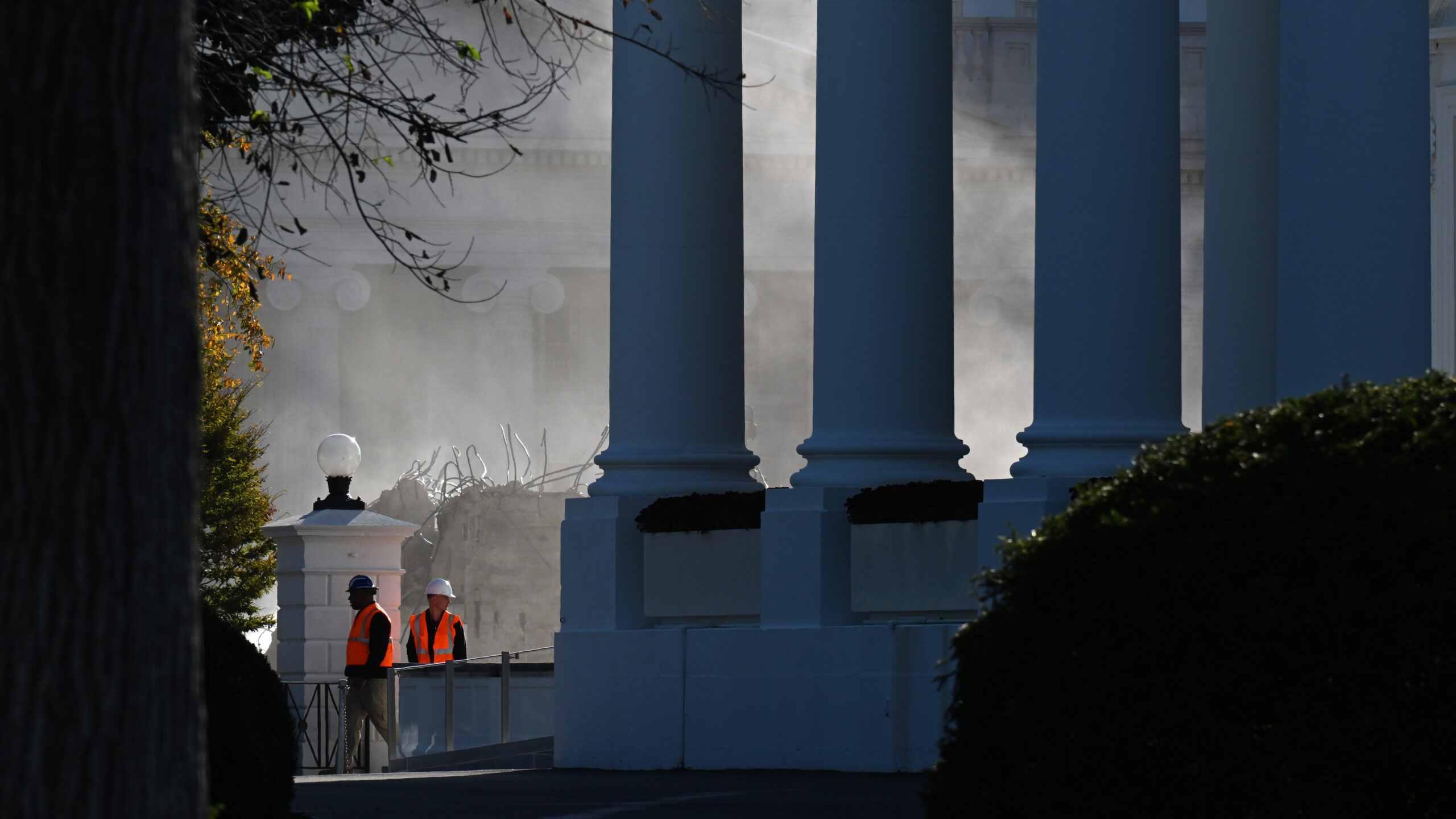
Trump’s swift demolition of East Wing may have launched asbestos plumes
A White House demolition proceeded under a secrecy veil, sidelining basic asbestos compliance documentation that our public institutions rely on to keep workers and citizens safe.
Oct 31, 2025
⚖ Legal Exposure
Sources
Summary
The East Wing of the White House was rapidly demolished amid visible dust clouds and unresolved questions about asbestos inspection and abatement compliance. The executive branch proceeded while withholding basic documentation and contractor details that lawmakers and health advocates say federal and local processes require. The practical consequence is potential airborne asbestos exposure for workers and the public, with accountability obstructed by non-disclosure.
Reality Check
This kind of opaque, high-risk demolition sets a precedent that the government can expose our bodies to hazardous materials while denying us the records needed to challenge it—an erosion of public health safeguards that ultimately weakens our rights. The described conduct most plausibly implicates civil and administrative violations rather than an easy criminal fit on this record, but federal Clean Air Act asbestos work-practice rules and worker-safety requirements exist precisely to prevent dust-cloud demolition when asbestos is present. If a non-licensed entity performed asbestos abatement in Washington, DC, that is a direct affront to licensing and notice regimes designed to make enforcement possible—yet the refusal to disclose documentation functionally blocks oversight. When the executive branch normalizes “trust us” compliance at the White House itself, it teaches every contractor and agency that transparency is optional and enforcement is negotiable.
Legal Summary
The reported demolition conditions, lack of released inspection/abatement documentation, and indications that the identified demolition company was not licensed for DC asbestos abatement create substantial regulatory and enforcement exposure. This reads as a procedural/compliance and public health investigation rather than a bribery-style structural corruption case. Criminal exposure cannot be confirmed from the article alone, but the fact pattern warrants subpoenas for inspection reports, notices, contractor scope, and abatement records.
Legal Analysis
<h3>42 U.S.C. § 7412 (Clean Air Act NESHAP—Asbestos)</h3><ul><li>Demolition of a 1902/1942-era federal building where asbestos was commonly used triggers federal requirements for inspection and regulated asbestos handling prior to demolition.</li><li>Advocates and lawmakers assert no public documentation shows required inspection/notification/abatement was completed, while images reportedly show significant dust clouds and workers without PPE—facts consistent with potential uncontrolled asbestos emissions.</li><li>Gap: Article does not confirm the presence of asbestos or specific NESHAP “facility” thresholds, but the age/renovation period and demolition conditions create a serious compliance and enforcement red flag.</li></ul><h3>40 C.F.R. Part 61, Subpart M (Asbestos NESHAP implementing regulations)</h3><ul><li>The described “speedy demolition,” visible dust plumes, and limited mitigation (hoses) are consistent with potential failure to adequately prevent release of asbestos-containing material during demolition if ACM was present.</li><li>Failure to release inspection/abatement records supports an inference of deficient procedural compliance (recordkeeping/notification) pending investigation.</li></ul><h3>District of Columbia asbestos abatement licensing/notice requirements (local regulatory compliance)</h3><ul><li>Article states DC abatement must be performed by a licensed contractor with advance notice to the DC Department of Energy and Environment and posting of notices; reporting indicates ACECO is not licensed for asbestos abatement in DC and had its license canceled in 2022.</li><li>If asbestos abatement occurred (as the White House claims) using an unlicensed entity or without required notice/posting, that suggests regulatory noncompliance; if no abatement occurred, risk shifts to unlawful demolition without required controls.</li></ul><h3>29 U.S.C. § 654 (OSHA General Duty Clause) & worker protection standards (potential workplace safety exposure)</h3><ul><li>Reported lack of PPE amid dust clouds during demolition raises potential failures to protect workers from recognized hazards, particularly if asbestos was reasonably anticipated given building age.</li><li>Gap: Article does not establish jurisdictional details or specific OSHA standard violations, but facts support an investigation into worker exposure controls.</li></ul><b>Conclusion:</b> The conduct presents serious investigative red flags for environmental and workplace-safety regulatory violations tied to demolition/abatement procedures, but the article does not provide a money-access-official-action transactional pattern indicative of prosecutable structural corruption.</p>
Detail
<p>The East Wing, built in 1902 and renovated in 1942, was demolished last week at the White House, prompting health advocates and Democratic lawmakers to seek information about asbestos inspections, notifications, and abatement. The Asbestos Disease Awareness Organization stated that buildings of that era commonly used asbestos and that demolition typically requires full inspection and abatement beforehand.</p><p>The White House said abatement work was performed but has not released documentation of inspections or the abatement work and has declined to identify the companies involved; photographs have led to ACECO being identified as handling demolition. Images showed dust clouds and workers without personal protective equipment, while tourists and crowds gathered nearby. Dirt from the site was transported by dump trucks to a nearby park, and the only clearly observed mitigation was water hoses used to suppress dust.</p><p>Sen. Edward Markey sent a letter to ACECO asking whether federal health and safety standards were followed. Sens. Sheldon Whitehouse, Martin Heinrich, and Gary Peters sought transparency on the demolition, including the asbestos abatement plan. Reporting cited that ACECO is not licensed for asbestos abatement in DC and that its prior license was voluntarily canceled in 2022.</p>