Norms Impact
Trump’s Treasury Secretary Caught in Blatant Lie to Congress
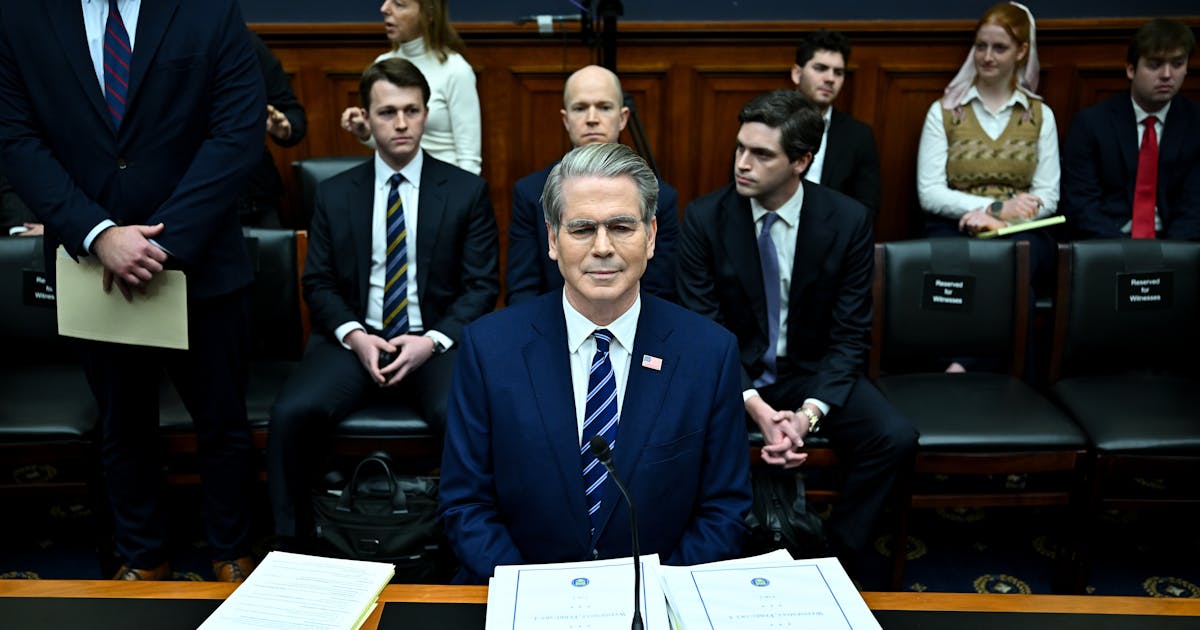
Treasury Secretary Scott Bessent denied an investor letter he authored as Congress pressed him on tariffs—an open challenge to sworn oversight and the public’s right to truthful testimony.
Feb 4, 2026
⚖ Legal Exposure
Sources
Summary
In a congressional hearing, Treasury Secretary Scott Bessent denied writing to investors that “tariffs are inflationary,” despite a cited January 2024 letter containing that language and follow-up questioning on the record. A cabinet-level official’s disputed sworn testimony against documented statements normalizes evasions that degrade Congress’s fact-finding power. The practical consequence is weakened oversight at the moment tariff policy and its real consumer costs are being publicly justified.
Reality Check
When a Treasury Secretary can deny a written statement in front of Congress and pivot to press-bashing, we invite a precedent where oversight becomes theater and our economic rights are governed by unaccountable messaging. If Bessent’s denial occurred under oath and the letter exists as described, the conduct is potentially criminal under 18 U.S.C. § 1621 (perjury) or § 1001 (material false statements), because the question went to a core policy justification and a concrete document. Even if prosecutors declined, the breach is severe: it corrodes the anti-evasion norm that makes democratic checks real, and it trains officials to treat Congress as a prop rather than a constitutional counterweight.
Legal Summary
The described conduct presents significant exposure for materially false statements to Congress, and potentially perjury if the testimony was under oath and the letter’s authorship/content is authenticated. On the article’s facts, this is an investigative red flag centered on misleading congressional oversight, not a transactional quid-pro-quo corruption pattern.
Legal Analysis
<h3>18 U.S.C. § 1001 — False statements to Congress (executive-branch jurisdiction)</h3><ul><li>Alleged fact pattern: In a congressional hearing, the Treasury Secretary reportedly answered “no” when asked whether he wrote a letter to investors stating “tariffs are inflationary,” while the article asserts a January 2024 letter exists containing that statement.</li><li>Element mapping: If the denial was knowingly and willfully false, and the existence/content of the letter was material to congressional oversight of tariff policy and economic representations, this supports § 1001 exposure.</li><li>Key investigative gaps: need authenticated copy of the letter, proof he authored/approved it, clarity on the exact question/answer context, and evidence of knowledge/intent (as opposed to confusion about wording, draft status, or authorship attribution).</li></ul><h3>18 U.S.C. §§ 1621 & 1623 — Perjury / False declarations (oath-dependent)</h3><ul><li>Potential exposure if the statements were made under oath in a proceeding covered by the perjury statutes and were materially false (denying authorship/existence of a specific investor letter; later statements arguably contradicting that denial).</li><li>Materiality: whether he told investors “tariffs are inflationary” versus telling Congress “tariffs do not cause inflation” is relevant to evaluating credibility and policy justification for tariffs.</li><li>Key investigative gaps: confirm oath status and whether the forum qualifies for § 1623; resolve whether the questioned statement was literally true under a narrow interpretation (e.g., he did not “write” it personally) versus misleading.</li></ul><b>Conclusion:</b> The article describes a serious investigative red flag for false-statement/perjury-type exposure tied to congressional testimony, but it reflects procedural misconduct (truthfulness/oversight obstruction) rather than a money-access-official-action corruption structure based on the provided facts.</p>
Media
Detail
<p>During a congressional hearing, Representative Maxine Waters questioned Treasury Secretary Scott Bessent about whether he had written a letter to investors raising concerns about tariffs and stating that “tariffs are inflationary.” Bessent responded “no.” Waters then cited a New York Times article indicating he had said it, to which Bessent replied, “Great, New York Times,” and later suggested that if he said tariffs were inflationary, he was wrong.</p><p>Waters also referenced Bessent’s prior Senate testimony in which he stated, “There is no inflation. Tariffs are not being passed on to consumers,” and asked directly whether tariffs are inflationary. Bessent responded by citing the San Francisco Federal Reserve to argue tariffs do not cause inflation.</p><p>The context included a January 2024 investor letter highlighted by Semafor’s Eleanor Mueller in which Bessent wrote, “Tariffs are inflationary and would strengthen the dollar.” Representative Sean Casten also confronted Bessent with the quoted language, and Bessent acknowledged it as a letter he wrote.</p>