Norms Impact
White House East Wing will be torn down ‘within days’ even as no plans filed for Trump’s new ballroom
The executive branch is tearing down the White House East Wing before filing plans for review, hollowing out public oversight by making compliance a post-demolition formality.
Oct 22, 2025
⚖ Legal Exposure
Sources
Summary
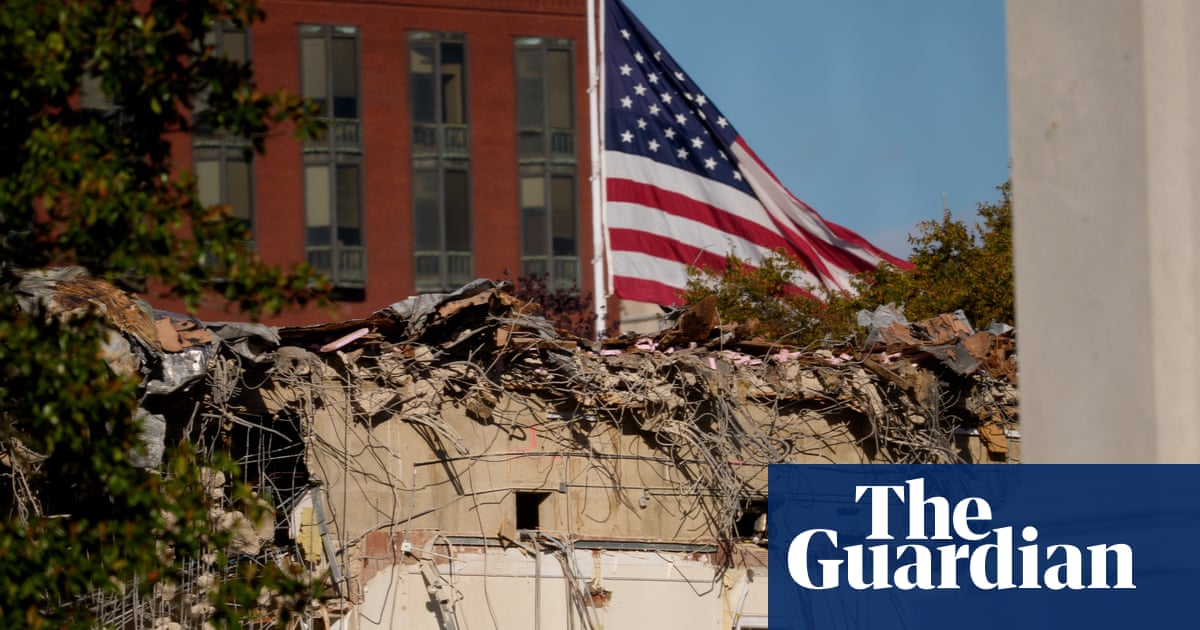
The White House East Wing is set to be demolished within days even though no ballroom plans have been submitted to the National Capital Planning Commission, the federal body that oversees construction of federal buildings.
The executive branch is proceeding with irreversible physical changes to a national symbol while treating the public-review and oversight process as optional and deferrable.
Once the East Wing is gone, the practical leverage of lawful review shifts from preventing harm to merely reacting after damage is done.
Reality Check
This conduct threatens our rights by normalizing a government that creates irreversible facts first and treats lawful oversight as something to be satisfied later, when meaningful restraint is no longer possible. Based on the record provided, the core problem reads less like a clear federal crime and more like an aggressive end-run around governance safeguards: bypassing public review, eroding transparency, and turning a national asset into an executive-controlled project. Even without a proven quid pro quo, the stated plan to build a $200m ballroom “paid for 100% by me and some friends of mine” at the seat of government pushes the anti-corruption norm against private patronage of public power toward a dangerous precedent. If we accept demolition-first governance here, we train future administrations to treat rules as optional whenever speed, ego, or advantage demands it.
Legal Summary
The article presents serious investigative red flags around whether legally required federal planning and historic-preservation review processes were bypassed while commencing demolition and advancing new construction. It does not supply facts showing a transactional quid pro quo (money tied to an official act benefitting a payer), so exposure is best characterized as potential unlawful/irregular procedure requiring investigation rather than clearly prosecutable bribery on the stated record.
Legal Analysis
<h3>40 U.S.C. § 3312 (National Capital Planning Commission authority over federal capital planning)</h3><ul><li>Article alleges demolition of the White House East Wing is proceeding before plans are submitted to the National Capital Planning Commission (NCPC), the body described as overseeing/approving federal building construction.</li><li>White House position in the article draws a procedural distinction (demolition vs. “vertical construction” requiring approval), while a congressionally created preservation entity asserts demolition plans are “legally required” to go through public review—creating a credible compliance dispute and investigative red flag.</li></ul><h3>54 U.S.C. § 306108 (NHPA Section 106 – review of effects on historic properties)</h3><ul><li>The White House is a historic property; the article describes demolition and a major new construction proposal that may affect historic design and massing, which typically triggers consultation/review obligations for federal undertakings.</li><li>The National Trust letter (as reported) asserts legal requirement for public review before demolition, suggesting potential failure to follow preservation review processes; key gap: the article does not specify whether Section 106 processes were initiated, consulted, or lawfully exempted.</li></ul><h3>18 U.S.C. § 201 (Bribery of public officials and witnesses) / 5 C.F.R. Part 2635 (Ethics rules) — structural corruption screen</h3><ul><li>Trump states the ballroom is “being paid for 100% by me and some friends of mine,” but the article provides no facts tying any payer to a specific official act, contract award, regulatory benefit, or access-for-action exchange.</li><li>Absent donor identities, timing of donor-provided funds, or any resulting official action benefitting those “friends,” the record supports an investigative ethics/compliance inquiry rather than a money-for-official-act prosecution on this article alone.</li></ul><b>Conclusion:</b> The reported conduct primarily reflects a procedural/legal compliance irregularity concerning mandated planning/preservation review rather than a developed money-access-official action quid-pro-quo pattern; nonetheless, the scale and unilateral execution support investigative scrutiny for unlawful process circumvention.
Media
Detail
<p>Trump administration officials told multiple outlets on Wednesday that the White House’s East Wing will be demolished “within days,” and a senior administration official told the New York Times the demolition should be finished by the weekend. Demolition began earlier this week, with video showing heavy equipment removing parts of the exterior.</p><p>In an Oval Office exchange with reporters, Donald Trump said the East Wing was “a separate building” and said removing the “existing structure” was necessary for a new ballroom project. He described a “glass bridge” connecting the White House to the planned ballroom and said the ballroom would be “paid for 100% by me and some friends of mine.”</p><p>The White House told Reuters on Tuesday it intended to send plans to the National Capital Planning Commission. A White House official told the Guardian that the commission “does not require permits for demolition, only for vertical construction,” and said permits would be submitted later. The National Trust for Historic Preservation wrote the White House on Tuesday urging a pause and stating demolition plans were “legally required” to go through public review.</p>