Norms Impact
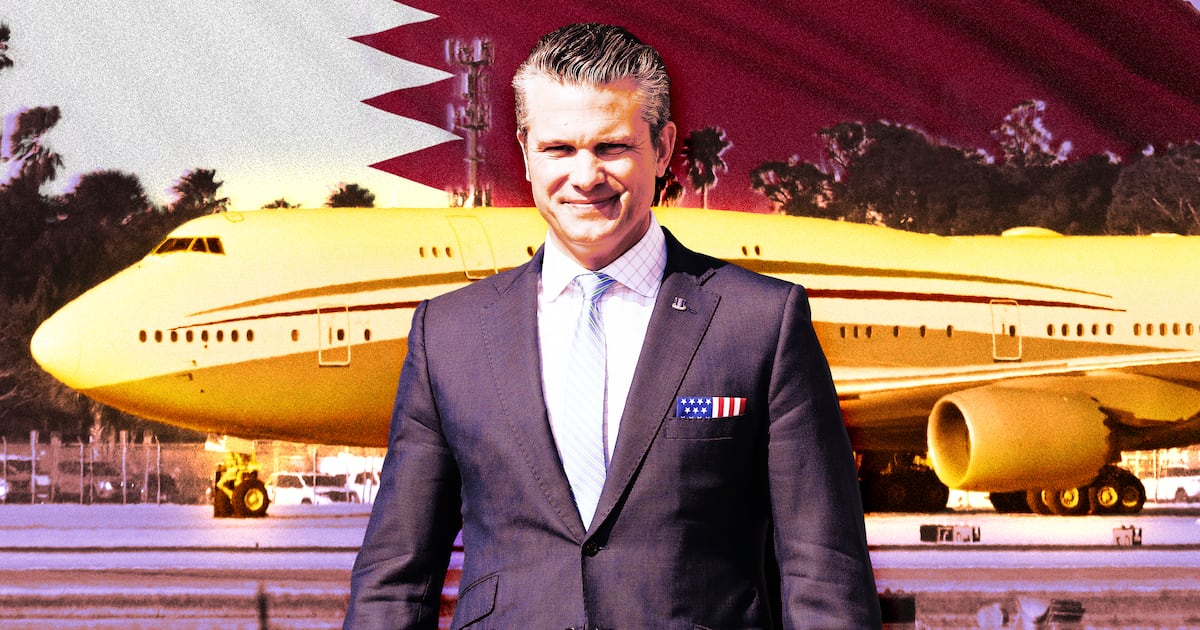
Hegseth’s Secret Deal to Get Trump His Free Qatari Jet Is Leaked
A foreign government’s “gift” becomes an American military asset only long enough to be renovated with taxpayer money—then transfers to a president’s library foundation, collapsing the wall between public office and private benefit.
Jul 28, 2025
⚖ Legal Exposure
Sources
Summary
The U.S. formally accepted Qatar’s “unconditional donation” of a $400 million Boeing 747-8 for use as Air Force One under the Trump administration. A Defense Department memorandum signed by Defense Secretary Pete Hegseth and his Qatari counterpart also permits Trump to use the aircraft after leaving office and transfers ownership to the Trump presidential library foundation. The arrangement directs taxpayer-funded renovation and security costs toward an asset that ultimately becomes tied to a former president’s private legacy institution.
Reality Check
This kind of arrangement normalizes a pathway for foreign state benefits to flow through the Pentagon and end up enriching a former president’s private legacy infrastructure, weakening our anti-corruption safeguards and the public’s ability to trust official decisions. Even with disclaimers, routing a high-value foreign transfer toward post-office personal use and ultimate private ownership squarely raises federal corruption and ethics concerns, including 18 U.S.C. § 201 (bribery of public officials), 18 U.S.C. § 208 (conflicts of interest), and 18 U.S.C. § 371 (conspiracy) if any quid pro quo or coordinated scheme is shown.
Separately, the acceptance of a foreign-state “gift” in this posture collides with the Constitution’s Foreign Emoluments Clause principles, and the taxpayer-funded renovation of an asset destined for a private foundation invites scrutiny as an abuse of office even if prosecutors cannot prove intent beyond a reasonable doubt. The precedent is the damage: once we treat foreign largesse plus public spending as a permissible off-ramp into private benefit, we train future administrations to monetize the presidency without leaving fingerprints.
Legal Summary
A foreign sovereign’s $400M aircraft “donation” coupled with a documented pathway for Trump’s post-office use and transfer to his presidential library foundation presents a classic money/access/benefit alignment that warrants treatment as structural corruption risk. While the MoU contains anti-bribery disclaimers and the article does not identify a specific exchanged official act, the size of the benefit and downstream private transfer structure support Level 3 exposure pending investigation into intent, decisions influenced, and funding/authorization.
Legal Analysis
<h3>18 U.S.C. § 201(b) — Bribery of public officials (quid pro quo)</h3><ul><li>Alleged facts show a foreign government providing a $400M aircraft characterized as a “gift” for official presidential use, with an MoU expressly allowing Trump to continue using the plane after leaving office—creating a personal-benefit vector tied to official position.</li><li>The structure (foreign-state thing of value → immediate executive access/use as Air Force One → post-office use/transfer pathway) is consistent with a corruption-risk “thing of value” being offered/accepted in connection with official acts, even though the MoU contains anti-bribery disclaimers.</li><li>Key gap: the article does not identify a specific Qatari-requested official act or decision exchanged; however, the magnitude and sequencing support treating this as a serious quid-pro-quo investigative pattern rather than a benign gift.</li></ul><h3>18 U.S.C. § 201(c) — Illegal gratuities</h3><ul><li>A $400M “bona fide gift” from a foreign sovereign to the Defense Department, coupled with an arrangement for continued benefit after office, supports an inference of a reward/inducement “for or because of” official position and potential actions, even absent proof of an explicit agreement.</li><li>The memo’s assertion that the donation is “not connected” to any governmental decision is self-serving and does not negate the structural gratuity risk given the extraordinary value and personal downstream benefit.</li></ul><h3>18 U.S.C. § 208 — Acts affecting a personal financial interest (conflict of interest)</h3><ul><li>Hegseth confirmed the aircraft will transfer after Trump leaves office to the Trump presidential library foundation, which could align executive-branch actions (acceptance, renovation funding, transfer structure) with a foreseeable private benefit stream connected to Trump’s post-office interests.</li><li>Gap: the article does not detail specific participating officials’ personal financial interests or formal decision roles beyond the MoU signing and described transfer plan.</li></ul><h3>18 U.S.C. § 641 — Theft or conversion of government property (misapplication theory)</h3><ul><li>Concerns raised that taxpayers may spend ~ $1B renovating an aircraft used briefly for government purposes and then transferred to a private foundation raise potential misapplication/conversion risk if the renovation spend is structured to confer private benefit.</li><li>Gap: the article does not provide evidence of fraudulent intent or illegitimate authorization; the concern is primarily the alleged end-use/transfer design.</li></ul><h3>31 U.S.C. § 1301(a) — Appropriations “purpose” statute / misuse of funds (civil-administrative exposure)</h3><ul><li>The reported near-$1B transfer for a classified project with some funds to renovate the aircraft, combined with an anticipated transfer to a private foundation, creates a high-risk appearance that appropriated funds are being used for a mixed or ultimately private purpose.</li><li>Gap: the article does not specify the appropriations source, legal authorities invoked, or audit findings.</li></ul><b>Conclusion:</b> The alleged pattern is not merely procedural; the magnitude of the foreign “gift,” immediate official use, and planned post-office private transfer/use create strong structural corruption indicators consistent with potentially prosecutable bribery/gratuities theories pending proof of linkage to specific official acts and intent.</p>
Detail
<p>The United States formally received Qatar’s “unconditional donation” of a Boeing 747-8 valued at roughly $400 million for use by the Trump administration as Air Force One. Earlier in July, Defense Secretary Pete Hegseth and his Qatari counterpart signed a memorandum of understanding describing the aircraft as a “bona fide gift” to the Defense Department with no payment by the U.S.</p><p>The memorandum states the donation is made “in good faith” and includes language disclaiming bribery, undue influence, or linkage to any governmental decision or official act. ABC News reported the agreement also allows Trump to use the plane after he leaves office.</p><p>Air Force officials told The New York Times that funds would be used to renovate the aircraft; aviation experts estimated renovations could cost at least $1 billion, and the Defense Department recently transferred close to that amount for a classified project. In a June Senate Appropriations Committee hearing, Hegseth confirmed that after Trump leaves office, ownership of the plane will transfer to the Trump presidential library foundation.</p>