Trump Humiliated as Ships Defy U.S. Navy Blockade
A headline about Trump being “humiliated” obscures the real story: contradictory official claims, unclear legal authority, and rising escalation risk around a purported U.S. blockade of the Strait of Hormuz.
Apr 14, 2026
Sources
Summary
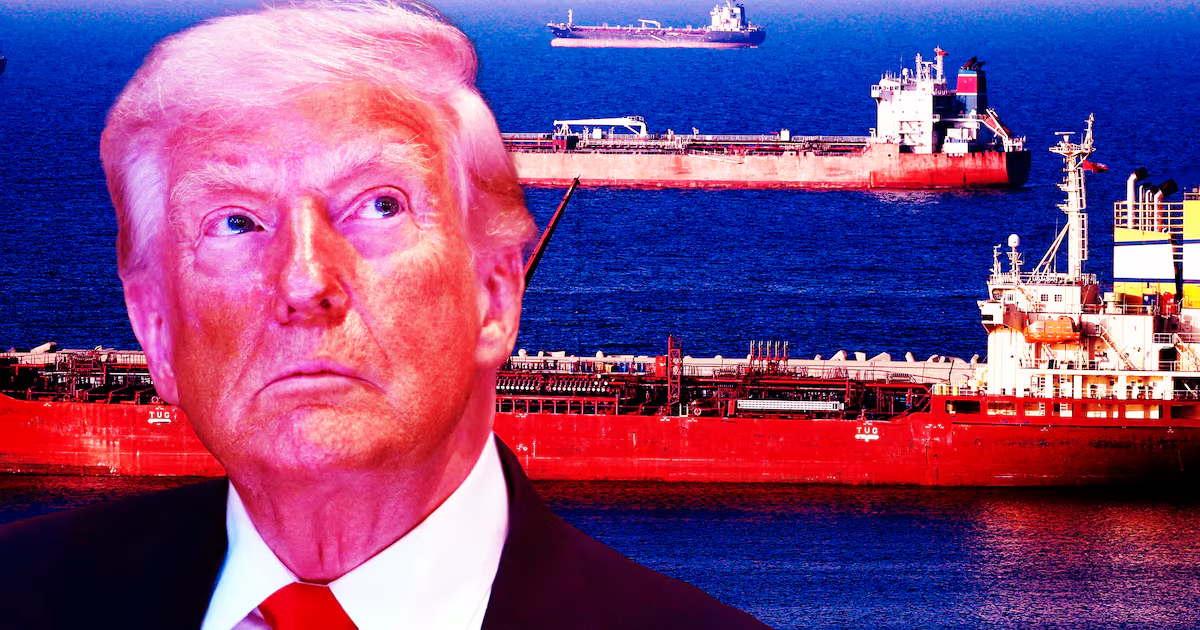
The Daily Beast reports that several Iran-linked tankers transited the Strait of Hormuz shortly after Trump said the U.S. Navy began a “blockade.” It frames those transits as an embarrassing failure, while leaving key basics fuzzy—what the U.S. is actually enforcing, under what legal authority, and what “bypass” vs. “allowed transit” means in practice. The stakes are enormous because mixed signals in a chokepoint like Hormuz can trigger miscalculation, spike energy prices, and widen a regional war.
Reality Check
The key uncertainty is definitional and operational, not just political: the article simultaneously describes ships “defying” a blockade and quotes Centcom claiming none “bypassed” it. Those statements can both be true if the U.S. is not stopping all traffic through the Strait, but is instead attempting selective interdiction of vessels linked to Iranian ports (as suggested by Centcom’s own language about “freedom of navigation” for non-Iranian port traffic).
The piece also doesn’t establish the basics readers need to judge success or failure: what the rules of engagement are, what counts as “making it past,” whether the tracked vessels were intercepted/hailed/cleared, and what legal basis the U.S. is claiming for a blockade-like action in international waters. Without those specifics, “humiliated” is more of a vibe than a verifiable conclusion.
Media
Detail
Trump posted on Truth Social that the U.S. Navy would begin “BLOCKADING” ships trying to enter or leave the Strait of Hormuz, after U.S.–Iran talks in Islamabad collapsed (per the article’s timeline).
The article claims multiple Iran-linked tankers—including sanctioned vessels and a Chinese-linked tanker—transited the Strait within hours of the blockade taking effect, citing “independently verified shipping tracking data.”
U.S. Central Command (Centcom) is quoted as denying that any ships “bypassed” the blockade, while also claiming in an X post that in the first 24 hours “no ships made it past” and that 6 merchant vessels complied with U.S. direction to turn around to re-enter an Iranian port on the Gulf of Oman.
Centcom is also quoted as saying the operation is “impartial” across nationalities and that U.S. forces are supporting “freedom of navigation” for vessels transiting Hormuz to and from non-Iranian ports—language that sounds closer to targeted interdiction than a classic, total blockade.
The piece asserts Hormuz traffic has been at a standstill since a Feb. 28 start date for Trump’s “war,” and cites economic impacts including Brent crude rising to about $102 on Monday and U.S. average gas at $4.12 per AAA.
The article adds IMF warnings about broader economic fallout from oil-market disruptions, and includes expert commentary (Quincy Institute’s Trita Parsi; Robert Malley) about possible escalation and the uncertainty of negotiations.