Trump’s Iran Blockade Not Working as Multiple Ships Pass Through
The article claims a U.S. Navy “blockade” of Iran began Monday and is already failing, but it offers no verifiable operational details, legal basis, or independent confirmation to support an extraordinary escalation in the Strait of Hormuz.
Apr 14, 2026
Sources
Summary
Newsweek’s text says the U.S. Navy began a blockade of Iranian ports and the Strait of Hormuz on Monday and that multiple ships still transited within 24 hours. The framing leans on anonymous-sounding ship counts and a sanctioned Chinese-linked tanker anecdote without showing sourcing, attribution, or the actual scope and rules of the operation. If true, this would be a major act with global energy and war-risk implications, but readers are not given enough verified facts to judge what is happening or what “blockade” means here.
Reality Check
A naval “blockade” is not just a policy slogan; it is a specific coercive act that normally comes with a declared scope (what waters/ports), rules of interdiction (stop/board/divert/seize), and a legal rationale—none of which are provided in the text you supplied. The article also presents precise-sounding operational claims (start time, ship counts, a sanctioned Chinese-linked ship transiting) without attribution to official statements, AIS/ship-tracking records, or independent reporting, leaving readers unable to verify whether an actual blockade is underway or whether this is a looser enforcement posture being labeled a blockade.
Detail
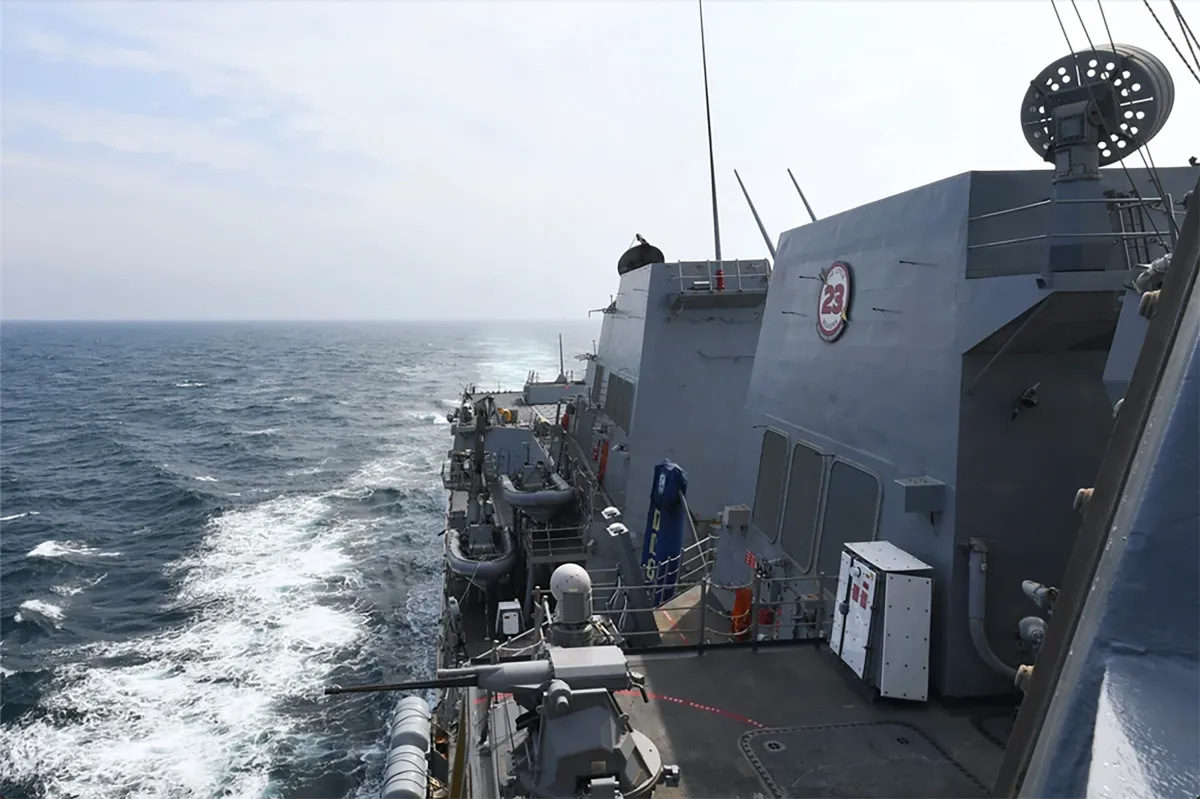
The text asserts that at 10 a.m. ET Monday the U.S. Navy “began its blockade of Iranian ports,” aimed at Iranian tankers and “Iran-friendly ships” transiting the Strait of Hormuz.
It says Trump demanded Iran “open” the waterway and claims traffic since “the war” began has plunged 90%, contributing to oil/fuel price increases and supply panic.
It says U.S.-Iran talks broke down Sunday and Trump announced a blockade of the already-impacted strait “to retaliate against Iran.”
It claims that within 24 hours at least seven ships passed through, including four tankers linked to Iran, contradicting the idea of an effective blockade.
It cites one example: a Chinese-owned vessel sanctioned by the U.S. in 2023 for carrying Iranian oil, allegedly spotted Tuesday in the Gulf of Oman after transiting.
The piece raises (but does not answer) feasibility questions: how the U.S. could police the strait and who the blockade is intended to target.
It suggests the blockade is aimed at Iran’s “shadow fleet” and notes that China is the destination for nearly all Iranian oil exports, but provides no data, documents, or named officials to substantiate this claim.