Norms Impact
‘Disgusting’: Republicans Applaud as Trump Brags About Taking Food Aid From Millions | Common Dreams
A president celebrated cutting millions off food aid while federal policy shifts SNAP’s guarantee away from national protection and toward state-by-state abandonment.
Feb 25, 2026
Sources
Summary
Donald Trump declared in his State of the Union address that his administration “lifted 2.4 million Americans” off food stamps as Republican lawmakers and administration officials gave a standing ovation. The enacted Trump-GOP reconciliation law restructures SNAP funding and eligibility, including historic cuts, shifting costs and program continuity risk onto states. The practical effect is the loss of nutrition assistance for millions and reduced federal capacity to measure the resulting food insecurity.
Reality Check
When elected officials publicly celebrate stripping basic nutrition assistance, we normalize governance that treats survival as leverage and rewires rights-like guarantees into discretionary benefits. The conduct described is not inherently likely criminal on these facts; signing budget legislation and changing eligibility rules typically falls within lawful policymaking, even when the stated “lifting” frame is misleading. The democratic damage is structural: unprecedented SNAP cuts, state cost-shifting that can end benefits entirely, and canceling a USDA food-insecurity survey together weaken accountability and informed consent by blinding the public to the consequences imposed on millions.
Media
Detail
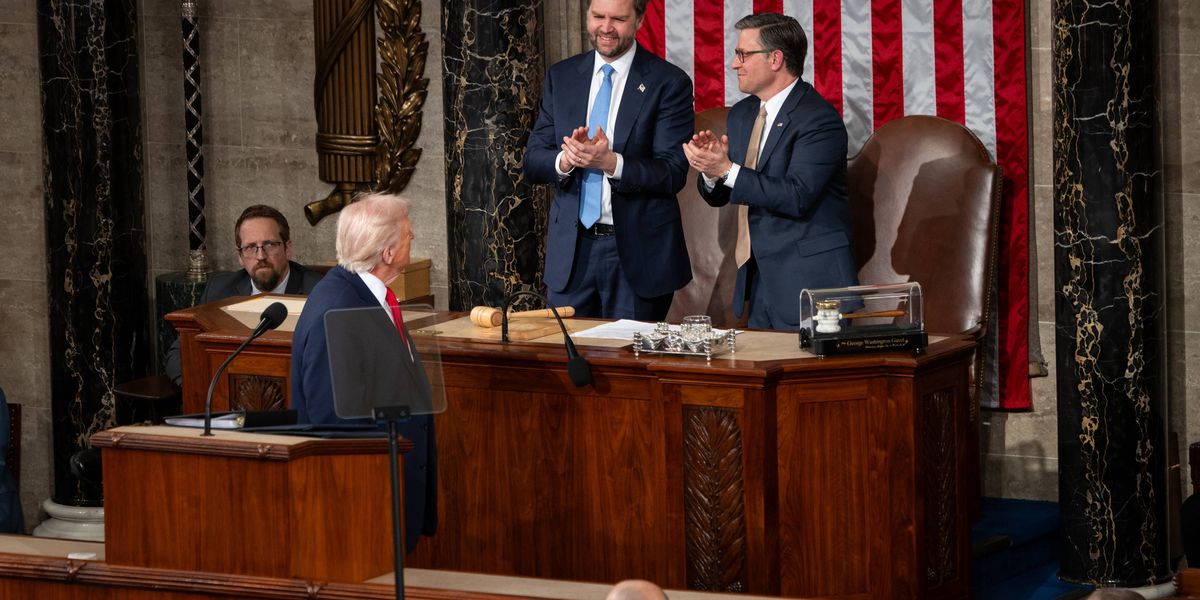
<p>During a Tuesday night State of the Union address, President Donald Trump said, “In one year, we have lifted 2.4 million Americans—a record—off of food stamps,” and received a standing ovation from Republican lawmakers and administration officials.</p><p>The reconciliation package Trump signed into law last summer included $187 billion in cuts to the Supplemental Nutrition Assistance Program over 10 years, along with reductions in federal nutrition funding for states and expanded work requirements. The Congressional Budget Office estimated these changes would strip nutrition benefits from roughly 2.4 million people in an average month over the next decade.</p><p>The Center on Budget and Policy Priorities said the changes mean the federal government will no longer ensure access for the lowest-income people in every state if a state refuses to pay the cost share, potentially ending the program there. After the bill became law, the administration canceled an annual USDA food-insecurity survey. USDA data showed about 696,000 fewer people received SNAP in November 2025 than in the prior month.</p>