Iran oil revenue soars as the only exporter out of Hormuz | Financial Post
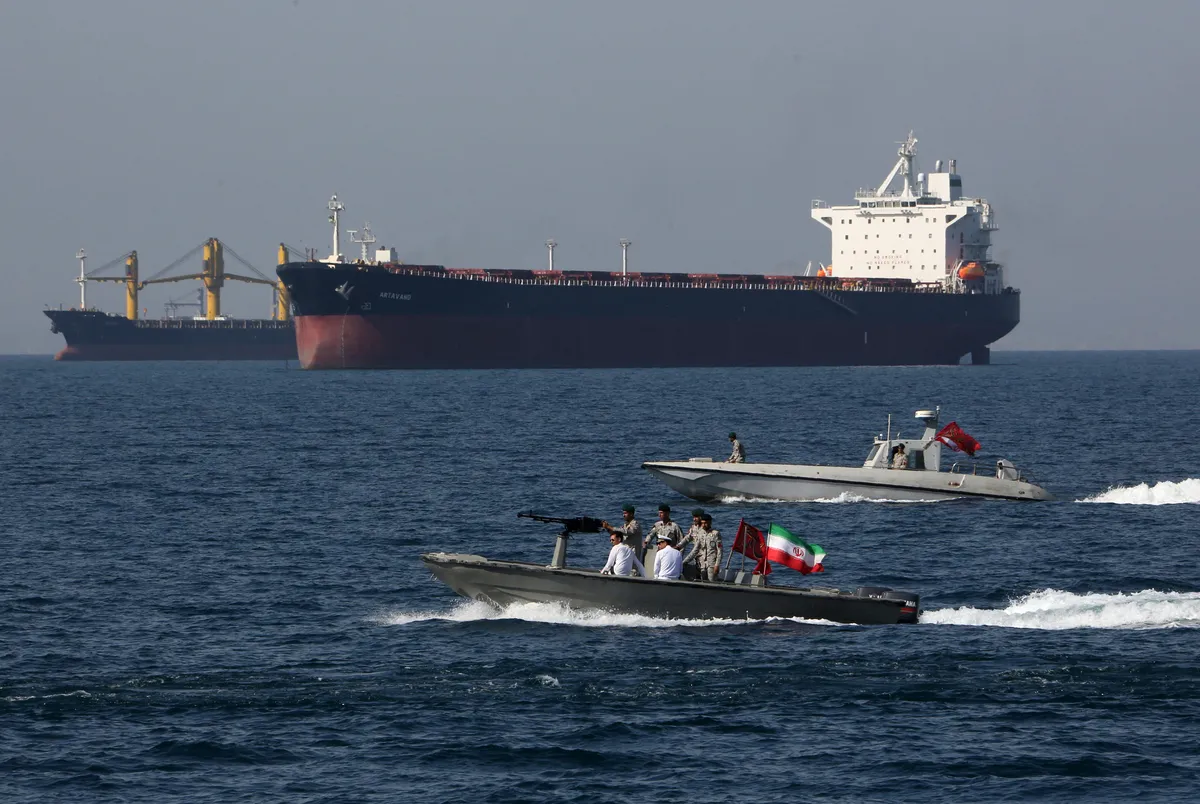
Iran is reportedly profiting from the Hormuz disruption because its crude keeps moving while rival Gulf exports are constrained, exposing a major gap between military pressure and energy-market policy.
Sources
Summary
Iran has likely earned hundreds of millions of dollars in extra oil revenue since the war began as Brent prices surged above $100 and Iran’s export volumes stayed near ~1.6 million barrels per day. The piece frames Iran as uniquely able to ship through the Strait of Hormuz, but leaves key uncertainty about how complete the “blockade” is, how flows are measured, and what exactly the U.S. sanctions waiver authorizes. The story matters because it suggests the conflict’s oil-price shock is financially sustaining Iran even amid strikes, while U.S. policy is prioritizing price relief over enforcement leverage.
Reality Check
The most solid, checkable point is that U.S. Treasury issued a time-limited authorization allowing purchases of certain Iranian oil already on tankers (reported as a 30-day waiver/authorization with specific cutoff timing). (cbsnews.com)
The rest of the argument—“Iran is the only major exporter out of Hormuz” and therefore uniquely capturing a windfall—depends on contested, fast-moving shipping conditions and on opaque tanker-tracking methodologies; treat the revenue numbers as estimates, not audited facts. (bloomberg.com)
Detail
Core claim: since the war’s start, Iran has gained “hundreds of millions” in additional oil income because prices rose and it could still ship through the Strait of Hormuz.
Pricing claim: Iran’s flagship grade (Iranian Light) is selling mostly to China at its slimmest discount to Brent in more than 10 months, while Brent has risen above $100/barrel since the bombing began.
Volume claim: Iran’s exports in March are estimated to be near prewar levels (~1.6 million barrels/day), with tankers loading at Kharg Island and exiting the Persian Gulf via Hormuz.
Contrast claim: other Gulf producers’ shipments are described as facing an “effective blockade,” implying significant disruption to non-Iranian exports through Hormuz.
Policy claim: the U.S. temporarily suspended/waived sanctions for a tranche of Iranian oil already loaded and at sea, to mitigate oil price impacts.
Attribution: the revenue estimate (about $139M/day in March vs $115M/day in February) is presented as derived from tanker-tracking export estimates and Iranian Light pricing, not official Iranian reporting.
Missing context: the article excerpt does not specify the war’s start date, who is blockading/controlling which lanes, or what independent shipping/port data corroborates the “only major exporter” characterization.