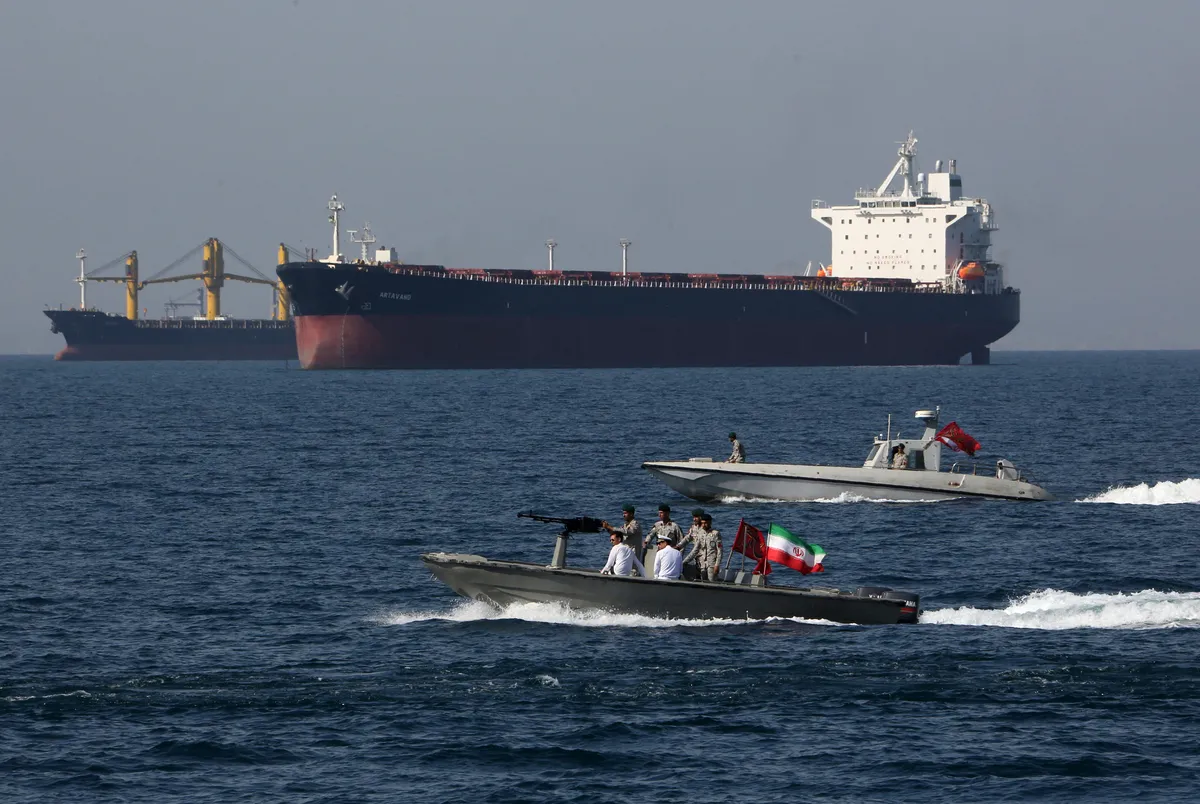
Core claim: since the war’s start, Iran has gained “hundreds of millions” in additional oil income because prices rose and it could still ship through the Strait of Hormuz.
Pricing claim: Iran’s flagship grade (Iranian Light) is selling mostly to China at its slimmest discount to Brent in more than 10 months, while Brent has risen above $100/barrel since the bombing began.
Volume claim: Iran’s exports in March are estimated to be near prewar levels (~1.6 million barrels/day), with tankers loading at Kharg Island and exiting the Persian Gulf via Hormuz.
Contrast claim: other Gulf producers’ shipments are described as facing an “effective blockade,” implying significant disruption to non-Iranian exports through Hormuz.
Policy claim: the U.S. temporarily suspended/waived sanctions for a tranche of Iranian oil already loaded and at sea, to mitigate oil price impacts.
Attribution: the revenue estimate (about $139M/day in March vs $115M/day in February) is presented as derived from tanker-tracking export estimates and Iranian Light pricing, not official Iranian reporting.
Missing context: the article excerpt does not specify the war’s start date, who is blockading/controlling which lanes, or what independent shipping/port data corroborates the “only major exporter” characterization.