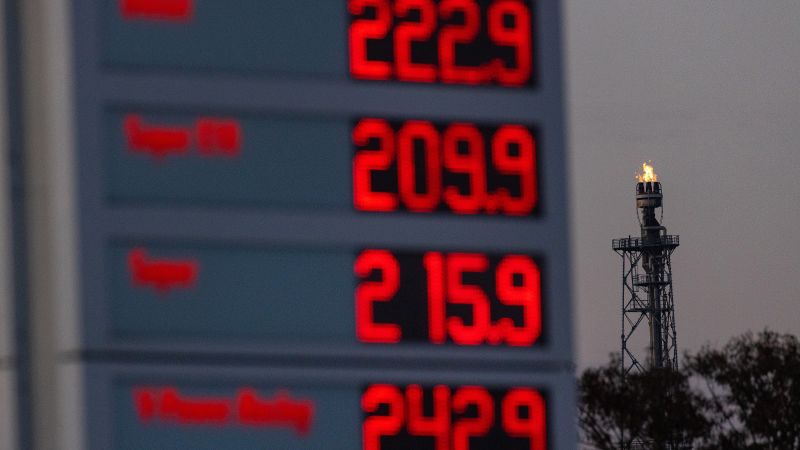
CNN reports Brent around $108.5/bbl (after touching about $110) and US crude around $95.6/bbl on Friday, March 20, 2026, despite a slight dip.
The stated driver is geopolitical disruption: damage to energy infrastructure in the Middle East and the Strait of Hormuz being “largely shut,” constraining flows.
Goldman Sachs is quoted warning that prior supply shocks have proven persistent, implying oil could remain above $100 longer under “risk scenarios” with longer disruptions and persistent supply losses.
The piece notes a widening gap between Brent and US crude, attributing it partly to US efforts to bring more domestic production online and the US role as the world’s largest oil producer.
It attributes a market move to comments from Israeli Prime Minister Benjamin Netanyahu about heeding President Donald Trump’s call not to repeat attacks on key Iranian energy sites.
The article describes an escalation cycle: an Israeli strike on Iran’s South Pars field followed by retaliation against Qatar’s Ras Laffan LNG facility, which it says helped drive prices higher earlier in the week.
Key missing context: what “largely shut” means operationally (full blockade vs. limited/controlled transits), how much volume is actually disrupted, and what other supply buffers (strategic reserves, OPEC+ spare capacity, demand destruction) could alter price paths.
Key clarity gap: whether “may stay above $100 through 2027” is presented as a tail-risk case vs. a base-case forecast; the headline emphasis can blur that distinction.